





















Key Takeaways
- Bestop soft tops are engineered for four-season use with multi-layer fabrics, heat-sealed seams, and DOT-approved windows that keep you dry in rain, snow, and slush.
- Choosing between a squareback (Supertop family) and a slantback (Trektop family) is a style decision first, then you narrow by features like fold-down capability or zipperless windows.
- Premium Black Twill fabric delivers the longest lifespan and quietest ride, while Black Diamond or Black Diamond sailcloth fabric offers strong performance at a lower price point.
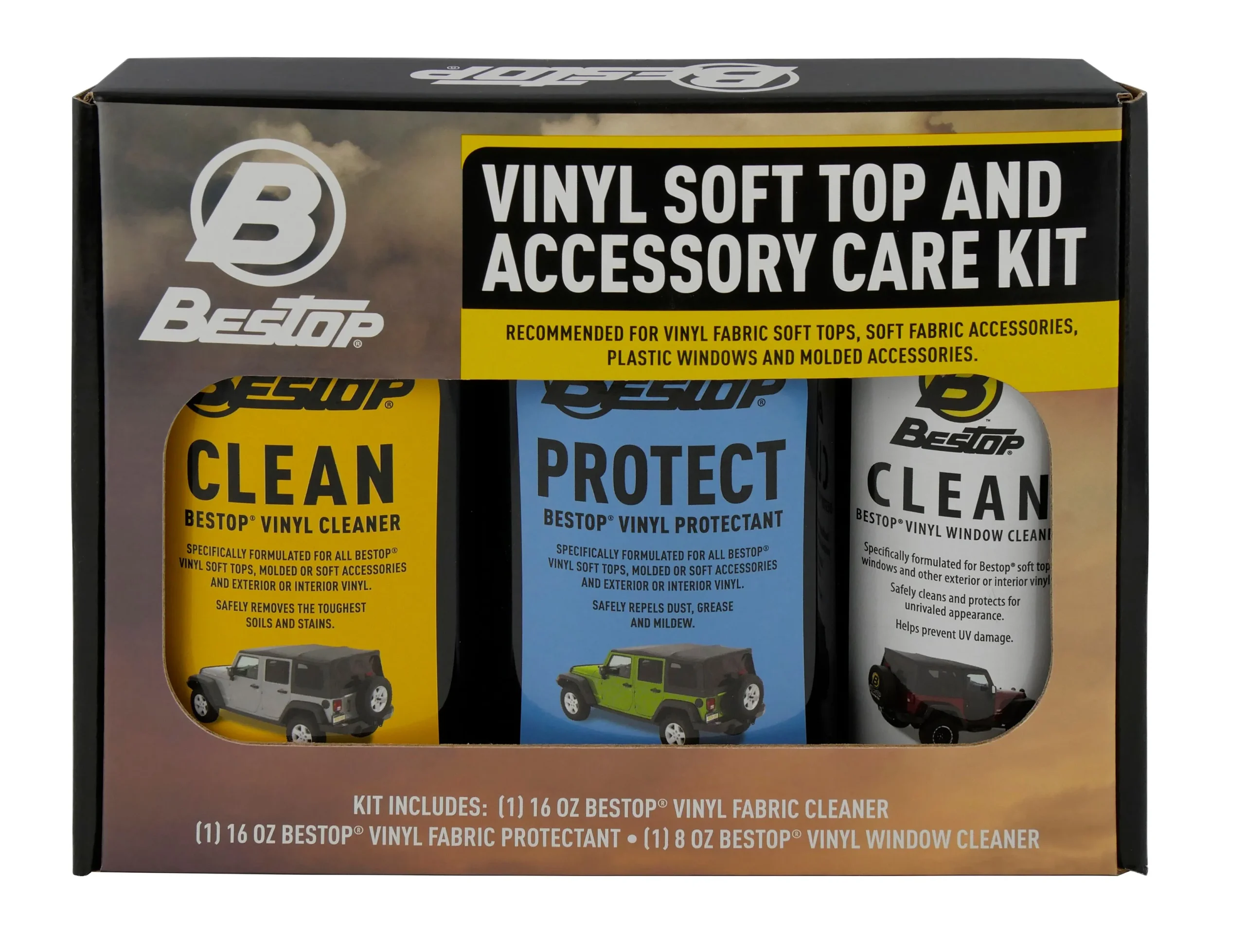
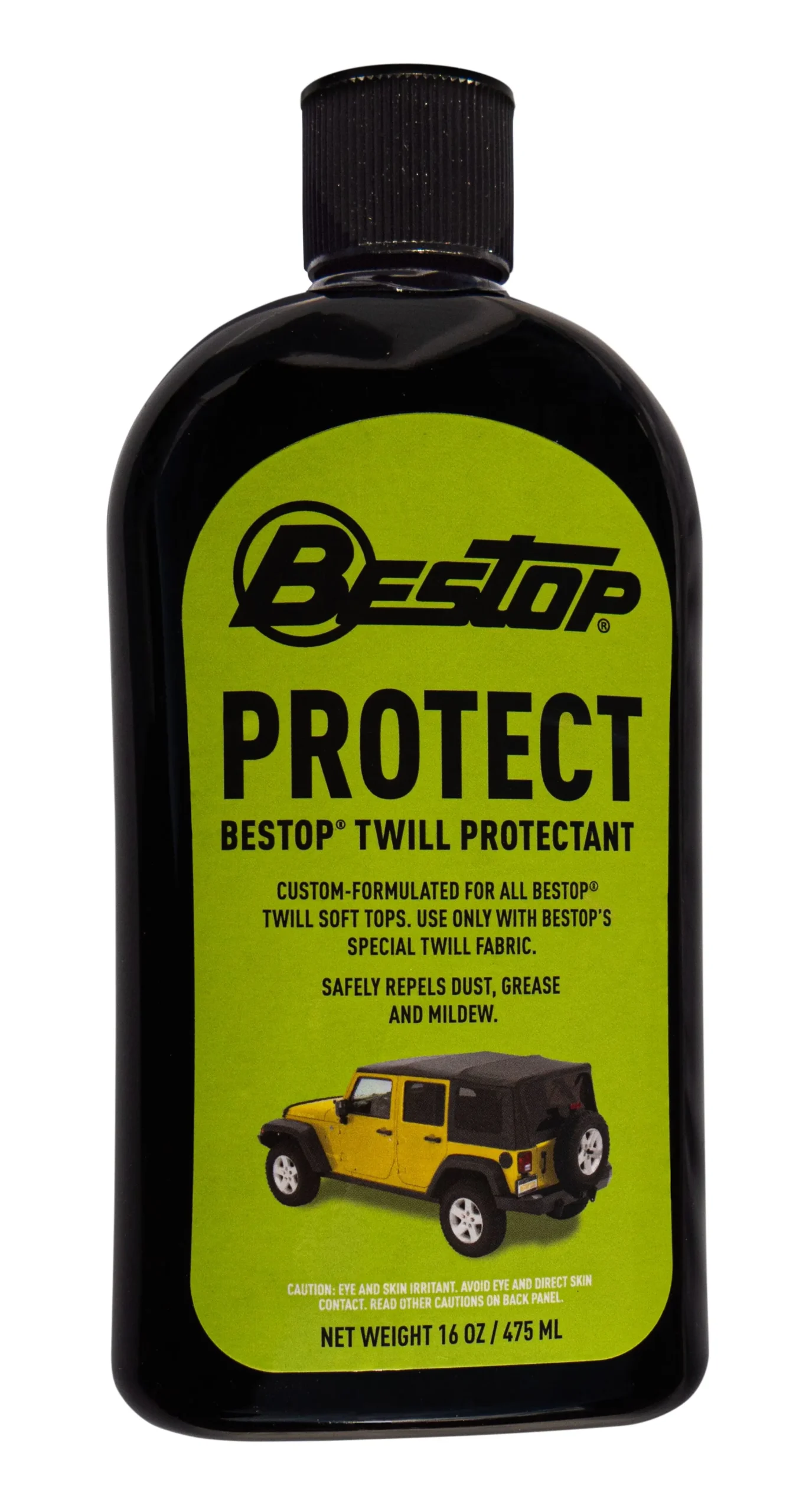
- Regular cleaning with a dedicated soft top cleaner and protectant every 30 to 90 days can add years to your top’s life.
- As the only aftermarket brand trusted as Jeep’s OEM soft top supplier for over three decades, Bestop brings factory-level fit and engineering to every product in the lineup.
There is something about dropping your top on a warm morning, feeling the wind hit, and realizing this is exactly why you bought a Jeep. That open-air feeling is what soft tops were built for. But if you are new to the soft top world, or even if you have been running one for years, questions come up. How do they handle rain? Will it survive winter? Which material is actually worth it?
We have been answering these soft top questions since 1954, when our founder Tom Bradley built the first easy-open Jeep top in a small Boulder, Colorado upholstery shop. Seven decades and an OEM partnership with Jeep later, our team still hears the same core questions from first-time buyers and seasoned trail runners alike. This guide brings those answers together in one place, straight from the people who engineer, test, and build more soft tops than anyone in the industry.
What Is a Jeep Soft Top and How Does It Work?
A Jeep soft top is a removable roof system made from engineered fabric stretched over a folding frame, designed to give you full weather protection when closed and open-air freedom when folded back or removed. It replaces or alternates with a fiberglass hardtop and typically includes a fabric deck, side and rear windows, door surrounds, and a folding hardware frame.
The basic concept is straightforward. A series of bows (the frame) arch over the roll bar area of your Jeep. The fabric stretches with precision over those bows and locks into channels along the sides and rear of the vehicle, creating a sealed cabin. Windows are integrated into the fabric panels and can be zipped, folded, or slid outdepending on the design. When you want open air, the top either folds back on its frame, slides into the cargo area, or comes off entirely.
What separates a modern soft top from the canvas flaps of decades past is improved fabric quality and engineering. Today’s soft tops use multi-layer fabrics with UV inhibitors, heat-sealed seams, DOT-approved windows, and precision-fit channels that create a seal tight cabin. The result is a roof that protects like a hardtop when you need it and disappears when you do not.
For a detailed look at how specific models compare, check out our soft top comparison page.
What Are the Different Types of Jeep Soft Tops?

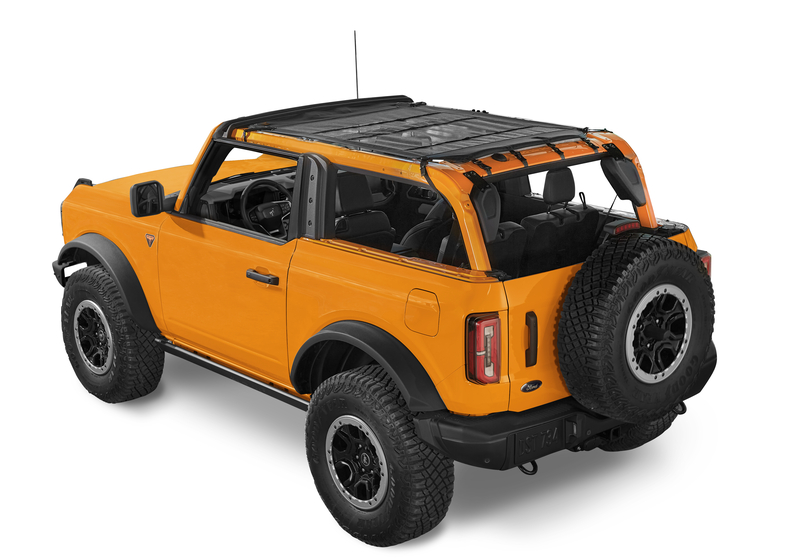
Jeep soft tops fall into four main style categories: classic squareback, fastback or slantback, partial-coverage soft tops like Sunrider for Hardtop, bikini, and bimini mesh tops, and then powered soft tops like the eTop. Each delivers a different style, varying levels of open-air accessibility, and their own unique driving experiences.
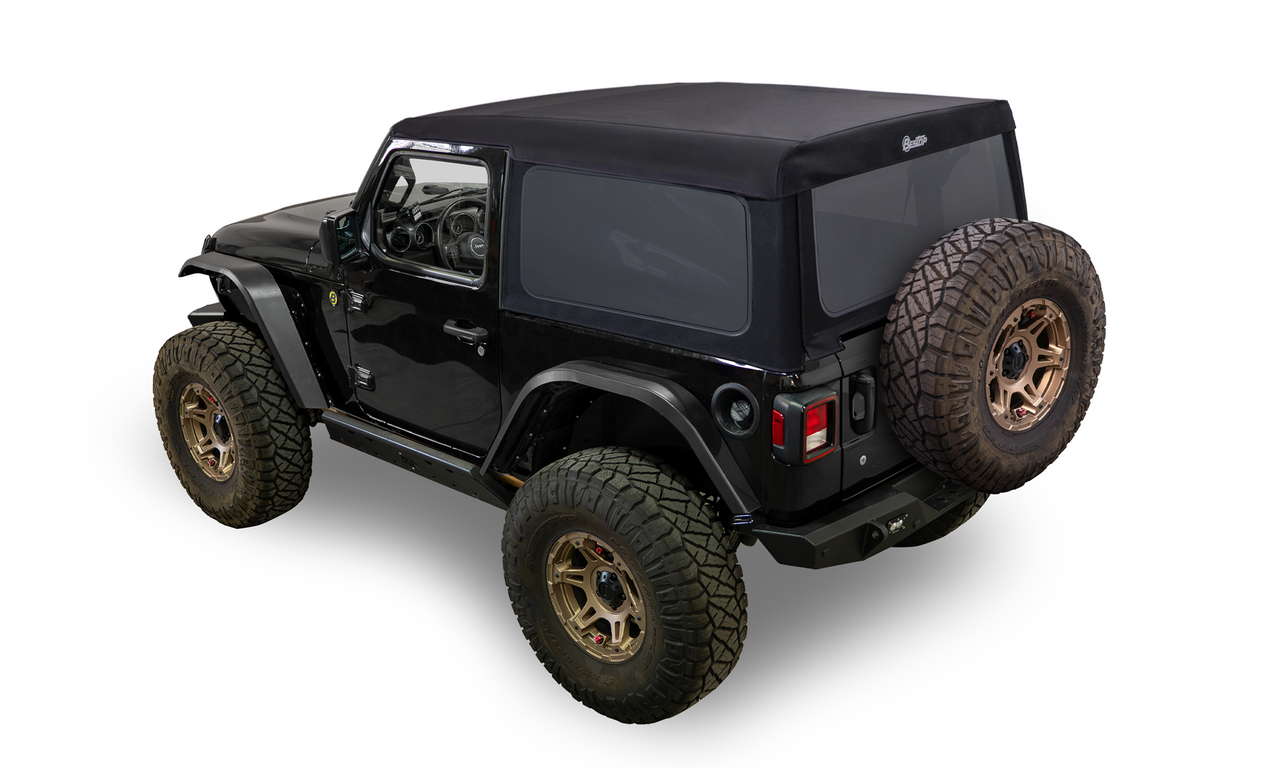
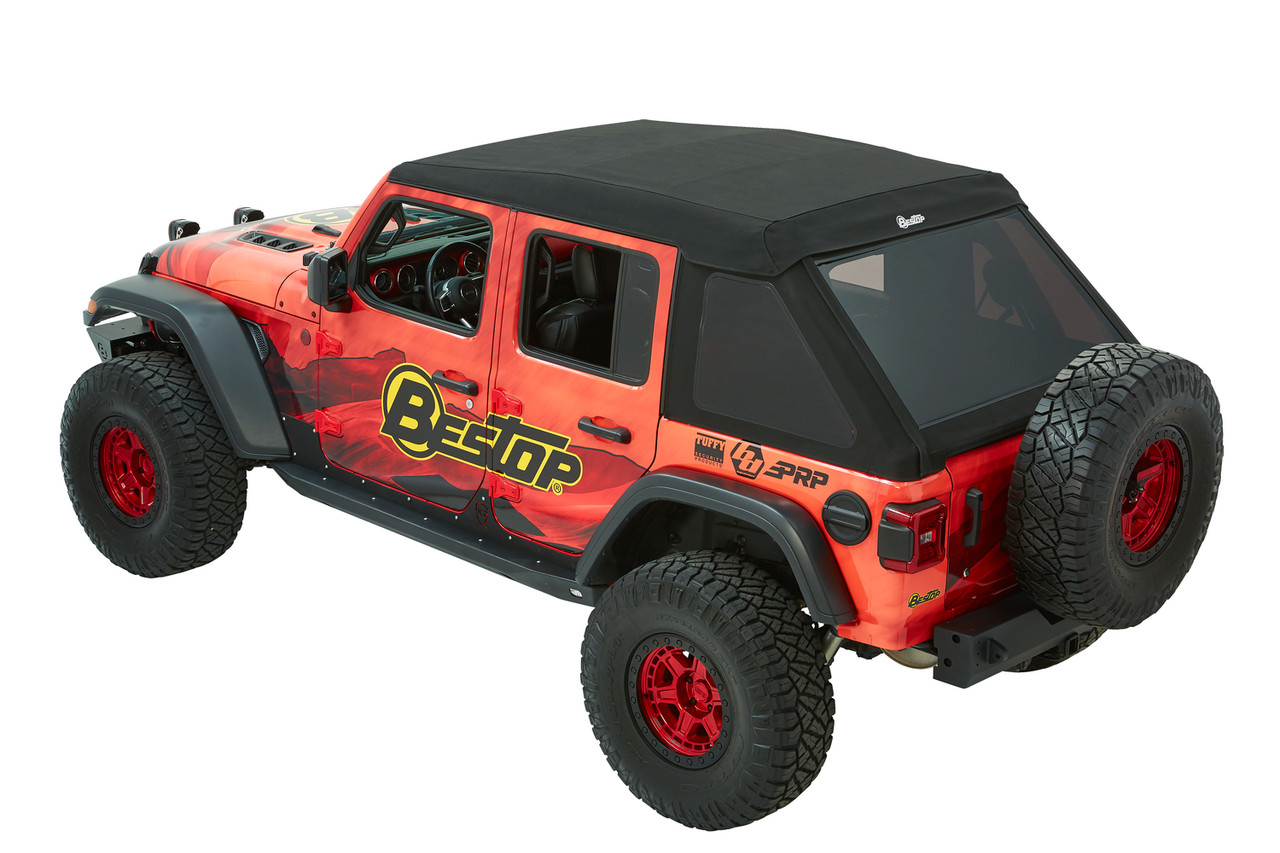
Squareback (factory-style) soft tops follow the traditional Jeep roofline. The Bestop Supertop family lives here and covers the widest range of vehicles and years, offering the familiar square silhouette with framed construction that folds back and stays on the vehicle. Variants include the Supertop Classic with YKK zipper windows and a rollable rear window, the Supertop Glide with zipperless slide-out panels, and the Supertop Ultra with patented Guide-Track Flow-Back retraction for easy solo operation.
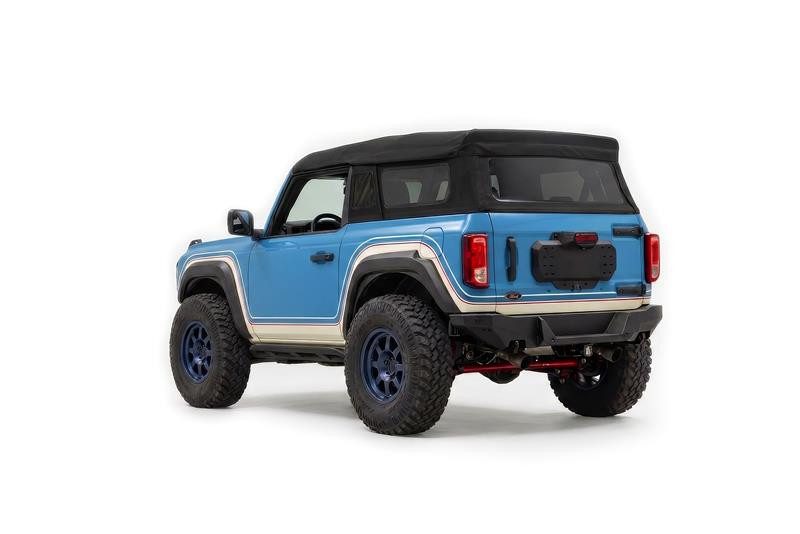
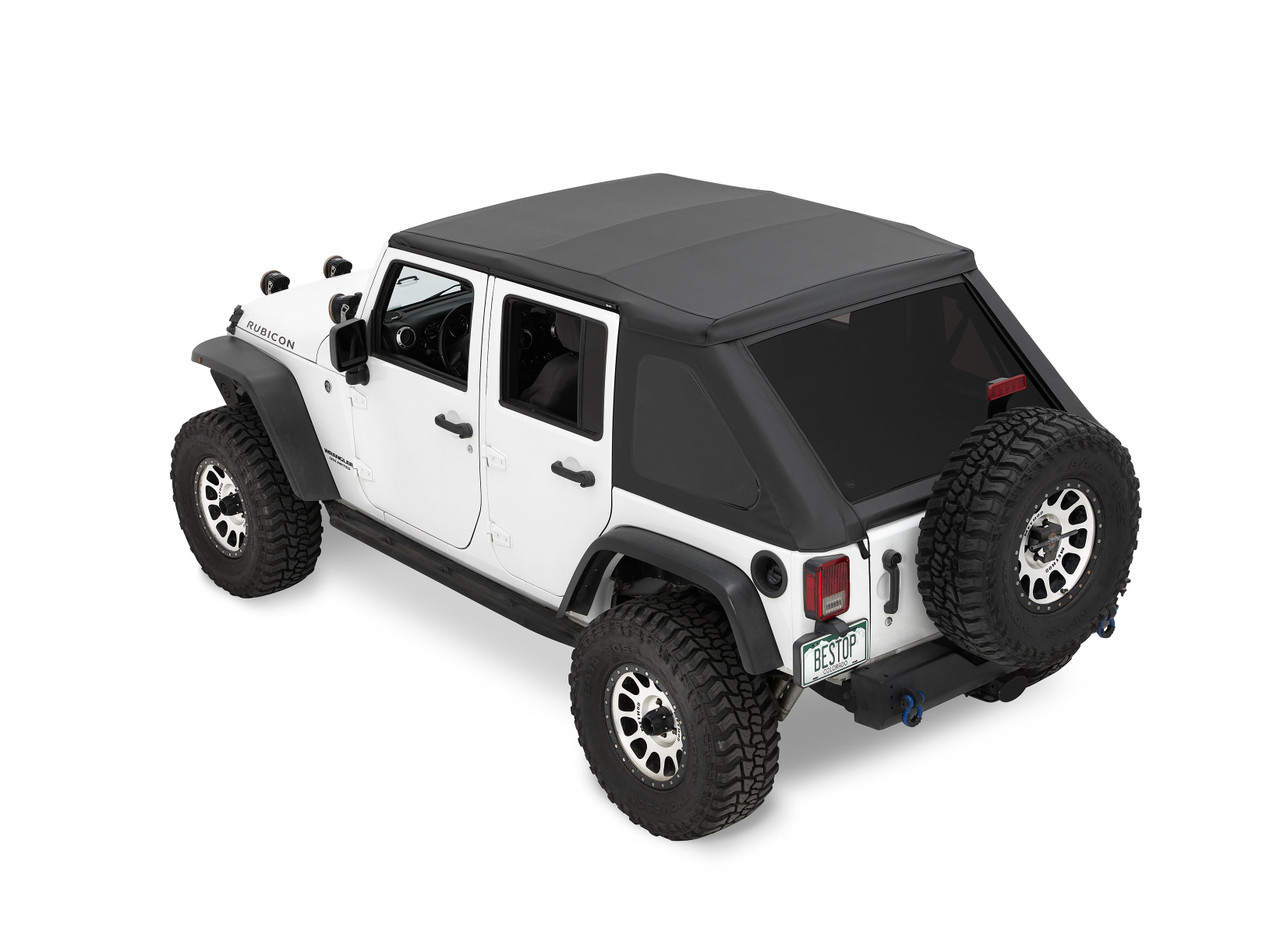
Slantback (fastback) soft tops give your Jeep a sportier, more aerodynamic profile. The Bestop Trektop family defines this category with a frameless design and Sunrider open-air access. Options range from the entry level Trektop NX to the Trektop Ultra with its patented Lift Assist system for JL 4-door models. The Trektop Pro Hybrid (JK) is an industry first, combining a hard rear glass hatch with defroster and gas-assist struts to complement the soft top open-air capability.
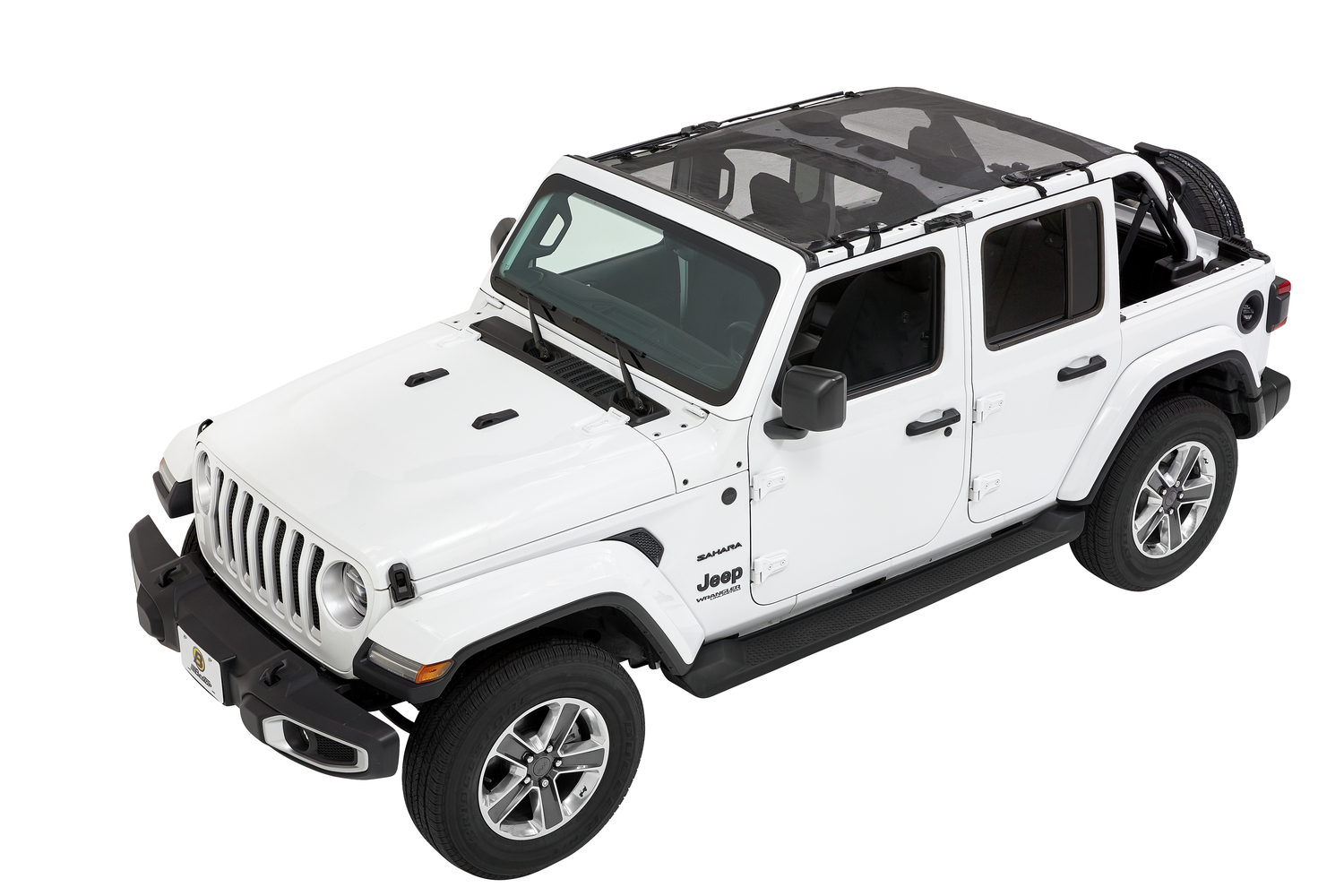
Bimini and halftops provide partial overhead shade without full enclosure. They are ideal for trail days or summer cruising when you want some sun protection but maximum airflow.
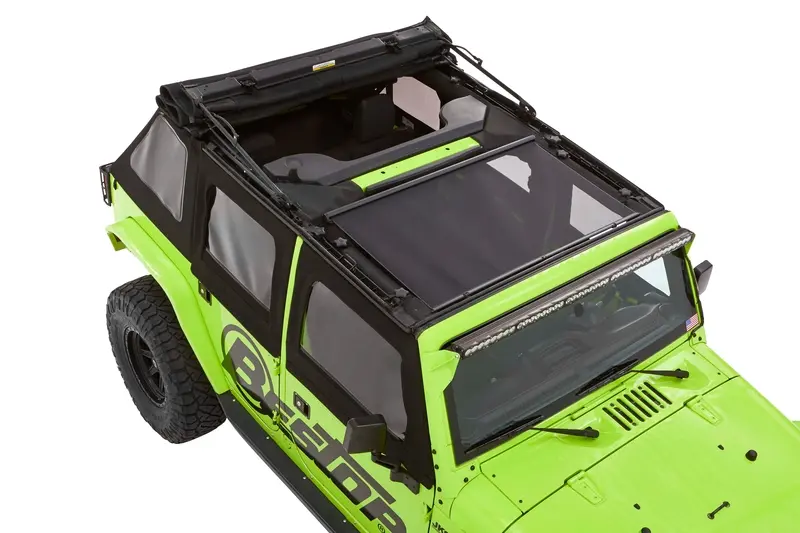
Sunrider tops offer a different kind of versatility. The Sunrider for Hardtop replaces the front freedom panels on your hardtop with a flip-back soft panel, giving you instant open-air access without having to remove the entire roof. It is a popular choice for owners who want to keep their hardtop but still enjoy a convertible feel on demand.
Powered soft tops represent the newest evolution in soft top design and is redefining what instant open-air freedom truly means. The eTop by Bestop is the world’s only fully automatic, powered soft top, giving you one-touch instant open-air access at the press of a button.
To compare all Bestop soft top models side by side, visit our comparison page.
How Do I Choose the Right Soft Top for My Jeep?
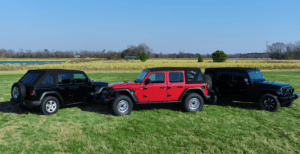
Choosing the right soft top comes down to several key factors: your Jeep’s year and model, whether you need a complete kit or just replacement fabric, and how you use your vehicle day to day.
Start with fitment. Soft tops are designed for specific Jeep platforms. A JL Wrangler (2018+) uses different mounting points and dimensions than a JK (2007-2018), TJ (1997-2006), or YJ (1987-1995). Some tops, like the Supertop NX and Trektop NX, offer the broadest fitment across generations. Others, like the Trektop Ultra, are designed exclusively for JL 4-door models.
Check your hardware. If your Jeep already has soft top hardware (the frame, bows, and channels), you may only need a Replace-A-Top fabric kit, which saves cost and simplifies installation. If you are converting from a hardtop or starting fresh, you will need a complete soft top kit with hardware included.
Understand the install. Many soft tops and replacement top fabric are designed exactly to fit within existing vehicle platforms and hardware to give the most secure, form fitting, look as well as function. While many vehicle owners consider themselves wrench and ratchet savvy, installing a soft top necessitates following instructions to the letter to ensure proper function and fit. Wind, noise, leaking, or various other post-install issues that surface are almost always a direct result of an improper installation.
Match your soft top to your lifestyle. Here is a quick guide:
- Daily driver who wants maximum convenience: The eTop powered soft top or a Supertop/Trektop Ultra with Guide-Track retraction
- Weekend adventurer who wants full convertibility: Supertop NX Glide or Trektop NX Glide with fold-down capability
- Style-first buyer who loves the fastback look: Trektop NX for the slantback silhouette at an accessible price
- Classic Jeep look with proven reliability: Supertop NX with its squareback design and rollable rear window
- Hardtop owner who wants open-air flexibility: Sunrider for Hardtop for a flip-back convertible panel without removing your roof
- Trail and summer shade: Bikini tops for maximum open-air exposure
- All-season driver (JK) who wants hard rear glass convenience: Trektop Pro Hybrid
The squareback vs. slantback choice comes down to style and identity preferences.. Pick the silhouette and look you love, then narrow it down by features.
Still not sure where to start? Our Soft Top Wizard walks you through a few short questions to help narrow the field, and our Year/Make/Model fitment tool confirms exactly which soft tops will fit your vehicle. For a deeper dive, browse our complete soft top buyer’s guide or contact our customer service team who can assist with any fitment questions.
Are Jeep Soft Tops Waterproof? Do They Leak?
Confidence in any climate or condition is part of what makes a soft top a true year-round choice. The answer is unequivocally yes. A properly installed and maintained soft top from Bestop is waterproof and built for any season. Our soft tops use multi-layer, top quality fabric, heat-sealed seams, and precision-fit channels meticulously engineered to create a weather-tight seal around the entire cabin.
Here is what goes into keeping you dry:
- Multi-layer fabric construction: Premium materials like our 30oz Black Twill use layered construction with built-in UV inhibitors and water-resistant coatings that shed rain on contact.
- Heat-sealed seams: Rather than relying on stitching alone (which creates needle holes), critical seams are heat-sealed to prevent water intrusion at joints.
- DOT-approved windows: 40-mil windows meet Department of Transportation standards for clarity, durability, and weather sealing.
- Precision channel fit: Each top is engineered to lock into vehicle-specific channels with tight tolerances, minimizing gaps where water could enter.
The most common cause of leaks comes down to improper installation or proper fabric care that can lead to worn seals, or debris in the sealing channels. Keeping your channels clean and your seals conditioned goes a long way. If you do notice moisture, it is usually traceable to a specific point that can be adjusted or mitigated rather than a fundamental design issue.
For a deeper dive into how fabric technology impacts weather performance, see our material comparison guide.
Can You Drive a Soft Top Jeep in Winter?
Absolutely. Bestop soft tops are engineered and tested for four-season use. Thousands of Jeep owners run soft tops year-round in climates from the Colorado Rockies to the upper Midwest.
Modern soft top fabrics retain heat better than many drivers expect. The multi-layer construction acts as insulation, and the tight seal design minimizes potential air drafts.
While modern day soft tops are designed and engineered to handle all weather scenarios, owners of soft tops should be aware of the potential impacts harsh weather conditions can have on fabric. Most issues can be avoided by common sense practices, but here are some useful, tips for practical cold-weather soft top use:
- Warm the fabric before folding. In freezing temperatures, let your Jeep’s cabin heat warm the fabric for a few minutes before operating the top. Cold fabric is stiffer and harder on zippers and seals.
- Keep zippers lubricated. A dedicated zipper lubricant prevents freezing and makes cold-weather operation smoother. Our zipper cleaner and lubricant is formulated for exactly this.
- Clear snow and ice gently. Brush snow off with a soft broom or cloth. Never use an ice scraper on fabric or windows.
- Condition seals before winter. A protectant application in fall keeps seals flexible through freeze-thaw cycles.
The old reputation of soft tops as “summer only” products comes from an era of basic canvas construction and loose, general fitment. Fabrics that stay tight under tension, seals that reduce wind whistle, and materials tested at highway speeds in sub-freezing conditions have changed the conversation entirely.
Soft Top vs Hardtop: Which Is Better for Your Jeep?
Neither is universally better. The right choice depends on how you use your Jeep, where you live, and what you value most in your driving experience.
Here is how they compare across the factors that matter most:
| Factor | Soft top | Hardtop
|
|---|---|---|
| Open-air access | Fold, slide, or remove in minutes (or seconds with eTop and Sunrider) | Requires removal of full top or lifting large quarter panels and storage |
| Weight | Lightweight fabric and hardware significantly reduces vehicle overall weight, potentially , improving fuel economy and center of gravity | Primarily made from fiberglass, sheet molded composite (SMC) or molded plastic layers, typically adds 100 to 150 lbs creating a on the vehicle |
| Noise at highway speed | Quieter than ever with premium fabrics and tight seam seals, but not silent. Modern soft tops (when installed properly) can perform as quite as factor hard tops, sometimes quieter based on the fabric type. | Current vehicles (2007 to present) with modular hard tops typically experience the same or above levels as modern soft tops. Older vehicle model’s hard tops tend to be slightly quieter overall |
| Weather sealing | Fully waterproof with proper installation and maintenance. Higher risk exists when soft tops are removed and stored and re-installed, depending on storage care and conditions. | Current vehicles (2007 to present) with modular hard tops will have more connection points and seals where older vehicle hard tops are fully sealed |
| Security | Tight seal connections make it more resistant to casual entry when closed and locked. Fabric can be cut (practical tips below) | When windows are up and doors locked, hard top enclosed vehicles deter casual entry opportunities. Windows can be smashed |
| Cost | Lower initial investment | Higher initial cost |
| Versatility | Multiple configurations from sealed cabin to fully open | Sealed or fully removed, limited middle ground |
| Storage when removed | Minimal footspace. Can be folded and stored | Requires roughly 5’x4’ storage space or 8’ garage height with a hoist |
The biggest advantage of a soft top is freedom of choice. On your morning commute, you have a sealed, weather-tight cabin. On your weekend excursions, you drop the top in minutes and enjoy the ride the way it was meant to be experienced. That flexibility is why many Jeep owners who try a soft top never go back.
For a closer look at common soft top myths and why experienced owners keep choosing fabric, visit our dedicated page.
How Long Do Jeep Soft Tops Last?
A quality Jeep soft top can typically last three to five years with standard everyday use, premium materials can extend that lifespan well beyond with proper soft top care. The biggest factors are fabric quality, climate exposure, and how consistently you maintain the top.
Here is how the main fabric options compare on durability:
- Premium Black Twill (30oz): The thickest, most durable option available. Twill resists UV degradation, stays taut longer, and delivers the quietest ride. Bestop’s Supertop NX in Twill is backed by one of the strongest warranties in the lineup. For full warranty details, visit our warranty page.
- Sailcloth: The factory-equivalent material, offering solid durability and weather performance at a lower price point than Twill. A strong choice for owners who want proven performance without the premium investment.
- Black Diamond vinyl (28oz): A budget-friendly option that performs well but has a shorter lifespan than fabric alternatives, particularly in high-UV environments.
Factors that can negatively impact the lifespan of a soft top include prolonged UV exposure without protectant, parking outdoors year-round in harsh climates, and neglecting regular cleaning. Factors that extend it include applying protectant every 30 to 90 days, parking in shade or a garage when possible, and keeping zippers lubricated and seals conditioned.
Bestop also offers replacement fabric kits (Replace-A-Top) that let you refresh your top using existing hardware, so when the fabric does reach the end of its life, you do not have to buy a complete new system.
Browse our full range of soft top cleaners and protectants to keep your investment looking and performing its best.
How Do You Clean and Maintain a Jeep Soft Top?
Clean your soft top every two to four weeks with a dedicated soft top cleaner, avoid automatic car washes with brushes, and apply a fabric protectant every 30 to 90 days. That routine alone will add years to the life of your top.
Here is a step-by-step cleaning process:
- Rinse the top with cool or lukewarm water to remove loose dirt, dust, and debris. Never start scrubbing a dry, dirty top.
- Apply a dedicated soft top cleaner (not dish soap, household cleaners, or degreasers, which can strip protective coatings). Work the cleaner in with a soft bristle brush using gentle, even strokes.
- Rinse thoroughly and let the top air dry completely before closing or folding.
- Clean windows separately with a dedicated vinyl window cleaner and a soft cloth. Standard glass cleaners contain ammonia and alcohol that cloud and crack vinyl over time.
- Lubricate zippers with a zipper-specific lubricant to keep them operating smoothly and prevent corrosion. This is especially important before winter.
- Apply fabric protectant once the top is clean and dry. Protectant restores UV resistance and water repellency that naturally diminishes with sun exposure.
For detailed window care instructions, see our guide on how to clean your soft top windows. For zipper maintenance, our zipper cleaner and lubricant is formulated specifically for soft top hardware.
Want the full care playbook? Read The care and feeding of your Bestop soft top.
For a visual walkthrough of the full cleaning process, watch our soft top care guide:
[Video: https://www.youtube.com/watch?v=UeOdiwEAR6U&t=2s]
Can You Take a Jeep Soft Top Through a Car Wash?
Use touchless (no-contact) car washes only. Never take a soft top Jeep through a car wash with spinning brushes or cloth strips.
Spinning brushes are designed for hard automotive paint, not fabric. They can scuff and abrade the top’s surface coating, scratch vinyl windows to the point of reduced visibility, pull at seams and edges, and grind embedded dirt into the fabric rather than removing it. One pass through a brushed car wash can cause more surface damage than months of trail dust.
Touchless car washes that use only water pressure and detergent are generally safe, though hand washing is always the best option. A garden hose, a soft bristle brush, and a dedicated cleaner give you more control and protect the fabric and windows from anything abrasive.
If hand washing is not practical every time, a touchless auto wash for the body followed by a quick wipe-down of the top and windows by hand is a solid compromise.
How Do You Install a Jeep Soft Top?
Installation difficulty depends on whether you are replacing fabric on existing hardware or doing a full changeover from a hardtop. A fabric-only replacement on existing hardware is a straightforward project most owners complete in one to two hours. A full hardtop-to-soft-top conversion takes longer depending on the soft top and work space.
Here is the key distinction:
- Fabric-only replacement (Replace-A-Top): If your Jeep already has a soft top frame and hardware in good condition, you are simply swapping the fabric skin. Remove the old fabric, stretch the new one over the existing bows, and lock it into the channels. This is well within DIY range for most owners.
- Complete soft top kit (new hardware + fabric): If you are converting from a hardtop or your hardware needs replacing, the kit includes the frame, bows, channels, and fabric. This involves assembling the frame, mounting it to the roll bar area, and then fitting the fabric. It is more involved but does not require any drilling, cutting, or permanent modification to the vehicle.
Consider using our dealer locator online to find Bestop Authorized Installers in your area.
Best practices for installation:
- Install above 72 degrees F. Fabric stretches more easily in warm conditions, giving you a tighter fit and making the channels easier to engage. Cold fabric is stiff and harder to work with.
- Watch the install video first. Every Bestop product has a corresponding installation video that walks through the process step by step.
- Do not force anything. If a channel is not engaging or a bow is not seating, recheck alignment before applying more pressure.
Visit our installation support page for model-specific guides and our full video library.
What Should You Do if Your Soft Top Is Damaged?
Most soft top damage can be repaired or addressed with replacement components rather than buying an entirely new top. Common issues include cloudy or scratched windows, stuck or broken zippers, and fabric wear or tears.
Here is how to handle each:
- Cloudy or scratched windows: Vinyl windows naturally haze over time from UV exposure and cleaning. A dedicated window cleaner and polish can restore clarity in many cases. For windows beyond polishing, Bestop offers replacement window sets that install into your existing top.
- Zipper issues: Zippers that stick, separate, or break are the most common soft top complaint. Often, a thorough cleaning and lubrication will restore function. If the zipper track itself is damaged, replacement window panels (which include new zippers) are available.
- Fabric damage: Small tears or abrasion spots may be manageable with fabric repair kits. For larger areas of wear, a Replace-A-Top fabric replacement lets you put new fabric on your existing hardware at a fraction of the cost of a complete top.
The key advantage of Bestop’s component approach is that you refresh and repair rather than replace. Replacement parts mean a single worn element does not force you into buying an entirely new system.
Browse replacement soft tops and components to find what you need for your specific model.
What Is the Best Jeep Soft Top Material?
The fabric material you choose shapes how your top looks, sounds, and holds up over years of open-air driving. Premium Black Twill is the highest-performing soft top material available, offering the best combination of durability, noise reduction, and weather resistance. Sailcloth delivers strong, factory-equivalent performance at a lower price, and Black Diamond vinyl is a more affordable option with versatile application.
Here is how the three main materials compare:
Premium Black Twill (30oz) – Durability: Thickest fabric available, with superior UV and abrasion resistance – Noise reduction: The tightest weave produces the quietest cabin at highway speeds – Weather resistance: Multi-layer construction with built-in UV inhibitors – Best for: Owners who want the longest lifespan, quietest ride, and premium feel
Sailcloth – Durability: Factory-equivalent material with proven performance across millions of OEM installations – Noise reduction: Good performance, slightly more road noise than Twill – Weather resistance: Solid water shedding and UV protection – Best for: Owners who want dependable, factory-grade performance at a moderate price
Black Diamond vinyl (28oz) – Durability: Good for the price, but more susceptible to UV degradation over time – Noise reduction: Adequate, but not on the level of Twill or sailcloth – Weather resistance: Effective when new, degrades faster without consistent protectant use – Best for: Budget-conscious buyers or owners who plan to upgrade later
The material you choose has more impact on long-term satisfaction than almost any other factor. If you plan to keep your soft top for years, the investment in Twill pays for itself in longevity and daily comfort.
For a side-by-side breakdown, visit our material comparison guide.
How Much Does a Jeep Soft Top Cost?
Jeep soft top pricing ranges from a few hundred dollars for a fabric-only replacement to a few thousand dollars for more premium soft tops like the powered eTop.
Here is a general breakdown by category:
- Replace-A-Top (fabric only): The most affordable path if your existing hardware is in good shape. These kits include new fabric, windows, and door surrounds that install onto your current frame.
- Complete Supertop or Trektop kits (hardware + fabric): Mid-range pricing that includes everything you need for a full soft top system. These are the most popular choice for hardtop-to-soft-top conversions or owners replacing a worn complete system.
- Premium and Ultra-tier tops: The Supertop Ultra, Trektop Ultra, and similar flagship products command a higher investment due to advanced features like Guide-Track retraction, Lift Assist systems, and 40-mil Twill fabric.
- eTop (powered soft top): The highest price point in the lineup, reflecting the one-touch powered operation, integrated electronics, and engineering that goes into the world’s only aftermarket powered soft top.
When comparing prices, fabric, features, and function all factor into the potential lifespan and overall total cost of ownership. A premium Twill top that lasts five-plus years with a strong warranty can cost less per year than a budget option that needs replacing in two to three. Also consider whether you need hardware: if your existing frame is solid, a Replace-A-Top fabric kit saves significant cost.
Explore the full lineup of soft tops for Jeep and Ford Bronco to compare options for your specific model and budget.
Is a Soft Top Jeep Safe and Secure?
A soft top provides full protection from weather and road conditions. They are designed to factory standards to fit tight and seal securely when closed. Unfortunately, bad actors exist and the perception that soft tops lack in security, the fact is cutting through fabric, while difficult, is not impossible. That honesty matters, because security and peace of mind are important considerations when making the decision to transition to a soft top.
Here is the reality: any vehicle can be targeted, and even hardtop windows are not truly unbreakable. A determined thief can get into any car,, which means the smart approach is prioritizing eliminating the reasons someone might try to break into your vehicle rather than relying on the material itself as a barrier.
Practical security tips for soft top Jeep owners:
- Do not leave valuables visible. This is the single most effective security measure. If there is nothing to see, there is no incentive to cut.
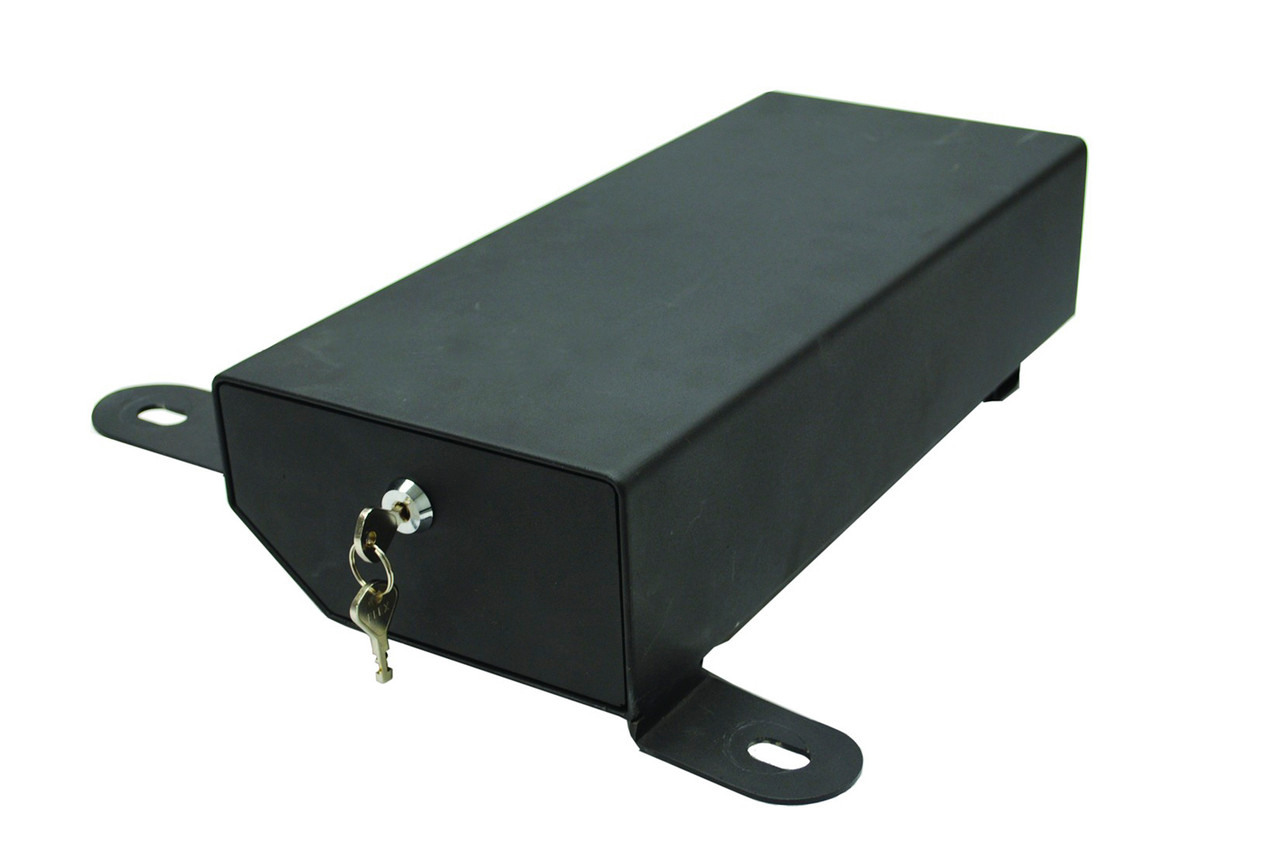
- Use lockable in-vehicle storage. Products like Tuffy security boxes bolt inside your Jeep and give you a locked compartment that stays even when the top is down or off.
- Remove or hide electronics, bags, and gear before parking in public areas.
- Consider your parking environment. A soft top in a well-lit, high-traffic area is at very low risk.
Many long-time soft top owners report that the freedom and lifestyle benefits far outweigh the minor shift in how they think about what they leave in the vehicle. It becomes a habit quickly, and most will tell you they have never had an issue.
Your Next Step
Every Jeep deserves the right top that matches your identity, and the right soft top solution depends on your vehicle, your lifestyle, and how you want to experience the road ahead. Whether you are replacing worn fabric, converting from a hardtop for the first time, or upgrading to the convenience of powered operation, the answers above should give you the confidence to move forward.
Ready to find the perfect fit? Select Your Vehicle to browse soft tops, accessories, and care products matched to your exact Jeep year and model.
Frequently Asked Questions About Jeep Soft Tops
Here are quick answers to the most common questions Jeep owners ask about soft tops, from weather performance to daily care.
Are Jeep Soft Tops Waterproof?
Yes. A properly installed Bestop soft top is fully waterproof. Multi-layer premium fabrics, heat-sealed seams, and precision-fit sealing channels keep water out of the cabin. The most common cause of moisture is not the top itself but debris in the sealing channels or worn seals, both of which are easy to maintain.
How Long Do Jeep Soft Tops Last?
A standard soft top lasts three to five years with normal use. Premium materials like Bestop’s 30oz Black Twill can last well beyond five years when maintained with regular cleaning and protectant application every 30 to 90 days. Climate, UV exposure, and storage conditions also affect lifespan.
Can You Drive a Soft Top Jeep in Winter?
Absolutely. Bestop soft tops are four-season gear, engineered and tested for rain, snow, slush, and freeze-thaw cycles. Multi-layer fabrics retain heat effectively, and tight sealing systems minimize cold air drafts. Thousands of owners run soft tops year-round in harsh winter climates.
Can You Take a Jeep Soft Top Through a Car Wash?
Use touchless (no-contact) car washes only. Never take a soft top through a wash with spinning brushes or cloth strips. Brushes can scuff the fabric surface, scratch vinyl windows, and grind dirt into the material. Hand washing with a soft bristle brush and dedicated cleaner is always the safest option.
How Do You Clean a Jeep Soft Top?
Rinse with cool water to remove loose dirt, apply a dedicated soft top cleaner with a soft bristle brush, rinse thoroughly, and air dry. Clean windows separately with a vinyl-specific cleaner. Lubricate zippers regularly and apply fabric protectant every 30 to 90 days to maintain UV resistance and water repellency.
What Is the Best Jeep Soft Top Material?
Premium Black Twill (30oz) is the highest-performing option, delivering the longest lifespan, quietest ride, and strongest weather resistance. Sailcloth offers proven, factory-equivalent performance at a lower price. Black Diamond vinyl is the most affordable but has a shorter expected lifespan, especially in high-UV environments.
How Much Does a Jeep Soft Top Replacement Cost?
Pricing ranges from a few hundred dollars for a fabric-only Replace-A-Top kit (using existing hardware) to over two thousand dollars for premium powered tops like the Bestop eTop. Complete kits with new hardware fall in the mid-range. Factor in total cost of ownership, as premium materials last longer and cost less per year.
Is It Hard to Install a Jeep Soft Top?
A fabric-only replacement on existing hardware is a straightforward project most owners complete in one to two hours. A full changeover from a hardtop takes longer but requires no drilling on Bestop products. Install above 72 degrees F for the best fabric fit, and watch the model-specific installation video before starting.
What Is the Difference Between a Soft Top and a Hardtop?
A soft top is a removable fabric roof system that folds, slides, or lifts off for open-air driving. A hardtop is a rigid fiberglass roof that provides slightly better noise insulation and security but requires a hoist or help to remove. Soft tops offer more versatility, weigh less, and cost less than hardtops.
Is a Soft Top Jeep Secure?
A soft top is not designed as a physical security barrier, and fabric can be cut. The most effective security approach is eliminating the incentive: keep valuables out of sight, use lockable in-vehicle storage like Tuffy boxes, and remove electronics before parking in public areas. Most long-time soft top owners report zero issues.
What Are the Different Types of Jeep Soft Tops?
Jeep soft tops fall into four categories. Squareback (factory-style) tops like the Bestop Supertop family offer a traditional roofline. Slantback (fastback) tops like the Trektop family provide a sportier profile. Bikini and halftops give partial shade for open-air driving. Powered tops like the Bestop eTop offer one-touch operation.
How Do I Know Which Soft Top Fits My Jeep?
Soft tops are built for specific Jeep platforms: JL (2018+), JK (2007-2018), TJ (1997-2006), and YJ (1987-1995). Start by identifying your model year and generation, then check whether your existing hardware is compatible. Use the Year/Make/Model fitment tool in the bestop.com navigation to confirm exactly which tops fit your vehicle, or contact customer service for help.