











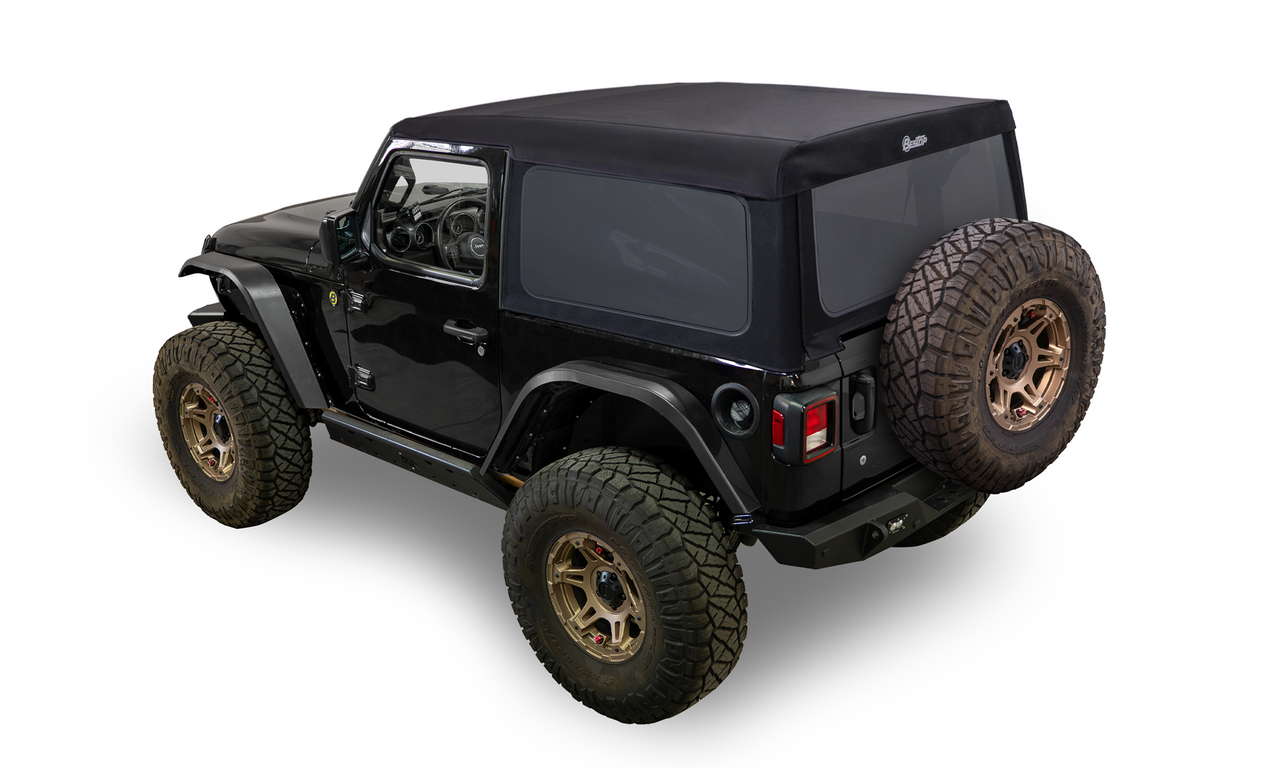


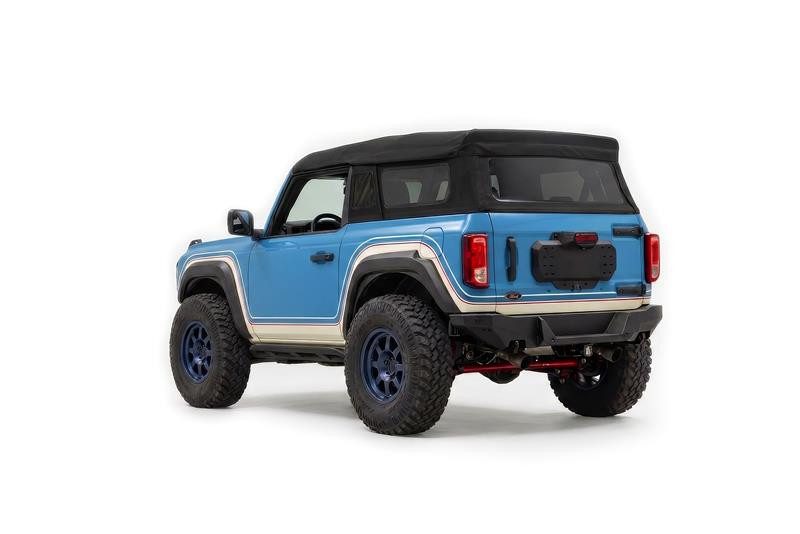
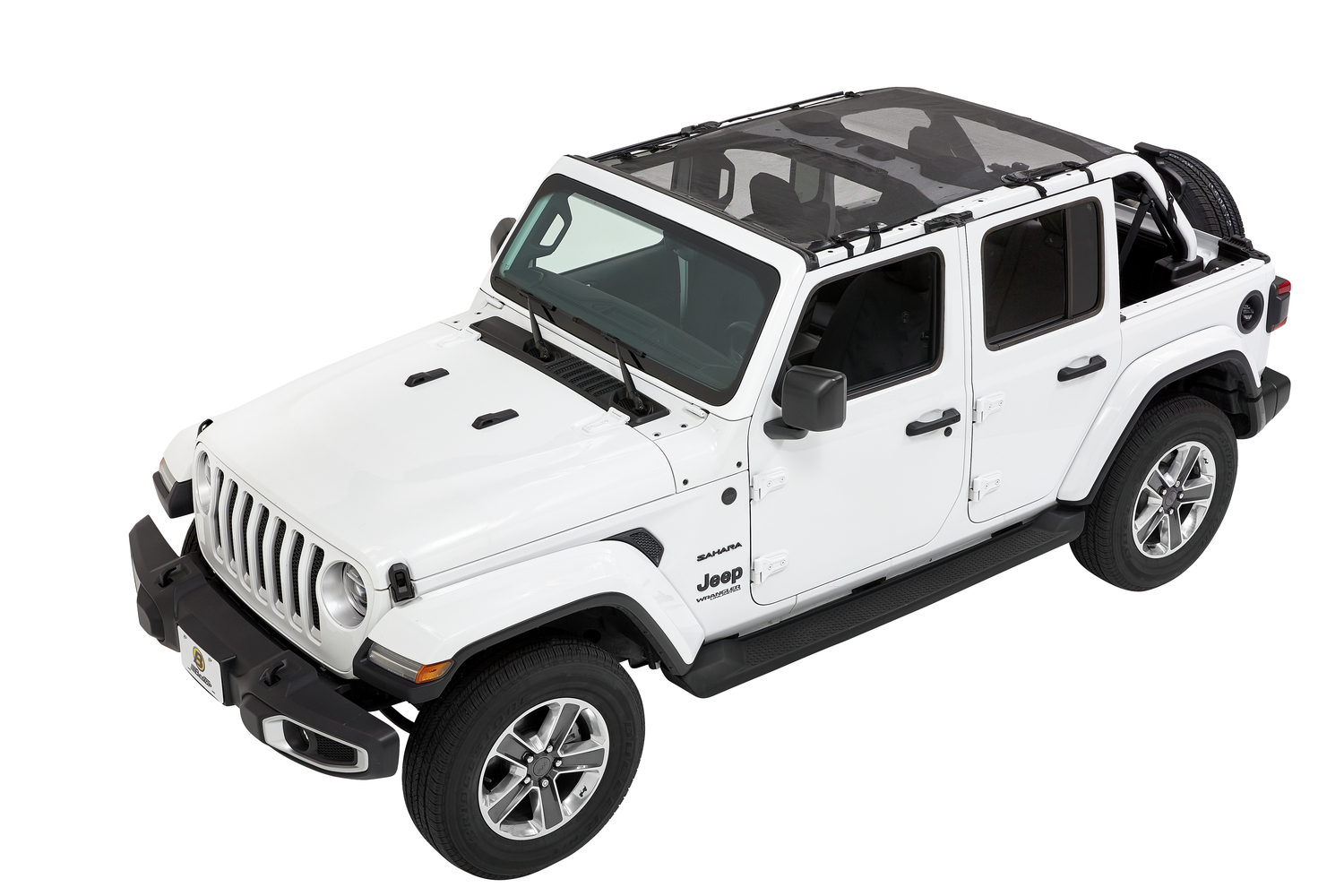
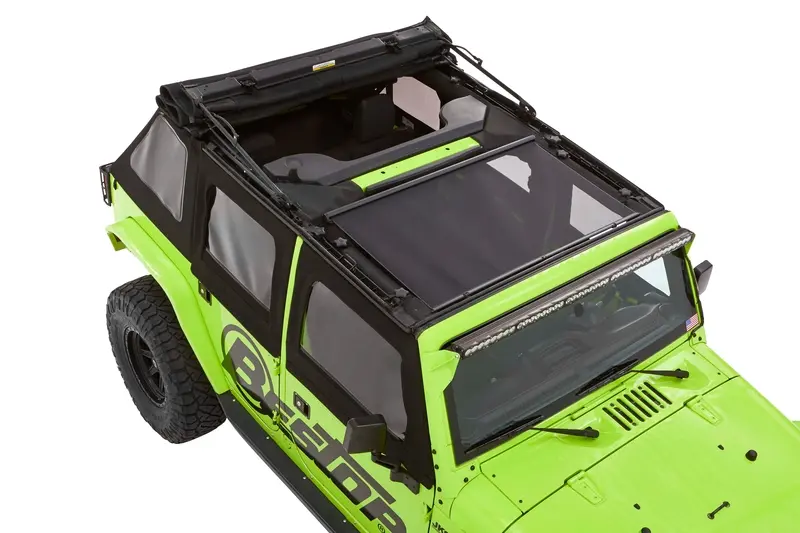










Key Takeaways
- A basic vinyl soft top typically lasts 3 to 5 years, while a premium sailcloth or twill top can last 5 to 10+ years with proper care.
- The most common signs it is time to replace: fading, new gaps or leaks, fabric tears, and cloudy or degraded windows.
- Regular cleaning and UV protectant application every 4 to 6 months can significantly extend your soft top’s lifespan.
- You do not always need a full soft top replacement. Bestop’s Replace-A-Top lets you install new fabric and windows on your existing hardware.
There is nothing quite like dropping the top on your Jeep and letting the open air in. Morning commutes feel more free. Weekend trails feel more scenic. Even a quick run to the store becomes a small escape. But if you have been wondering how long does a Jeep or Ford Bronco soft top last, you are asking the right question, because your open-air freedom depends on the fabric over your head holding up to everything life and weather throw at it.
As the only aftermarket brand trusted as Jeep’s OEM soft top supplier, with more than 70 years of experience designing, testing, and manufacturing soft tops, Bestop understands exactly what determines a soft top’s lifespan. This guide breaks down realistic timelines, the factors that impact wear, the warning signs to watch for, and how to get the most life out of your investment.
How Long Does a Soft Top Last?

The short answer: it depends on the material, your climate, and how well you take care of your soft top. A soft top’s longevity starts with what it is made of. Entry-level vinyl offers solid protection and the most affordable path to open-air freedom, while premium twill delivers the best UV resistance, noise reduction, and long-term durability in the category.
Most Bestop soft tops are built with one of three primary materials:
| Material | Expected Lifespan | Notes |
|---|---|---|
| Vinyl (Black Diamond) | 3 to 5 years | Most affordable option, adequate UV resistance |
| Sailcloth | 5 to 7 years | Better UV and abrasion resistance, softer feel |
| Premium Twill | 7 to 10+ years | Best durability, UV resistance, quietest ride |
Bestop uses all three materials across its soft top lineup, so the right choice depends on how you drive, where you live, and how long you plan to keep your Jeep. If you want a more detailed side-by-side look at how these materials and top styles compare, Bestop’s soft top comparison page is a great starting point.
What Affects Your Soft Top’s Lifespan?
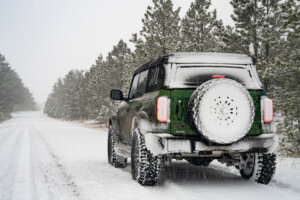
Every soft top faces the same basic contributing factors: sun, moisture, temperature swings, and everyday wear. Understanding what accelerates aging helps you take the right steps to slow it down.
Material Quality
Not all soft top fabrics are created equal. Premium materials from manufacturers like Bestop use multi-layer construction that makes for a higher quality fit, resists UV degradation, repels moisture more effectively, and holds color longer than single-layer alternatives. The difference between a bargain-brand top and one engineered to OEM specifications becomes obvious after the first year or two of real-world use.
Investing in a quality soft top up front typically means fewer replacements over the life of your Jeep. Browse Bestop’s full range of Jeep soft tops to see how material and construction vary across the lineup.
Climate and UV Exposure
The sun is the number one enemy of any soft top. Ultraviolet radiation breaks down fabric fibers over time, causing fading, stiffening, and eventual cracking. If you live in the Sun Belt or park outdoors daily, your top will age faster than one that spends most of its time in a garage.
Here is what to keep in mind by season:
- Summer heat: Accelerates fading and makes fabric brittle over time. Dark-colored tops absorb more heat and can deteriorate faster without UV protectant.
- Winter cold: Never fold or operate your soft top when temperatures drop below 60 degrees Fahrenheit. Cold fabric loses flexibility and can crack at fold points and seams.
- Humidity and rain: Persistent moisture promotes mold and mildew growth, especially if the top stays damp for extended periods without airflow.
Usage Patterns
How you use your soft top matters just as much as where you park it.
- Year-round outdoor exposure shortens a top’s useful life compared to garage storage, even in moderate climates.
- Frequent folding and unfolding creates wear at stress points, particularly at fold lines, along zipper tracks, and where fabric meets the frame.
- Trail driving introduces scratches, abrasion, and potential punctures from branches, brush, and trail debris.
None of this means you should baby your soft top. It is built for this. But understanding where wear happens helps you focus your maintenance where it counts.
Maintenance and Care
This is the single biggest factor you can actually control. A soft top that gets regular cleaning and protection will outlast a neglected one by years.
- Clean regularly: Wash your soft top with a dedicated soft top cleaner every 2 to 4 weeks during heavy use. This removes embedded dirt, pollen, and bird droppings before they can break down the fabric.
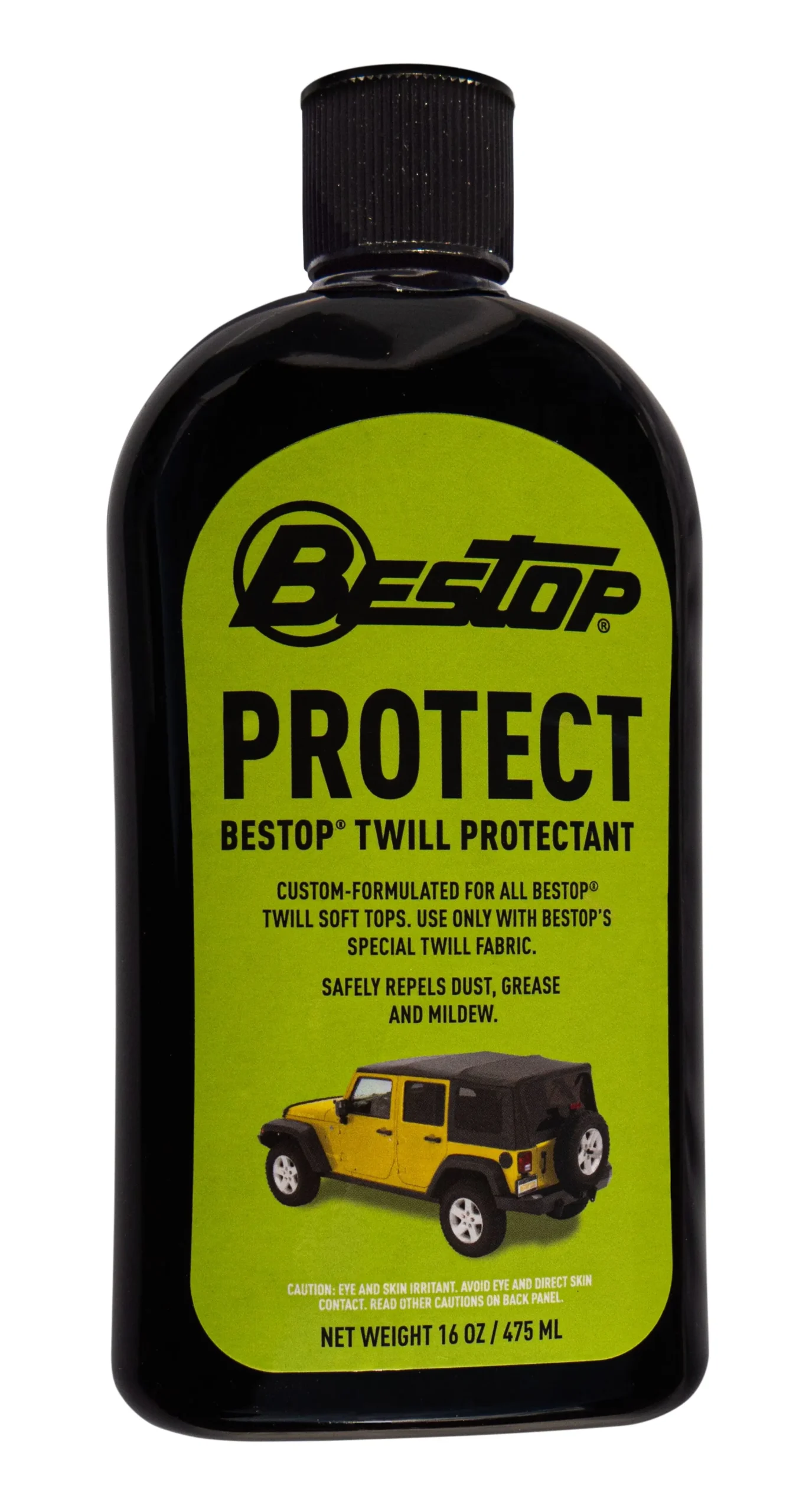
- Apply UV protectant: Every 4 to 6 months, apply a UV protectant formulated for your top’s specific material. This is the most effective way to slow fading and maintain fabric integrity.
- Do not ignore the windows: Vinyl windows need their own care routine to prevent yellowing and cloudiness.
- Storage matters: Most soft tops can be considered all season, permanent replacements for hard tops. However some drivers do choose to uninstall and reinstall their soft top seasonally. This practice does add additional wear and tear and introduces new potential hazards and risk to warranty coverage.
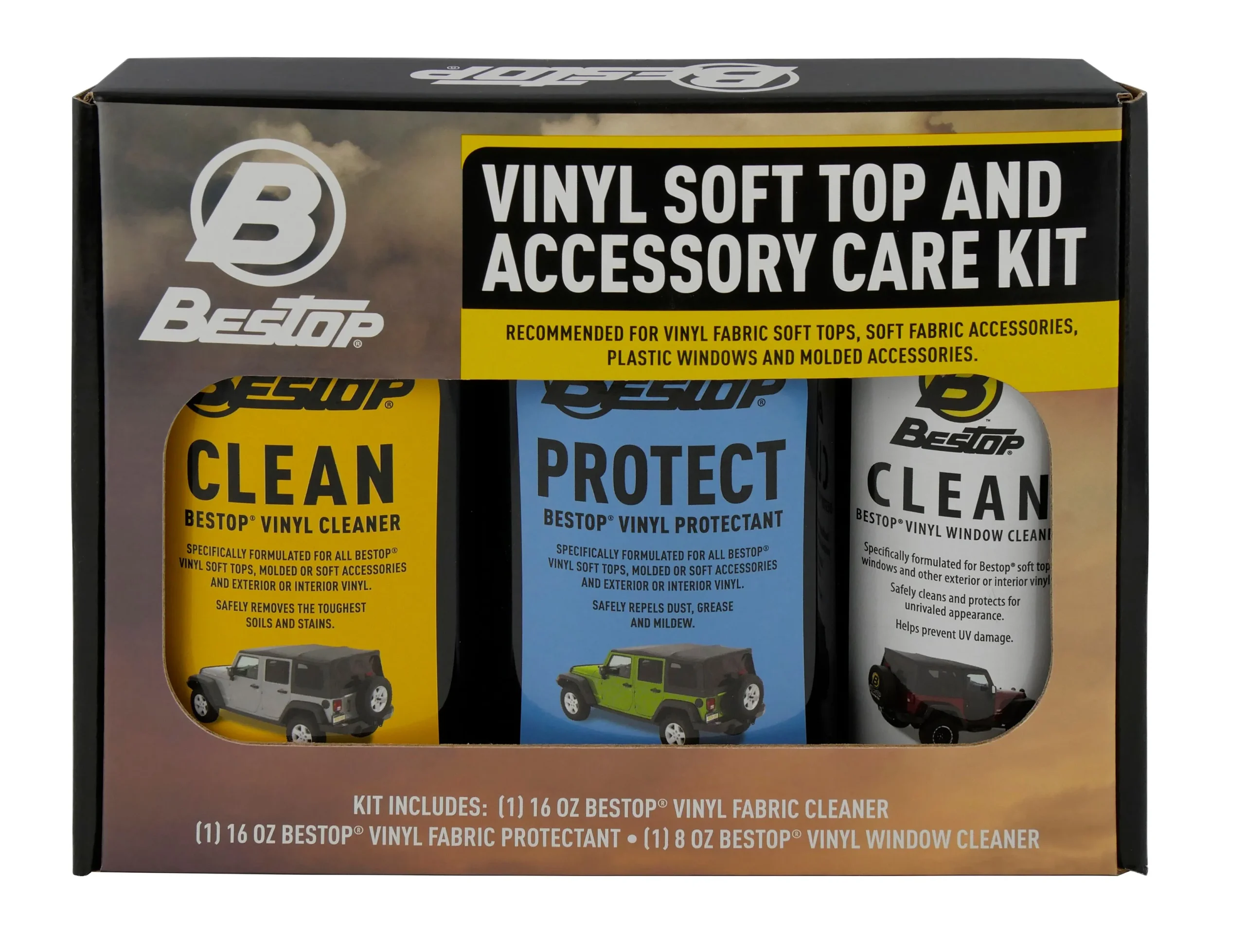
Bestop’s soft top cleaners and protectants are purpose-formulated for the specific fabrics and vinyl Bestop builds with, so they will not damage coatings or leave residue that accelerates wear.
For a more detailed maintenance walkthrough, check out Bestop’s soft top care guide.
7 Signs It’s Time to Replace Your Soft Top For Your Jeep or Ford Bronco
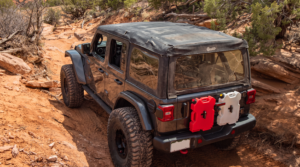
Even with great care, every soft top eventually reaches the end of its useful life. Here are the signs that tell you it is time.
- Fading and discoloration that will not respond to cleaning or protectant. When the color has changed permanently and cleaning products no longer restore it, the fabric’s UV-resistant coatings have broken down beyond recovery. This is usually the first visible sign of aging.
- Cracks, tears, or holes in the fabric. Pay special attention to corners, fold lines, and areas where the fabric wraps around the frame. Small tears grow quickly once the fabric’s structural integrity is compromised, especially at high-stress points.
- Window shrinkage, yellowing, or cloudiness. Vinyl windows degrade independently from the top fabric. Shrinkage can pull windows away from their frames, and yellowing reduces visibility. Once windows have significantly yellowed or warped, replacement is the only fix.
- Persistent leaks even after resealing seams and adjusting fit. A well-fitted soft top should keep you dry. If water is getting in despite proper sealing and correct installation, the fabric or its seams may have deteriorated past the point of repair.
- Mold or mildew that returns after thorough cleaning. Surface mold can usually be cleaned. But if mildew keeps coming back even after deep cleaning, it has penetrated the fabric layers. At that point, the top is compromised and replacement is the healthier, more practical option.
- Worn or failing zippers and hook-and-loop fasteners. When zippers stick, skip teeth, or separate, and when hook-and-loop strips no longer hold firmly, the top cannot seal properly. Zipper failure alone can make a top functionally unusable.
- The top no longer fits snugly. If you notice gaps at the frame, windshield header, or door surrounds that were not there before, the fabric has stretched or the seals have compressed beyond their limits. Gaps let in wind, water, and road noise, defeating the purpose of having a top at all.
If you are experiencing two or more of these signs, it is likely time to start shopping for a replacement rather than continuing to patch an aging top.
How to Make Your Soft Top Last Longer
The good news: a consistent care routine can add years to your soft top’s lifespan. Cleaner and protectant has been specifically tested and created to improve the longevity and look of your soft top. Here is what works.
- Wash with a dedicated soft top cleaner every 2 to 4 weeks during active use seasons. Household cleaners and dish soap can strip protective coatings and accelerate wear.
- Apply UV protectant every 4 to 6 months. Bestop Protectant is specifically formulated for Bestop fabrics, and using the right protectant is one of the most impactful things you can do for longevity. The Bestop Cleaner/Protectant Pack includes everything you need in one kit.
- Park in shade or use a car cover when possible. Reducing direct sun exposure between drives is free protection that adds up over months and years.
- Avoid folding the top below 60 degrees Fahrenheit. Cold vinyl and fabric lose flexibility and can crack at fold points. Wait for warmer conditions, or leave the top up during cold months.
- Lubricate zippers with a silicone-based lubricant a few times per year to prevent sticking, binding, and premature wear.
- Store the top properly if removing for the season. Roll rather than fold when possible, store in a cool and dry location, and avoid stacking heavy items on top of it.
For a visual walkthrough of proper cleaning and protection techniques, watch Bestop’s guide on soft top care:
Replacing Your Soft Top: Full System vs. Fabric Only
When it is time for a new top, you have two main paths, and the right one depends on the condition of your existing hardware.
Full replacement means a new frame, bows, and fabric. This is the way to go if your frame is bent, rusted, or damaged, or if you are switching to a completely different top style.
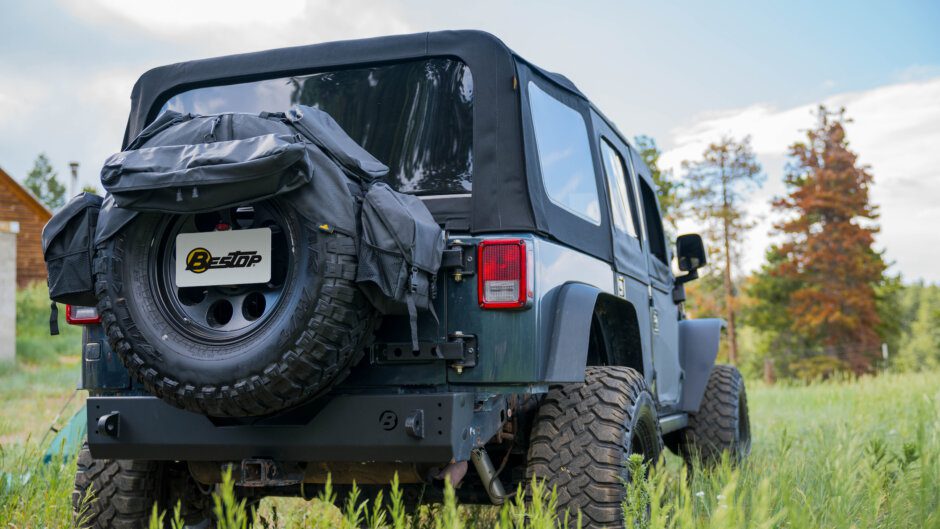
Fabric-only replacement is where Bestop’s Replace-A-Top comes in. If your existing OEM or Bestop frame and bows are still in good shape, Replace-A-Top gives you brand-new fabric, windows, and seals without buying a complete system. It is the most cost-effective path to a top that looks and performs like new. Check out Replace-A-Top to see options available, and browse the full selection of replacement soft tops to compare.
If you own a hardtop and have been curious about open-air driving without committing to a full soft top, the Sunrider for Hardtop is worth a look. It replaces your factory Freedom Panels with a soft panel that flips back in seconds, giving you instant open-air access with no removal, no storage, and no tools after a single install.
Whichever direction you go, use the YMM (Year/Make/Model) fitment tool on any Bestop product page to confirm the exact fit for your specific vehicle before purchasing.
Choosing the Right Replacement Soft Top for Your Jeep or Bronco
Bestop’s lineup covers every style of open-air driving, so finding the right fit comes down to how you want your Jeep to look, how you want to interact with your top, and what hardware you already have.
- Replace-A-Top: New fabric and windows that work with your existing OEM or Bestop hardware. The most affordable path to a fresh, leak-free top when your frame is still solid.
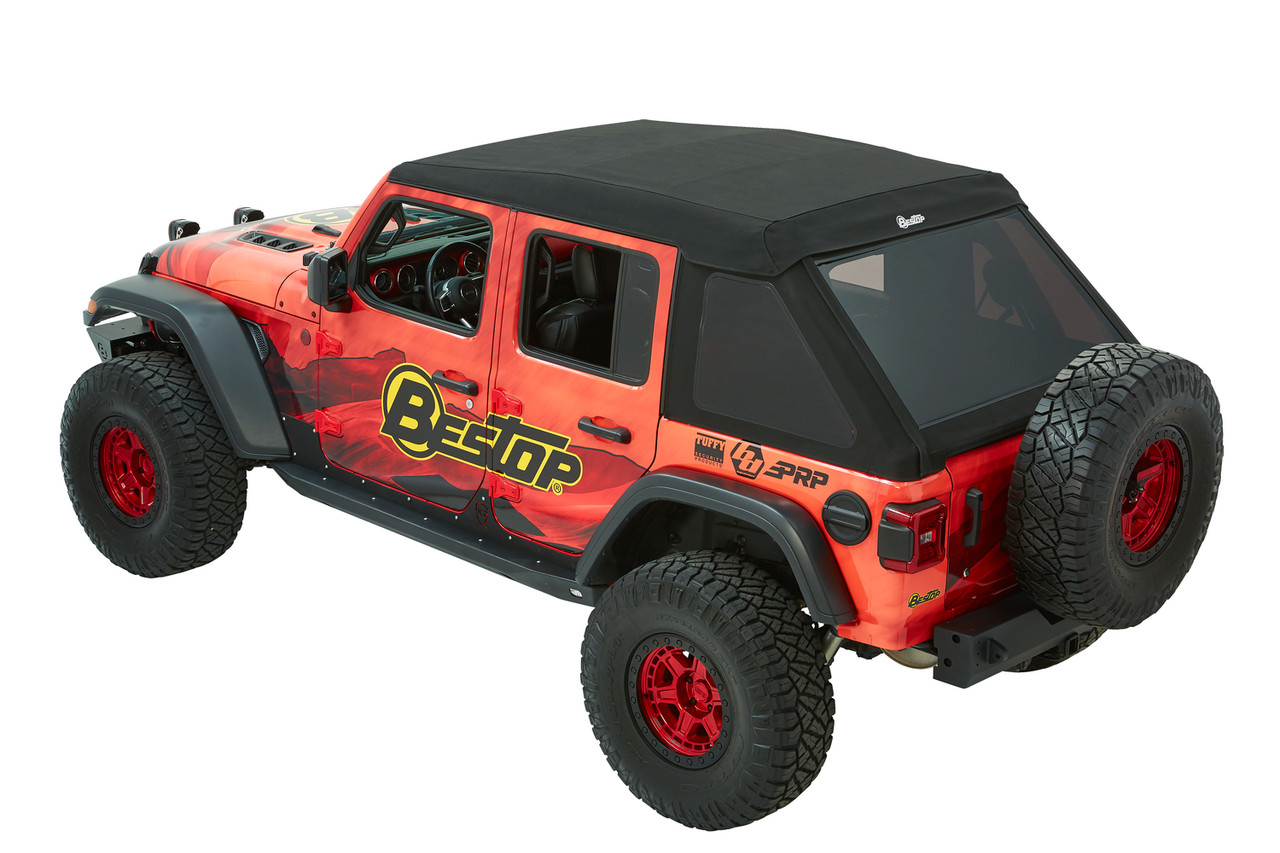
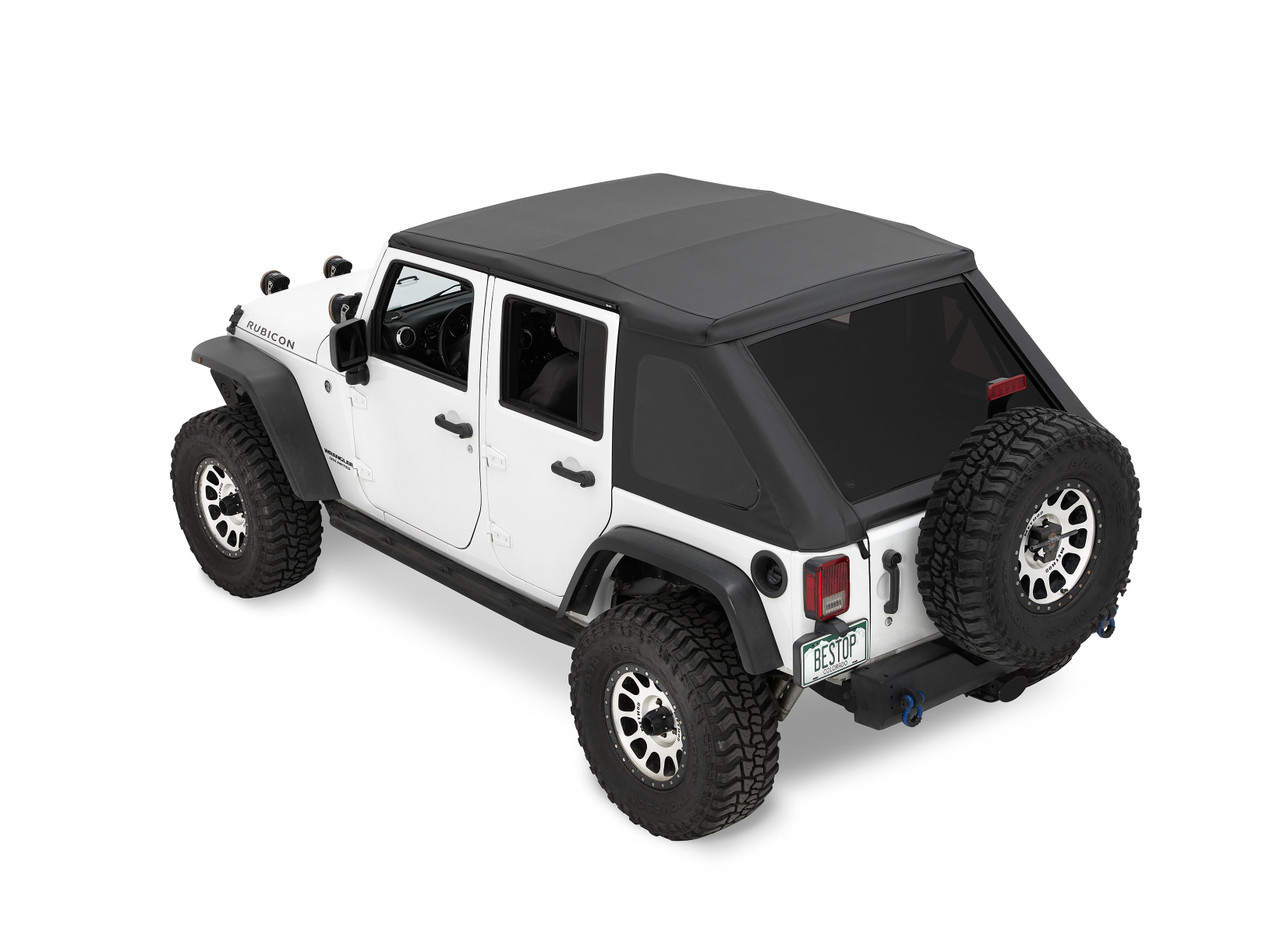
- Supertop family: The classic framed squareback design Bestop has built since 1954. The frame folds back and stays on the vehicle, giving you the fastest path from fully enclosed to completely topless. Available in NX, Glide, and Ultra variants.
- Trektop family: A modern frameless fastback silhouette with no visible frame bars over occupants, cleaner sightlines, and integrated Sunrider access on every variant. Available in NX, NX Glide, Pro Hybrid, and Ultra variants.
- Sunrider for Hardtop: Replaces factory Freedom Panels on JK, JL, Bronco, and Gladiator hardtops with a flip-back soft panel for everyday open-air freedom, no full soft top conversion required.
- eTop: The world’s only aftermarket powered soft top. One touch opens or closes it, with no latches, no panel removal, and no planning. Available for Jeep JL, JK, and Ford Bronco.
With this many options, the best way to narrow things down is to use the YMM fitment tool on Bestop’s site. It filters the lineup to show only the tops confirmed to fit your specific year, make, and model, so there are no surprises.
Check out the eTop to see Bestop’s flagship in action, or start with the soft top comparison page to explore how each style stacks up.
Your soft top is what makes open-air freedom possible on every drive, not just the ones you plan for. Whether you are extending the life of the top you have or choosing a replacement that matches how you actually drive, Bestop’s lineup has you covered. Explore the soft top comparison to find the right fit, or browse the full lineup to see every option available for your vehicle.
Frequently Asked Questions About Soft Top Lifespan
These are the most common questions Jeep or Bronco owners ask about soft top durability, replacement timing, and care.
How Long Does a Soft Top Last?
A standard vinyl soft top typically lasts 3 to 5 years with regular use. Premium soft tops made from sailcloth or twill fabric can last 5 to 10 years or longer with proper care, including regular cleaning and UV protectant application every 4 to 6 months.
What Are the Signs You Need to Replace Your Soft Top?
The most common signs include permanent fading or discoloration, cracks or tears in the fabric, window shrinkage or yellowing, persistent leaks that will not stop despite resealing, and mold that returns after cleaning. If you notice two or more of these, it is time to shop for a replacement.
Can You Repair a Soft Top Instead of Replacing It?
Minor tears and small holes can sometimes be patched with a fabric repair kit, and failing seals can be reseated. However, once UV damage has broken down the fabric coating, or once windows have significantly yellowed or shrunk, repair is no longer practical and full fabric replacement is the better option.
How Much Does It Cost to Replace a Soft Top?
Costs vary depending on the type of replacement. A fabric-only option like Bestop’s Replace-A-Top, which uses your existing hardware, typically starts around $215. A full soft top system with new hardware ranges from $700 to over $1,000 depending on the style and material.
Do You Need to Replace the Entire Soft Top System, or Just the Fabric?
If your frame, bows, and hardware are still in good condition, you can replace just the fabric and windows using a product like Bestop’s Replace-A-Top. This is the most cost-effective path to a top that looks and performs like new without buying a complete system.
How Do You Make a Soft Top Last Longer?
Regular maintenance is the most effective way to extend your soft top’s life. Wash it every 2 to 4 weeks with a dedicated soft top cleaner, apply UV protectant every 4 to 6 months, avoid folding the top below 60 degrees Fahrenheit, and park in shade when possible.
Is a Soft Top or Hard Top Better?
Each has advantages. Soft tops offer easier open-air access, lighter weight, and lower cost. Factory hard tops offer a durable, rigid, fixed roof structure, integrated glass windows, and a traditional factory-style look. Some owners will choose to switch between the two seasonally or use a Sunrider for Hardtop to get open-air access from their existing hardtop.
What Causes a Soft Top to Wear Out Faster?
The biggest factors are prolonged UV exposure, neglecting regular cleaning, operating or folding the top in cold temperatures, or using household cleaners instead of cleaner and protectant products formulated specifically for soft top materials. Climate, frequency of use, and storage habits also play significant roles.