























Key Takeaways
- The Jeep soft top vs hardtop choice comes down to how often you want open air, since soft tops bring the sky on short notice and hardtops bring a quieter, insulated cabin.
- Hardtop owners can still enjoy open-air driving, because Sunrider for Hardtop replaces the front Freedom Panels on JK, JL and Gladiator factory hardtops with a fabric panel that flips back.
- Soft top cabin sound depends on the fabric you pick, and Premium Twill is the quietest of the three Bestop materials, followed by Sailcloth and then Black Diamond vinyl.
- You can convert a hardtop Wrangler to a soft top by installing a full soft top with its hardware, and most Bestop soft tops install with no drilling.
The Jeep soft top vs hardtop question comes down to how you want to live with your Wrangler. If you crave sun on the commute and sky on a whim, a soft top makes open air part of every day. If you want a hushed, insulated cabin all year, a hardtop fits that rhythm.
Both roofs belong on a Wrangler, and plenty of owners end up enjoying both. This guide walks through daily life with each for JL, JK and TJ owners, plus Gladiator drivers where it applies.
Bestop has been the sole OEM soft top supplier to Jeep since 1986, so roofs are what we think about all day. When you’re ready to compare tops, the full range of Bestop soft tops is a good place to start.
Jeep Soft Top vs Hardtop at a Glance
A soft top suits drivers who want open air on short notice, with a fabric roof that folds back or comes off. A hardtop suits drivers who want a quieter, insulated cabin with glass windows and rear defrost. Each roof shapes a different driving style, so the table below lays out how daily life looks with each on a Jeep Wrangler.
Here’s the Jeep Wrangler soft top vs hard top picture, side by side:
| Category | Open-Air Driving Style (Soft Top) | Closed-Cabin Driving Style (Hardtop) |
|---|---|---|
| Open-air access | Fold the top back, take it off, or open a Sunrider-style front section on many tops | Remove the front Freedom Panels, or lift the full hardtop off for topless days |
| Taking it off | Supertop frames fold back and stay attached, and one person can fold one down | Weighs well over 100 pounds and typically needs two people or a hoist |
| Storage | Supertop frames stay on the Jeep when folded; the base Trektop comes off for fully topless driving | Needs garage or storage space when the top is off |
| Cabin sound | Varies by fabric, with Premium Twill the quietest; the JL eTop headliner cuts noise up to 5 dB | Quieter and more insulated |
| Seasons | Year-round use with a fabric matched to your climate | Glass windows and rear defrost for cold, wet months |
| Roof-mounted gear | Plan gear around a fabric roof that folds or comes off | Rigid shell; confirm roof gear against the hardtop and rack instructions |
| Starting price | Full Bestop soft tops from $999.99; Sunrider for Hardtop from $799.99 | Factory option priced by Jeep |
What Life with a Jeep Hardtop Looks Like
Life with a Jeep hardtop centers on a solid, quiet cabin that feels the same in July and January. Glass windows, rear defrost and extra insulation make it a comfortable daily driver in every season. Open-air days take a little more planning, because the full top is heavy and needs a place to live when it comes off.
Year-Round Cabin Comfort
A hardtop gives your Wrangler a quieter, more insulated cabin, which many drivers love on long highway stretches and cold mornings. Glass windows stay clear, and rear defrost handles frost and fog. For drivers who spend most of the year buttoned up, that steady comfort is the whole appeal. It pairs well with a commute in changing weather.
Bestop builds for hardtop owners too. From flip-back panels to lifting and storage tools, the goal is to make every roof on a Wrangler feel more open.
The Disadvantages of a Hardtop
The main disadvantages of a hardtop involve weight and space. A Jeep hardtop weighs well over 100 pounds, so removal typically takes two people or a hoist or removal tool. Once it’s off, it needs room in a garage or storage area. That means fully topless days usually take some planning ahead of time.
The right gear makes the swap far more manageable. Bestop’s hardtop removal and storage tools include the TopLift PRO v2.0, the LIFTnGO, and the HOSS hoist for JL hardtops. Each one helps you lift, move and store the top with less strain.
What Life with a Jeep Soft Top Looks Like
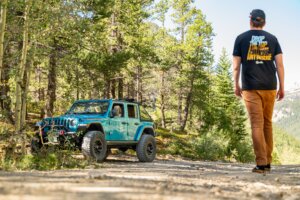
Life with a Jeep soft top means open air is always a few moments away. Fold the top back for a sunset drive, or open the front for a lunch run. Take it off for a full weekend on the trail. The fabric you choose then shapes how the cabin sounds and how the top handles your seasons.
Open Air Whenever You Want It
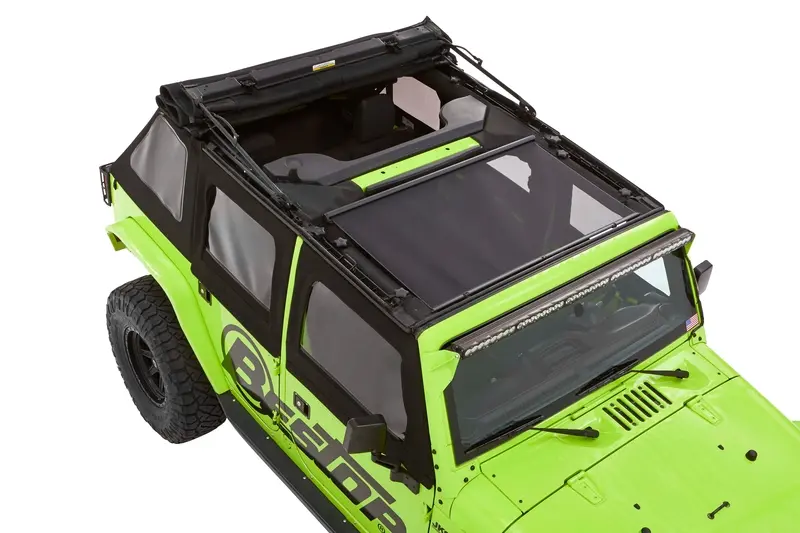
A soft top turns ordinary drives into small escapes. Errands, school pickups and backroad detours all get a little brighter when the sky is part of the ride. Framed tops like the Supertop fold back and stay attached, so going topless fits into a regular afternoon. Several Bestop tops also open at the front for a dose of sunshine between stops.
That spontaneity is why so many Wrangler owners pick fabric. The top works around your plans, and the open-air feeling becomes part of your weekly routine.
Is a Jeep Soft Top Louder than a Hardtop?
A Jeep soft top is generally louder than a hardtop, and the gap depends on fabric. Premium Twill, a 30 oz triple-layer fabric with a butyl-rubber core, delivers the lowest noise of Bestop’s three materials. Sailcloth is quieter than vinyl. On the Jeep JL eTop, a neoprene headliner reduces cabin noise by up to 5 dB.
If a calm cabin matters most to you, start with fabric. The soft top material comparison breaks down how each material looks, sounds and performs.
How Long Does a Jeep Soft Top Last?
A Jeep soft top typically lasts five to ten years with care. Climate, sun exposure and how often you fold it all play a role. Regular cleaning, careful window handling and proper storage help a top look and seal well for longer. Fabric choice also matters, so match the material to how and where you drive.
Which Is Better for Winter and Four-Season Driving?
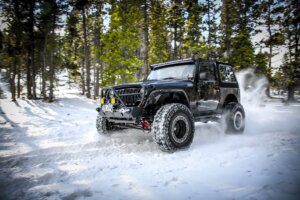
For winter and four-season driving, a hardtop gives you the most insulated cabin, with glass windows and rear defrost built in. A soft top also works year-round when you match the fabric to your climate. Premium Twill offers the best cold-weather flexibility of Bestop’s three materials. That makes it the go-to fabric for drivers who keep their top on through winter.
Many owners in snowy regions settle into a seasonal rhythm. The hardtop goes on for the coldest months, and a soft top comes out when the weather warms. Others run Premium Twill all year and love having open air ready for the first warm weekend.
Can You Have Both? Open-Air Options for Hardtop Owners
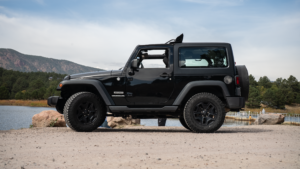
Yes, you can have both. Hardtop owners can add open-air access with Sunrider for Hardtop, which replaces the front Freedom Panels with a fabric panel that flips back. Bikini tops add shade for topless days. Many owners also keep a hardtop for winter and a soft top for warm months, using removal tools to make the switch.
Sunrider for Hardtop
Sunrider for Hardtop brings everyday open air to a factory hardtop. It replaces the front Freedom Panels on JK, JL and Gladiator factory hardtops with a fabric panel that flips back. The rest of the hardtop stays on. The install uses no drilling and takes about 30 minutes, and it starts at $799.99.
Think of Sunrider for Hardtop as the daily-driver companion to your hardtop. It works alongside a full soft top too, so the two fit together in one open-air setup.
Bikini Tops for Topless Days
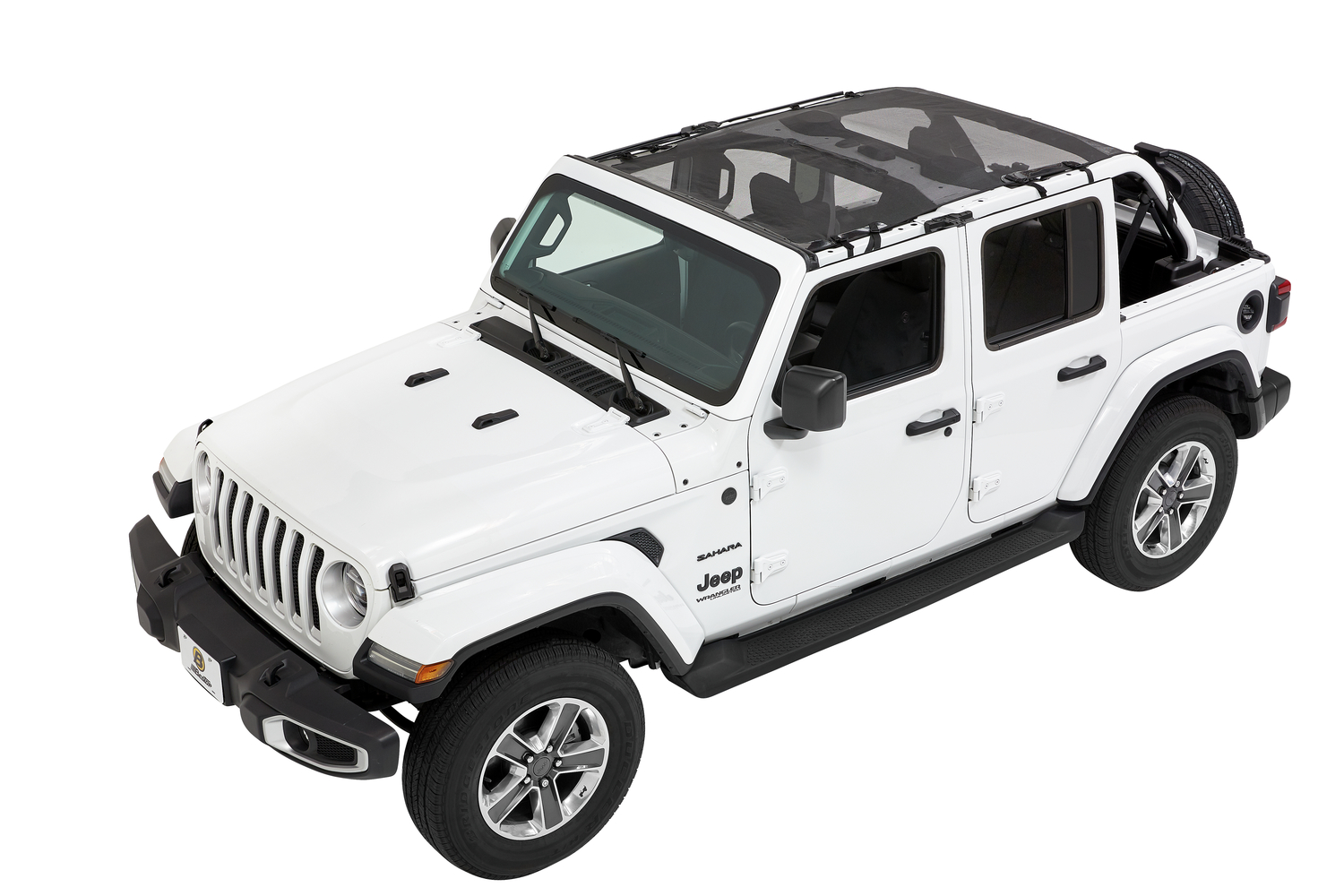
Bikini tops give you shade on topless days so you can stay out in the sun longer. Sun Bikini styles work over an existing top. Traditional, Safari and Targa styles are made for top-off driving. They’re a natural add-on for warm-weather trips.
Browse the full range of Bikini tops to find the style that matches your summer plans.
Switching Between Both Tops
Switching between a hardtop and a soft top lets you enjoy both styles across the year. Because a hardtop weighs well over 100 pounds, most owners use a second person or a hoist to make the change. Plan for garage or storage space for whichever top is off the Jeep, and pick a lifting tool that fits that space.
Bestop’s hardtop storage and removal gear helps you lift the top off and store it until the next season.
Can You Convert a Jeep Hardtop to a Soft Top?
Yes, you can convert a Jeep hardtop to a soft top. A hardtop Wrangler takes a full soft top with its included hardware, and most Bestop soft tops install with no drilling. Fitment varies by model and body style, so confirm your Jeep with the Year/Make/Model fitment tool on any product page before you order.
Many hardtop owners keep the factory top for winter and add a soft top for warm months. That way, the conversion opens up a second driving style while keeping the first one ready on the shelf.
Choosing the Right Soft Top for Your Wrangler
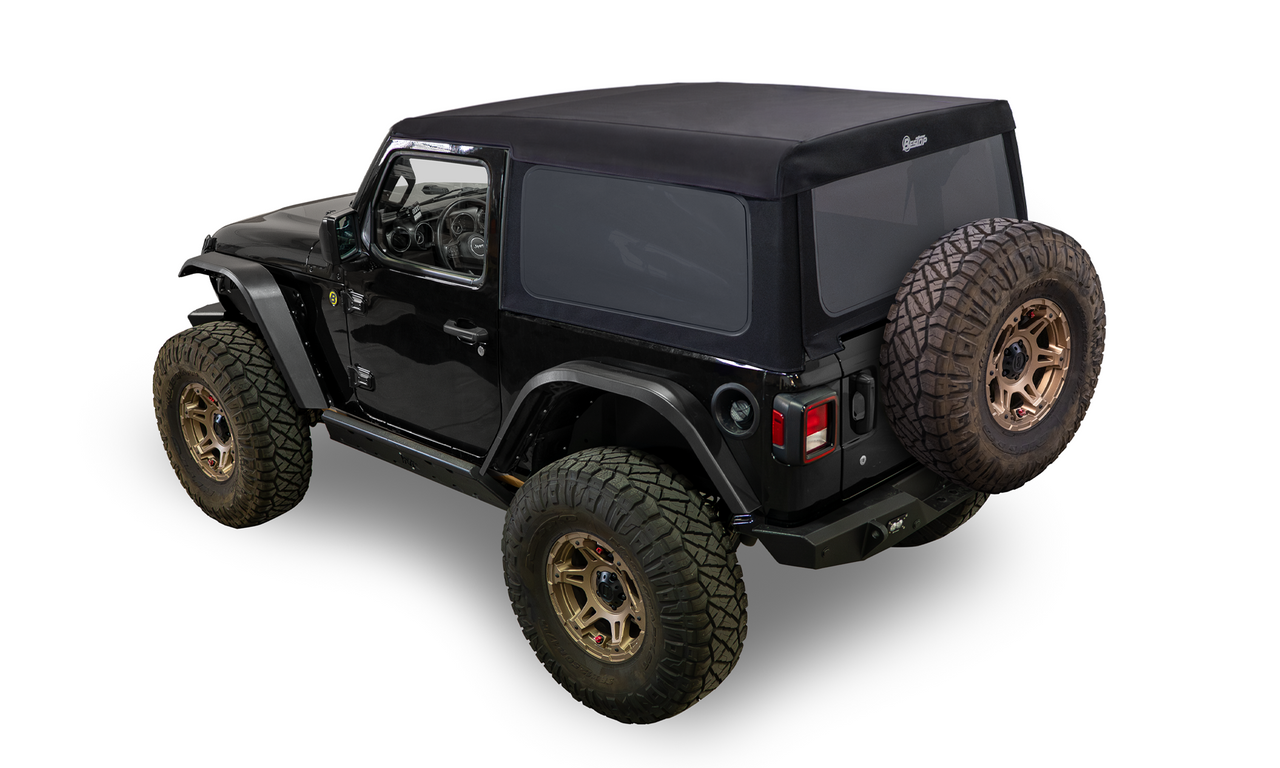
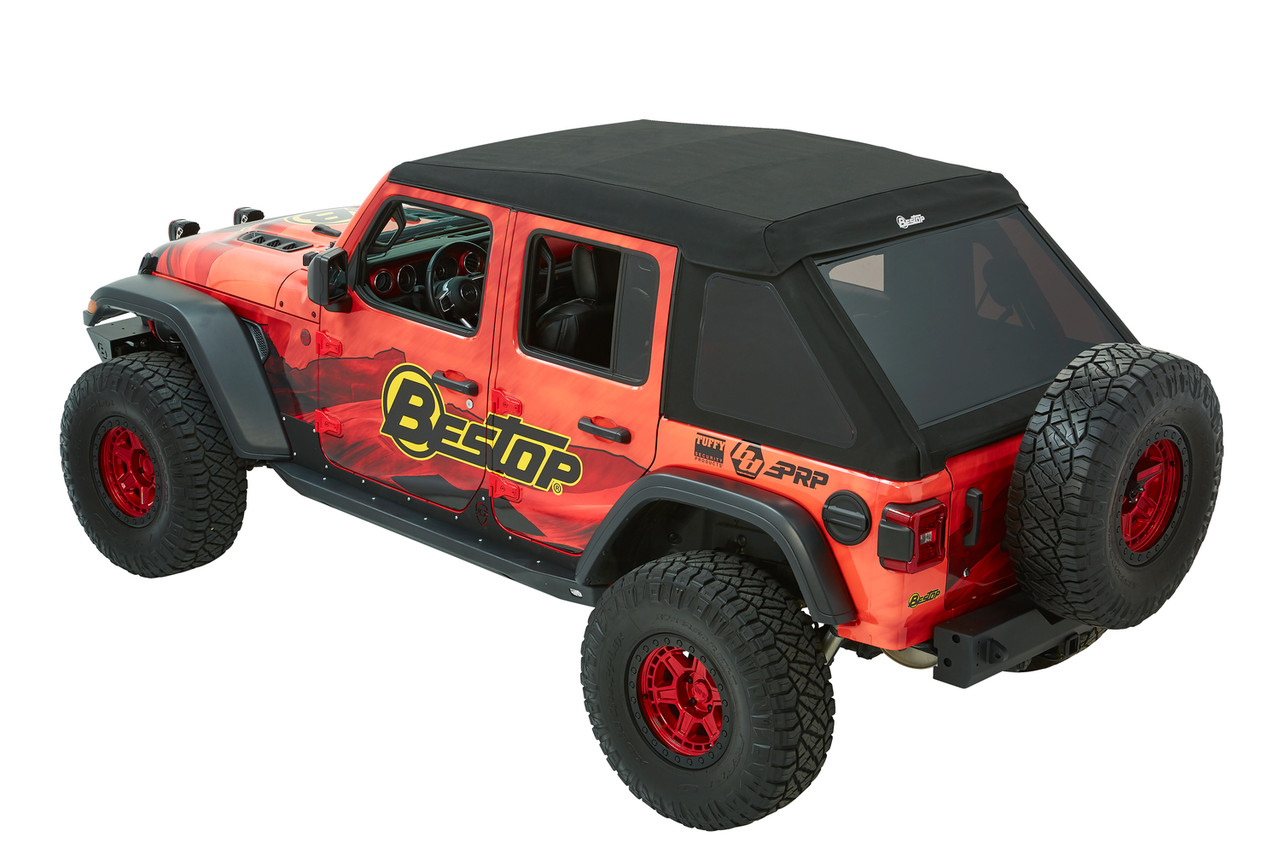
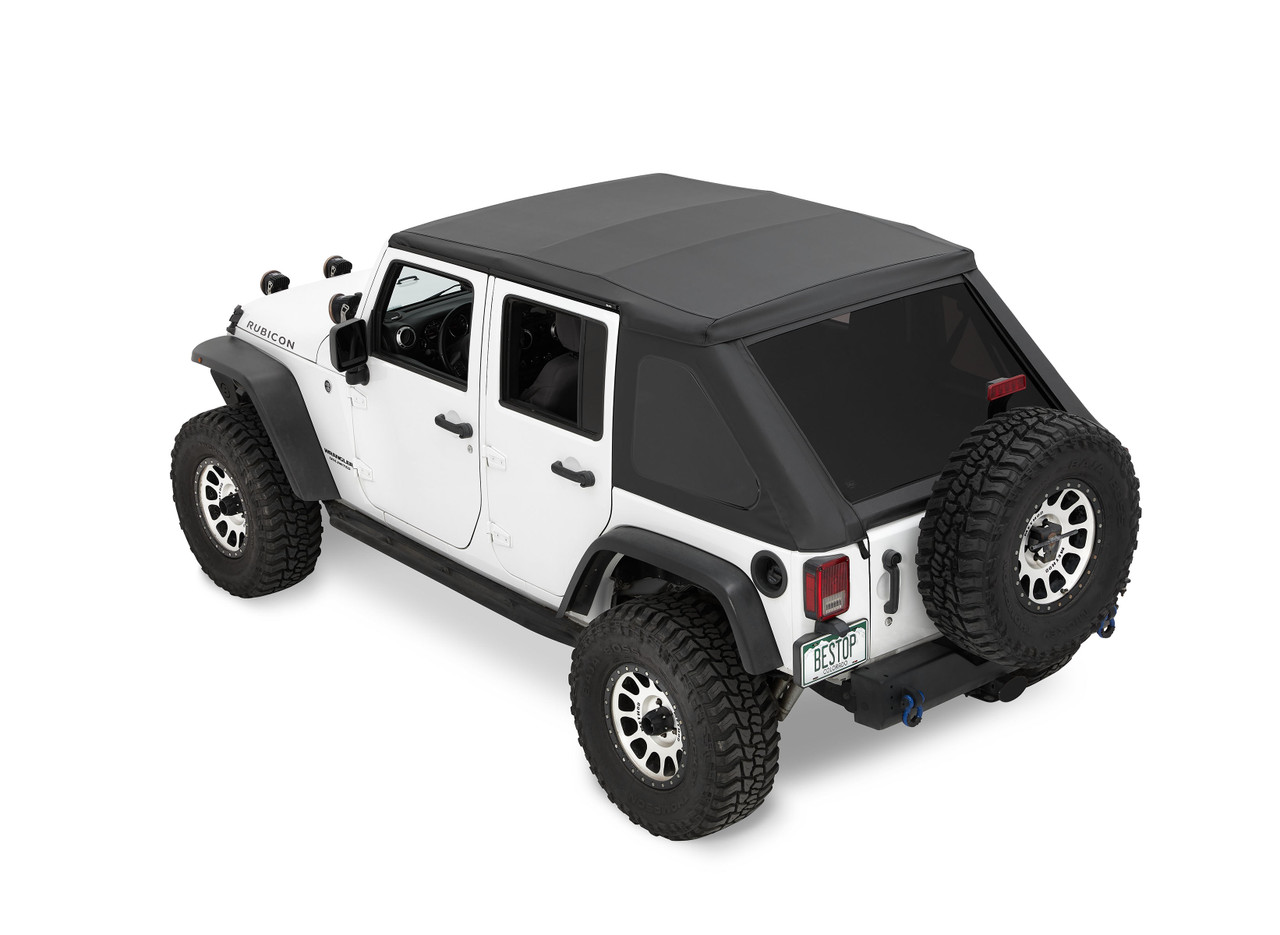
The right soft top for your Wrangler starts with the look and open-air rhythm you want. A slantback gives a modern profile, while a squareback offers the classic Jeep shape and a frame that folds back and stays on. Modular and powered options round out the lineup, so each driving style has a match.
- Trektop family: A slantback from $999.99; versions add a Sunrider-style open front, and the base Trektop comes off to go topless.
- Supertop family: A framed squareback with broad fitment including TJ, from $1,099.99; the frame folds back, stays attached, and one person can fold it down.
- Halftop: A modular three-piece soft top for JK and JL with an integrated Sunrider and zippered rear window, installed with no drilling, from $999.99.
- eTop: The world’s only aftermarket powered soft top, with one-button operation, for JL 2-door and 4-door and JK 4-door models.
Explore the Trektop family if the slantback look speaks to you. Explore the Supertop family if you want that classic squareback shape. The Halftop fits drivers who like mixing and matching sections.
The eTop starts at $4,995 before professional installation, which is a separate cost handled by a certified installer. The Jeep JL version adds a neoprene headliner that reduces cabin noise by up to 5 dB.
Pick Your Fabric
Your fabric sets the look, sound and cold-weather feel of your soft top. Bestop offers three materials. Black Diamond is a marine-grade vinyl, Sailcloth is a matte, canvas-like fabric, and Premium Twill is the quietest option with the best cold-weather flexibility. Choose based on your climate, how often you drive with the top up, and the finish you like.
- Black Diamond: Marine-grade vinyl made from 28 oz PVC-coated polyester, with a smooth, glossy finish.
- Sailcloth: A 28 oz three-layer fabric with a matte, canvas-like texture that runs quieter than vinyl.
- Premium Twill: A 30 oz triple-layer fabric with a butyl-rubber core, the lowest noise, and the best cold-weather flexibility.
See every detail in the Bestop material comparison before you choose.
How to Decide: Which Jeep Top Matches Your Life?
Deciding between a hardtop vs soft top starts with picturing your typical week. Think about how often you want open air, where you’ll store a removed top, and how cold your winters get. The Jeep soft top vs hardtop choice then becomes a question of identity. The list below matches common driver types to the roof that suits them.
- You want open air most days: A full soft top from the Trektop or Supertop family keeps the sky close for commutes and weekends.
- You love your hardtop and want sun on the commute: Sunrider for Hardtop adds a flip-back front panel above the front seats.
- You drive a TJ or love the classic look: The Supertop family brings a framed squareback with broad fitment, including TJ.
- You like modular flexibility: The Halftop gives JK and JL drivers a three-piece soft top with an integrated Sunrider.
- You want open air at the push of a button: The eTop brings one-button powered operation to eligible JL and JK models.
- You want both styles through the year: Run the hardtop in winter and a soft top in summer, with a hoist for the swap.
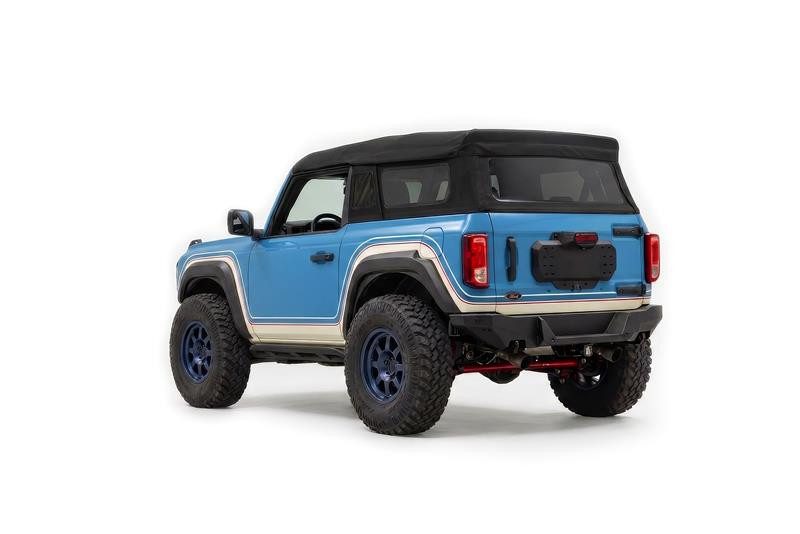
Driving a Ford Bronco? Our Ford Bronco hard top vs soft top guide covers that choice in detail.
Whichever style fits your life, the best roof is the one that gets you outside more often. Find the top that matches the way you drive. Explore the Lineup
Frequently Asked Questions About Jeep Soft Tops vs Hardtops
Here are quick answers to the questions Wrangler owners ask most when choosing between a soft top and a hardtop.
Is a Soft Top or Hardtop Better for a Jeep Wrangler?
The right roof depends on how you want to drive. A soft top suits drivers who want open air on short notice, with a fabric roof that folds back or comes off. A hardtop suits drivers who want a quieter, insulated cabin with glass windows and rear defrost. Many owners enjoy both across the year.
Can I Convert My Jeep Wrangler Hardtop to a Soft Top?
Yes. A hardtop Wrangler can take a full soft top with its included hardware, and most Bestop soft tops install with no drilling. Fitment varies by model and body style, so confirm your Jeep with the Year/Make/Model fitment tool before ordering. Many owners keep the hardtop for winter and run the soft top in warm months.
What Are the Disadvantages of a Hardtop?
The main considerations with a hardtop are weight and storage. A Jeep hardtop weighs well over 100 pounds, so removal typically takes two people or a hoist or removal tool. Once it’s off, it needs garage or storage space. That means fully topless days usually take some planning, though Sunrider for Hardtop adds flip-back open air up front.
Is a Jeep Soft Top Louder than a Hardtop?
A soft top is generally louder than a hardtop, which is quieter and more insulated. Fabric makes a big difference. Premium Twill, with its butyl-rubber core, has the lowest noise of Bestop’s three materials, and Sailcloth is quieter than vinyl. On the Jeep JL eTop, a neoprene headliner reduces cabin noise by up to 5 dB.
Is a Soft Top or Hardtop Better for Winter?
A hardtop gives you the most insulated winter cabin, with glass windows and rear defrost. A soft top also works year-round when you match the fabric to your climate. Premium Twill offers the best cold-weather flexibility of Bestop’s three materials. Many owners in snowy regions run a hardtop in winter and a soft top in warmer months.
Can I Get Open-Air Driving with a Jeep Hardtop?
Yes. Sunrider for Hardtop replaces the front Freedom Panels on JK, JL and Gladiator factory hardtops with a fabric panel that flips back. The rest of the hardtop stays on. It installs in about 30 minutes with no drilling and starts at $799.99. You can also remove the full hardtop for topless days.
How Heavy Is a Jeep Wrangler Hardtop to Remove?
A Jeep Wrangler hardtop weighs well over 100 pounds, so removal typically takes two people or a hoist or removal tool. You’ll also need garage or storage space once it’s off. Bestop’s hardtop removal and storage tools, including the TopLift PRO v2.0, the LIFTnGO, and the HOSS hoist for JL hardtops, help with the job.
How Long Does a Jeep Soft Top Last?
A Jeep soft top typically lasts five to ten years with care. Climate, sun exposure and how often you fold the top all play a role. Regular cleaning, careful window handling and proper storage help it look and seal well for longer. Choosing a fabric matched to how and where you drive also helps.
