






















Key Takeaways
- Regular cleaning prevents UV damage, mildew buildup, and premature fading.
- Always use a cleaner formulated for soft top fabrics, and never use household products like Windex, ammonia, bleach, or pressure washers on your top.
- After cleaning, apply the correct protectant for your fabric type (vinyl or twill) to restore UV resistance and maintain a factory-fresh appearance.
- Clean soft top windows separately with vinyl-safe cleaner and a microfiber cloth, wiping in straight lines to avoid scratching.
- Keep zippers functioning smoothly by cleaning debris from the teeth and applying a dedicated zipper lubricant before cold weather sets in.

Why Your Jeep Soft Top Needs Regular Cleaning
Your soft top is one of the defining features of the open-air Jeep experience. Keeping it clean is not just about looks. Consistent Jeep soft top care protects the fabric from the elements that break it down over time, and it keeps every trail ride, highway cruise, and sunrise drive feeling as good as the first one.
Soft top fabrics face a constant battle with UV rays, rain, dirt, bird droppings, tree sap, and airborne pollutants. UV exposure causes fading and weakens the fibers that give your top its shape and water resistance. Moisture that sits on a dirty top creates the perfect conditions for mildew, which can stain fabric permanently and leave a musty smell inside the cabin.
Dust and road grime act like fine sandpaper when the top flexes in the wind, slowly wearing through the surface coating that keeps water out. Over time, a neglected top loses its color, becomes stiff, and may start to leak at the seams.
The good news is that none of this has to happen. Cleaning your soft top regularly removes the contaminants that cause damage before they get a chance to take hold. A simple, regular routine keeps the fabric supple, the color vibrant, and the waterproofing intact season after season.
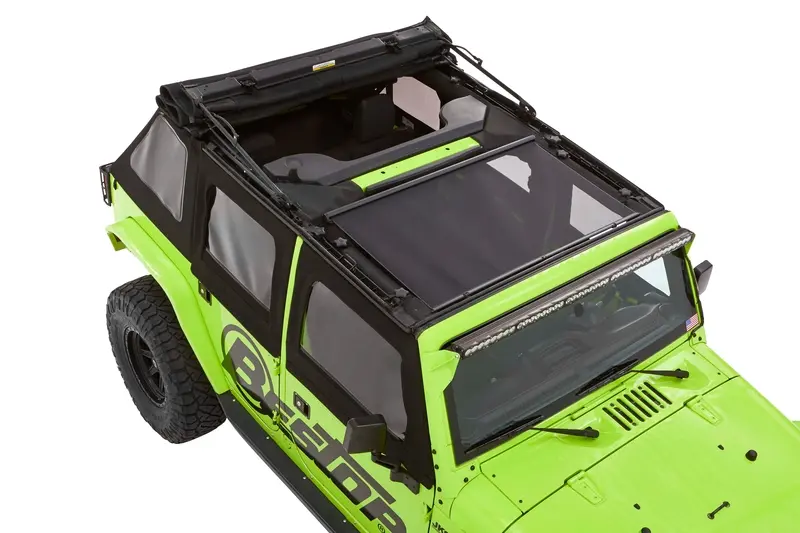
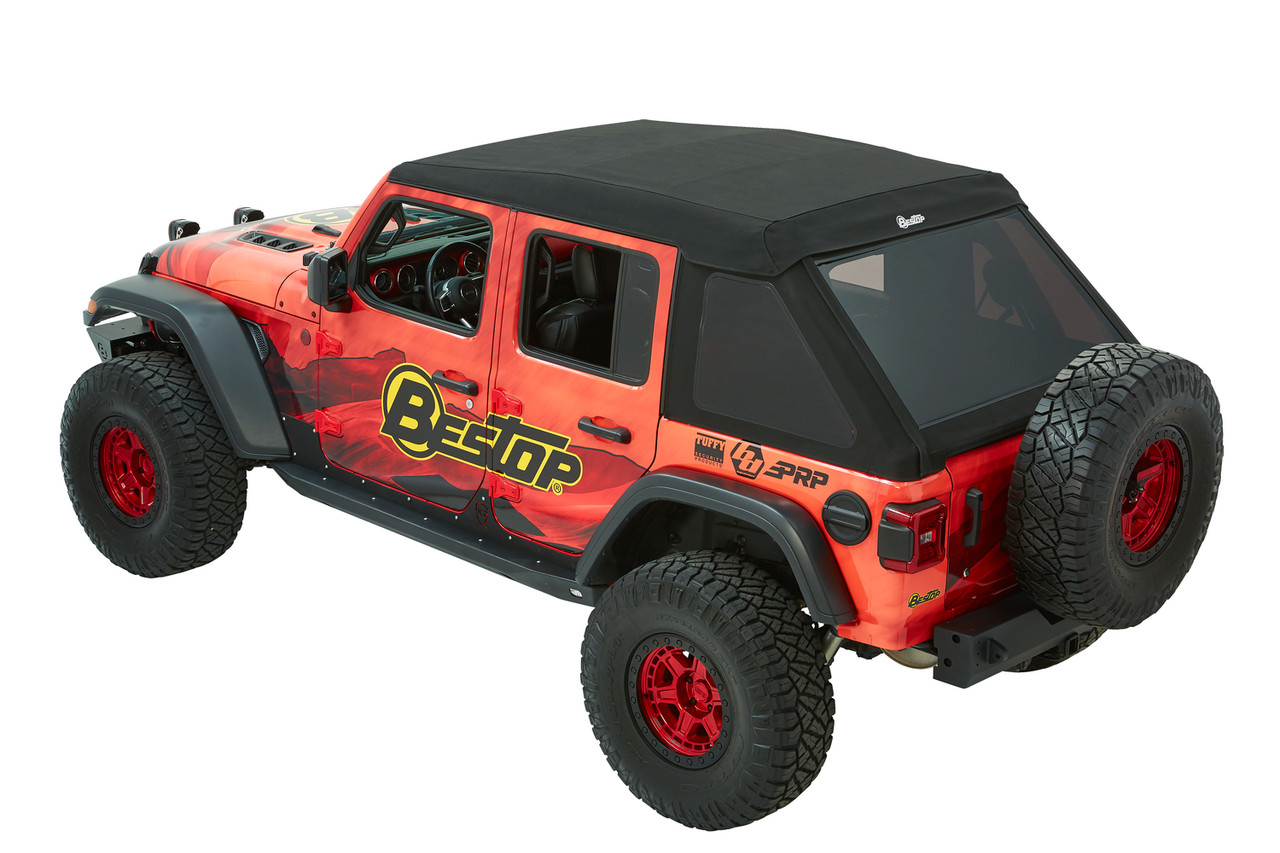
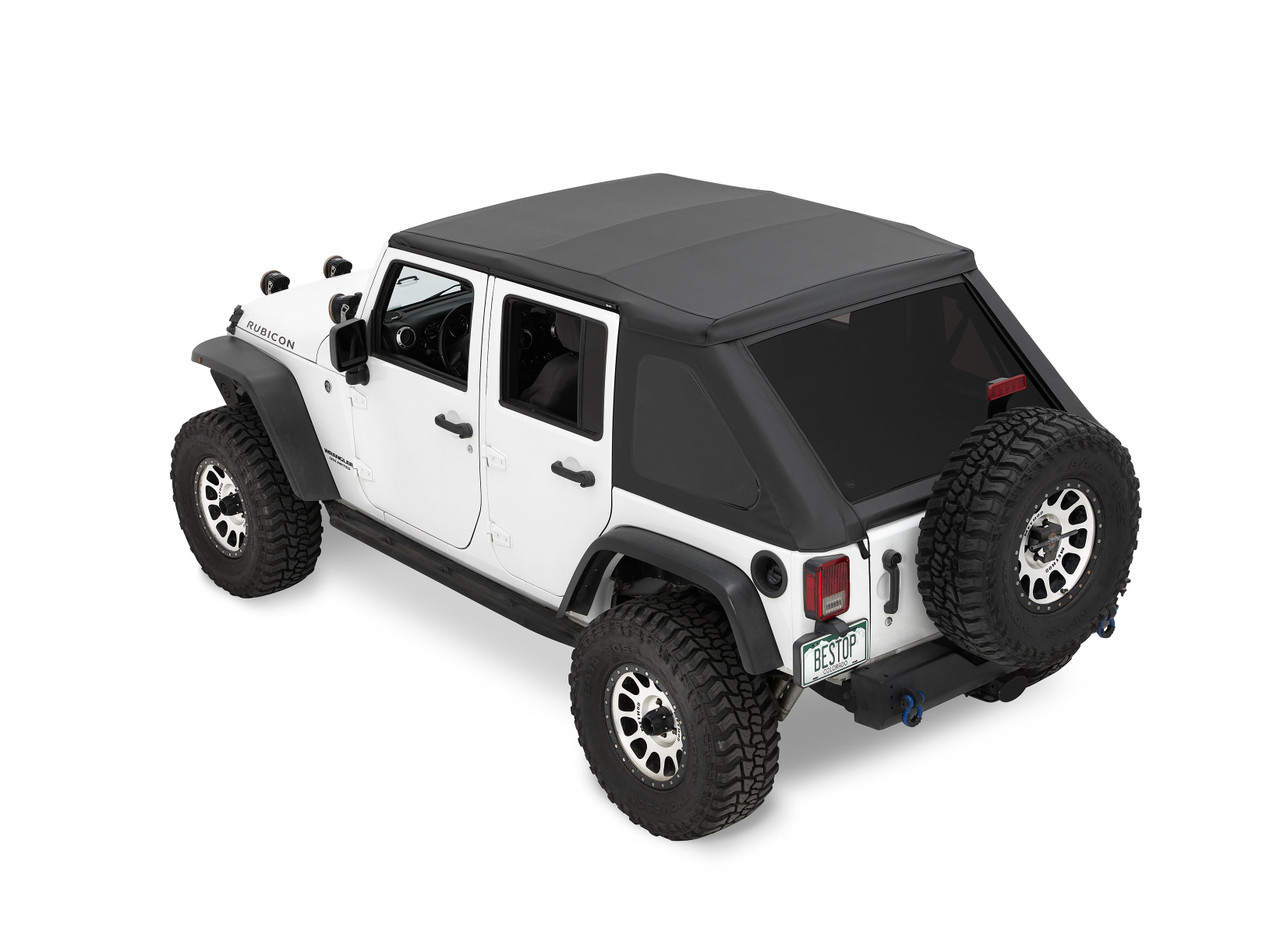
Whether you own a Trektop, Supertop, Sunrider, or another style from the Bestop lineup, the care process is straightforward. A few minutes of attention each month can add years of life to your top and keep it performing the way it was engineered to.
What You Need To Clean A Jeep Soft Top
The best Jeep soft top cleaner is one formulated specifically for the fabric and vinyl materials used in automotive soft tops. Purpose-built cleaners dissolve dirt and contaminants without stripping the protective coatings that keep your top water-resistant and UV-protected.
Here is what to gather before you start:
Supplies Checklist
- Soft top cleaner formulated for Jeep fabric tops (such as Bestop Cleaner)
- Fabric protectant matched to your top material (vinyl or twill)
- Soft bristle brush (a car wash brush or soft detailing brush works well)
- Garden hose with a standard spray nozzle
- Two or three clean microfiber towels
- A shaded work area or overcast day
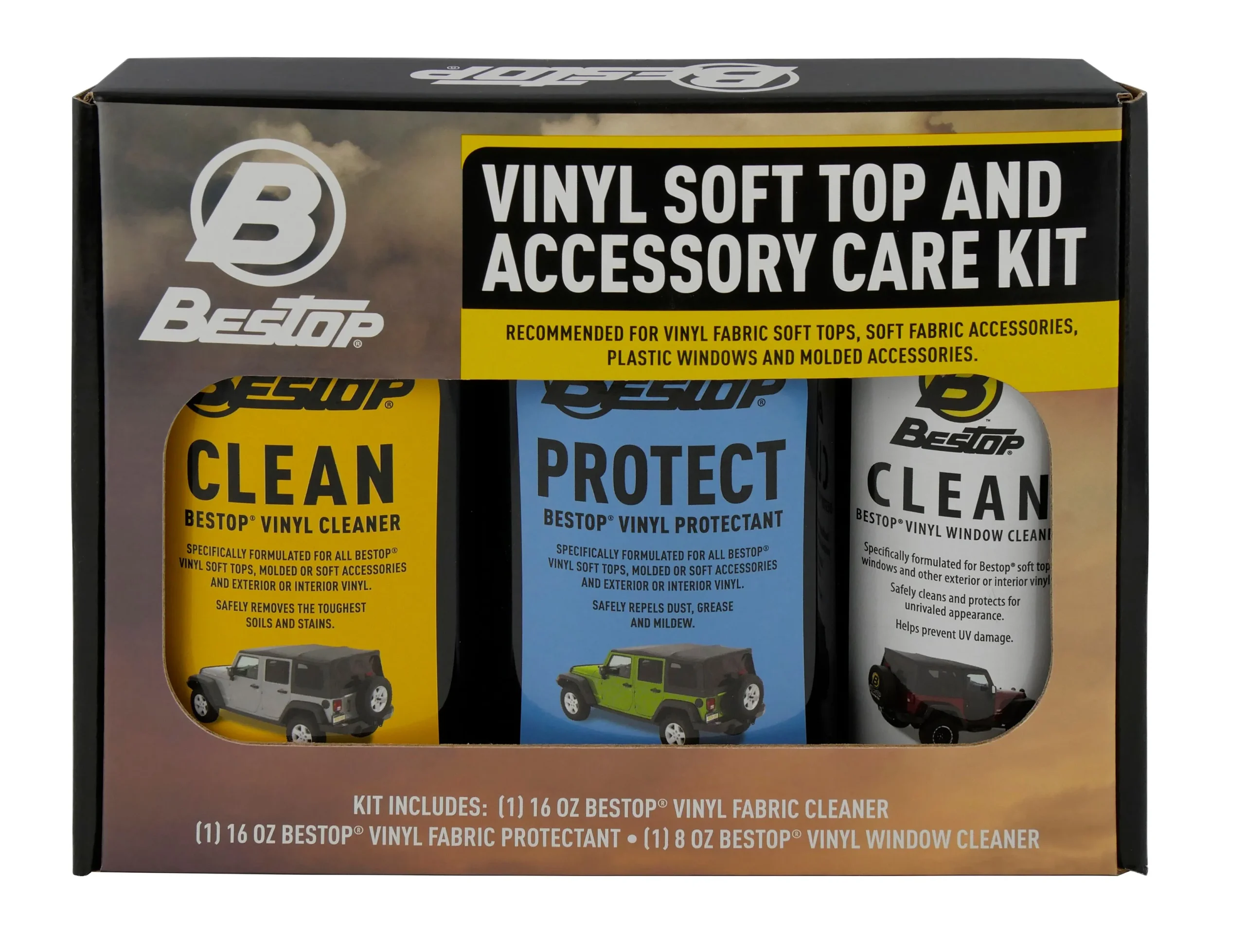
For a convenient all-in-one option, the Bestop Cleaner/Protectant Pack includes both cleaner and protectant sized to handle a full cleaning session.
What NOT To Use
Avoid these products and tools entirely. They can cause irreversible damage to soft top fabrics and windows:
- Windex or glass cleaners: Contain ammonia that clouds vinyl windows and degrades fabric coatings.
- Ammonia-based cleaners: Break down the plasticizers that keep vinyl windows flexible and clear.
- Bleach or chlorine products: Discolor fabric, weaken fibers, and destroy water-resistant coatings.
- Pressure washers: Force water through seams and can tear or stretch fabric panels.
- Dish soap or household detergents: Strip protective treatments and leave residue that attracts more dirt.
- Rough scrub brushes or abrasive pads: Scratch vinyl windows and damage the fabric weave.
What is the best cleaner for a Jeep soft top? The best soft top cleaner is one specifically formulated for automotive soft top fabrics, not a household product. Look for a low-pH, non-detergent formula that lifts dirt and contaminants without stripping the factory-applied water repellents or UV coatings. Bestop Cleaner is engineered for this purpose and is ideal for vinyl soft tops, with fabric-specific protectants available for twill tops.
How To Clean A Jeep Soft Top Step By Step

A proper cleaning takes about 30 to 45 minutes and protects the investment you have made in your open-air setup. Follow these five steps for a thorough, fabric-safe clean every time.
Step 1: Rinse And Remove Loose Debris
Start by hosing down the entire soft top with cool or lukewarm water. Use a standard garden hose, not a pressure washer. Work from the top down to flush leaves, dust, pollen, and loose dirt off the surface. Pay attention to seams, edges along the tub rail, and areas around the windows where debris tends to collect.
If there is caked-on mud or dried material, let the water soak for a minute before gently brushing it free. Removing loose debris first prevents you from grinding it into the fabric during the scrubbing step.
Step 2: Apply Soft Top Cleaner
Spray or apply your soft top cleaner evenly across one section at a time. Working in sections (one panel or one side) keeps the cleaner from drying on the surface before you have a chance to scrub.
Follow the product directions for dwell time. Most quality cleaners need 30 seconds to a minute to break down embedded grime. Do not let the cleaner dry on the fabric.
Step 3: Scrub With A Soft Bristle Brush
Using a soft bristle brush, gently scrub the fabric in small circular motions. Focus on areas with visible staining, bird droppings, tree sap, or mildew spots. The brush works the cleaner into the fabric weave to lift out contaminants without damaging the fibers.
For stubborn stains, apply a second coat of cleaner, let it dwell slightly longer, and scrub again. Avoid pressing too hard. Let the cleaner do the work.
Step 4: Rinse Thoroughly
Rinse each section completely with clean water before moving on to the next. Leftover cleaner residue can attract dirt and leave streaks once the top dries. Again, work from top to bottom and make sure water runs clear from the fabric before you stop.
Step 5: Apply Protectant After Drying
Allow the soft top to air dry completely. This is important because protectant needs to bond with dry fabric to create an effective barrier.
Once dry, apply a protectant that matches your fabric type:
- Vinyl tops: Use a vinyl-specific protectant that restores flexibility and blocks UV rays.
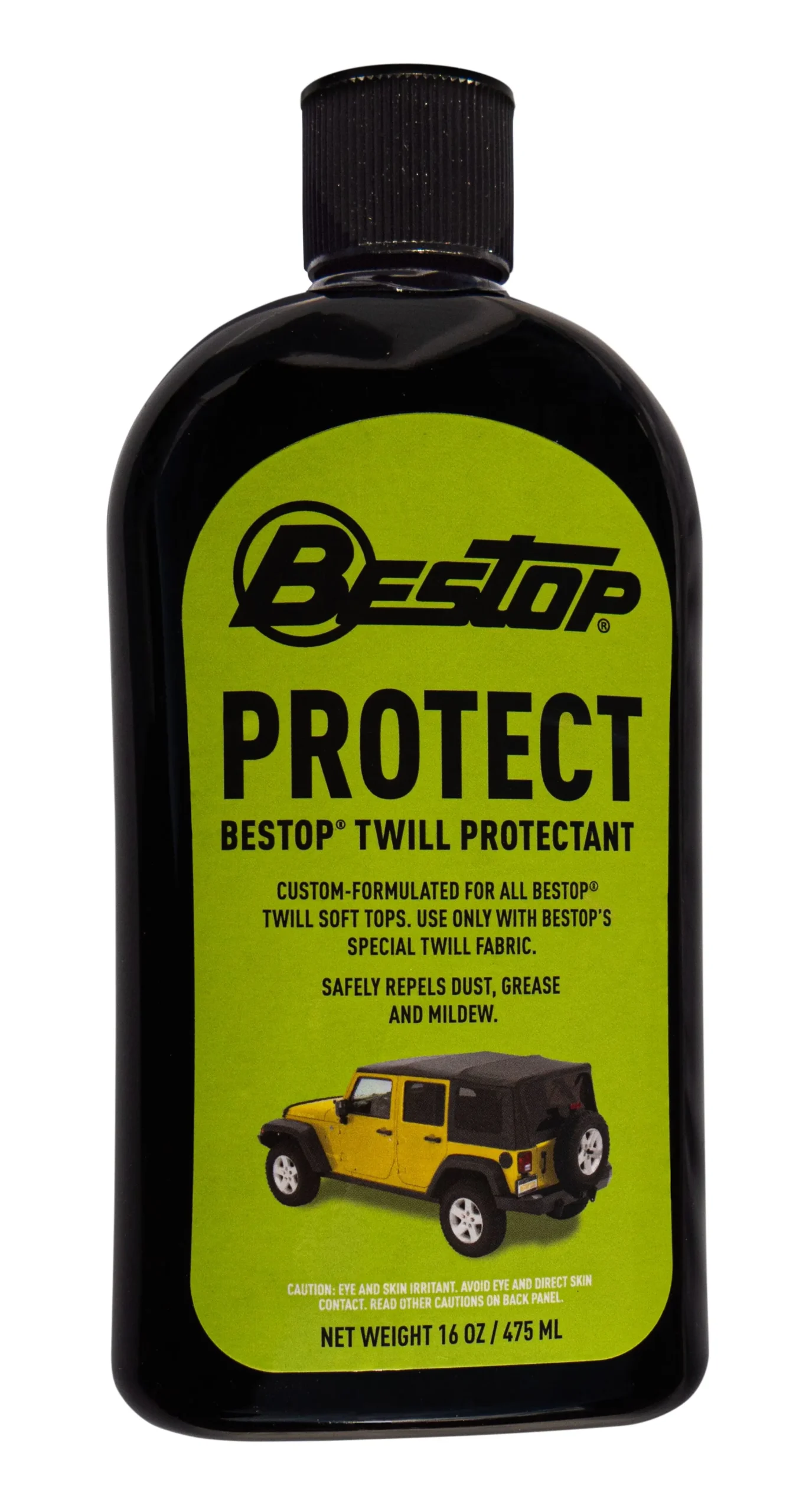
- Twill fabric tops: Use Bestop Protectant for Twill Fabric, which is formulated to penetrate woven twill material and renew its water repellency and UV resistance.
Apply the protectant evenly, following the product instructions. Most protectants need several hours to cure fully, so plan your cleaning for a day when the top can sit undisturbed.
Browse the full range of Bestop cleaners and protectants to find the right combination for your top.
How To Clean Jeep Soft Top Windows
Vinyl soft top windows require their own cleaning approach. The same cleaner you use on the fabric panels can cloud, scratch, or damage clear vinyl if applied to the windows.
Use a dedicated vinyl window cleaner, such as Bestop Vinyl Window Cleaner, which is formulated to clean without hazing or scratching the surface.
Cleaning Steps For Vinyl Windows
- Rinse the windows with cool water to remove surface dust and grit.
- Apply vinyl window cleaner to a clean, dry microfiber cloth (not directly onto the window).
- Wipe in straight, overlapping lines from top to bottom. Never use circular motions on vinyl windows, as this can create swirl marks that scatter light and reduce clarity.
- Flip the microfiber cloth to a dry side and buff gently to remove any remaining cleaner.
- Repeat on the interior side of the window using the same straight-line technique.
Common Window Cleaning Mistakes
- Using paper towels or rough cloths: These scratch vinyl. Microfiber is the only safe choice.
- Spraying cleaner directly on the window: This can leave runs and uneven spots. Apply to the cloth first.
- Cleaning in direct sunlight: Heat causes the cleaner to dry too fast, leaving streaks and residue.
- Using the same cloth for fabric and windows: Grit from fabric cleaning will scratch the vinyl. Use a separate, clean microfiber cloth for windows.
- Circular wiping motions: These create visible swirl patterns. Always wipe in straight lines.
How To Maintain Jeep Soft Top Zippers

Zippers on a Jeep soft top endure a lot. They get exposed to dust, mud, salt, and temperature swings that can cause them to bind, stick, or corrode. A few minutes of zipper maintenance during each cleaning session keeps them operating smoothly and prevents the frustration of a stuck zipper when you are ready to drop the top.
Zipper Care Steps
- Clean the zipper teeth: Use a soft brush (an old toothbrush works well) to remove dirt, sand, and debris from the zipper teeth. Work along the full length of each zipper, brushing gently in the direction the teeth run.
- Apply zipper lubricant: Use Bestop Soft Top Zipper Cleaner & Lubricant along the teeth. Open and close the zipper several times to distribute the lubricant evenly.
- Wipe off excess: Remove any lubricant that gets on the fabric around the zipper with a clean cloth.
Cold Weather Tips
- Lubricate all zippers before the first freeze of the season. Cold temperatures stiffen fabric and put extra strain on zipper tracks.
- If a zipper freezes shut, do not force it. Warm the area gently with a hair dryer on low heat, then try again.
- Store windows unzipped when possible during winter to reduce stress on cold, stiff zipper teeth.
Common Soft Top Cleaning Mistakes To Avoid
Even well-intentioned cleaning can damage a soft top if you use the wrong approach. Avoiding these common mistakes protects your investment and keeps your top looking and performing its best.
- Running through automatic car washes: The stiff brushes and harsh chemicals used in car washes can scratch vinyl windows, tear fabric, and strip protective coatings. Always hand wash your soft top.
- Using a pressure washer: High-pressure water forces its way through seams, can delaminate fabric layers, and may stretch or tear panels. A garden hose provides all the water pressure you need.
- Reaching for household cleaners: Products designed for kitchens, bathrooms, or household glass contain chemicals that degrade soft top materials. Stick to cleaners specifically formulated for automotive soft tops.
- Cleaning in direct sunlight: Heat causes cleaning products to dry too quickly, leaving residue and streaks. Clean in the shade or on an overcast day for the best results.
- Skipping the protectant step: Cleaning removes dirt, but it also strips some of the existing protective coating. Applying protectant after every deep clean restores the UV barrier and water repellency that keep your top in top condition.
- Using rough towels or paper products on windows: Only microfiber cloths are safe for vinyl windows. Anything coarser creates micro-scratches that accumulate and cloud the vinyl over time.
Soft Top Cleaning Schedule And Seasonal Tips
Maintaining a consistent cleaning schedule is the simplest way to protect your soft top year-round. A predictable routine prevents damage from building up and keeps your top ready for whatever the season brings.
Monthly Quick Clean (15 to 20 Minutes)
- Rinse the entire top with a garden hose to remove surface dust and pollen.
- Spot clean any visible stains, bird droppings, or tree sap with soft top cleaner and a microfiber cloth.
- Wipe down vinyl windows with vinyl window cleaner.
- Check zippers for smooth operation and lubricate if needed.
Periodic Deep Clean (30 to 45 Minutes)
- Follow the full five-step cleaning process outlined above.
- Apply protectant (vinyl or twill, depending on your fabric).
- Inspect seams, stitching, and hardware for any signs of wear.
- Lubricate all zippers.
Seasonal Considerations
- Spring: Start the season with a deep clean. Winter road salt, grime, and moisture can leave behind residue that accelerates fabric breakdown once temperatures rise. Apply a fresh coat of protectant to prepare for increased UV exposure.
- Summer: UV intensity is at its peak. Clean monthly and reapply protectant as needed. If you park outdoors regularly, consider a fabric protectant with strong UV-blocking properties to fight fading.
- Fall: Do a deep clean before winter storage or continued cold-weather driving. Remove leaves and organic debris promptly, as they trap moisture and promote mildew.
- Winter: If you drive with your soft top through winter, rinse off road salt and chemical deicers regularly. These compounds are corrosive and can damage both the fabric and the hardware. Lubricate zippers before the first freeze.
Bestop Soft Top Cleaning Products
Bestop’s fabric care lineup is purpose-built for the materials used in Jeep soft tops. Every product in the lineup is formulated to work with, not against, the coatings, fabrics, and vinyl that make your top perform.
Here is an overview of the core products:
- Bestop Cleaner: A low-pH, biodegradable formula that lifts dirt, grime, tree sap, and bird droppings from vinyl soft top panels without stripping protective coatings.
- Bestop Protectant (Vinyl): Restores UV protection and flexibility to vinyl soft top surfaces, helping prevent cracking, fading, and stiffness.
- Bestop Protectant for Twill Fabric: Penetrates woven twill material to renew water repellency and UV resistance from within the fabric weave.
- Bestop Vinyl Window Cleaner: A streak-free formula designed to clean vinyl windows without hazing, scratching, or clouding the surface.
- Bestop Soft Top Zipper Cleaner & Lubricant: Cleans and lubricates zipper teeth to prevent binding, sticking, and corrosion.
- Bestop Cleaner/Protectant Pack: A convenient bundle that combines Bestop Cleaner, Vinyl Protectant, and Vinyl Window Cleaner/Polish for a complete cleaning and protection session.
Why OEM-Formulated Products Matter
Bestop has been the exclusive OEM soft top provider for Jeep Wranglers for more than three decades, and it also engineers soft tops for the modern Ford Bronco. The same engineering standards that go into building the tops also go into formulating the care products. That means the cleaners and protectants are tested on the exact materials, coatings, and stitching used in Bestop tops, so you know they will clean effectively without causing unintended damage.
Generic automotive cleaners and household products are not tested against these specific materials. Using them introduces risk to your top’s appearance and longevity.
Browse the full Fabric Care category for a complete look at what is available, or explore the broader collection of Soft Tops & Accessories to see the full Bestop lineup.
For a visual walkthrough of the complete cleaning process, watch this step-by-step guide from the Bestop team:
Your Jeep soft top is built to let the outside in, and keeping it clean is one of the simplest ways to make sure it keeps delivering that open-air feeling for years to come. A regular routine, the right products, and a little attention to detail go a long way. Explore Bestop’s full lineup of care products and find everything you need to keep your top looking and performing at its best at Bestop Jeep Soft Tops.
Frequently Asked Questions About Jeep Soft Top Care
These are the most common questions Jeep owners ask about cleaning and maintaining their soft tops.
What Is the Best Cleaner for a Jeep Soft Top?
A cleaner specifically formulated for soft top fabrics is the safest and most effective option. Bestop Cleaner is designed by the same company that manufactures OEM Jeep soft tops, so it lifts dirt and stains without damaging the fabric or leaving residue. Avoid household cleaners, which can dry out and discolor the material.
Can You Take a Soft Top Jeep Through a Car Wash?
No. Automated car wash brushes can scratch vinyl windows and tear at seams, while high-pressure spray nozzles may force water through seals and into the cabin. Always hand-wash your soft top with a gentle cleaner and soft-bristle brush to protect the fabric, windows, and stitching.
How Often Should You Clean a Jeep Soft Top?
Plan on a light wash every 30 to 60 days under normal driving conditions. After off-road trips, heavy pollen seasons, or extended exposure to mud and dust, clean the top as soon as possible. A periodic deep clean with protectant application will keep the fabric in its best condition year-round.
Can You Pressure Wash a Jeep Soft Top?
Pressure washing is not recommended. The concentrated spray can damage stitching, break down seam seals, and leave visible streaks across the fabric. If you need extra rinsing power, use a standard garden hose at normal water pressure and let the cleaner do the heavy lifting.
What Should You Not Use to Clean a Jeep Soft Top?
Avoid Windex, Formula 409, bleach, ammonia-based cleaners, and Armor All. These products contain chemicals that dry out vinyl, cause cracking, and strip UV protection from the fabric. Stick with cleaners formulated specifically for automotive soft tops to protect your investment.
How Do You Clean Jeep Soft Top Windows Without Scratching Them?
Use a vinyl-safe window cleaner and a clean microfiber cloth. Wipe in straight lines from top to bottom or side to side, never in circles. Avoid paper towels, standard bath towels, and any abrasive material. For haze or minor scratches, a dedicated vinyl window polish can restore clarity.
What Is the Difference Between Vinyl and Twill Soft Top Protectant?
Vinyl protectant is formulated for vinyl (Black Diamond) soft top fabrics. Twill protectant is specifically designed for the thicker, acrylic-based twill fabric used on premium tops like the Bestop Trektop Pro Hybrid. Using the correct protectant ensures the formula bonds properly with your specific fabric type.
How Do You Maintain Jeep Soft Top Zippers?
Brush loose dirt and debris from the zipper teeth with a soft brush, then apply a dedicated zipper cleaner and lubricant along both sides of the zipper track. Run the zipper head up and down to distribute the lubricant evenly. Do this before cold weather arrives to prevent sticking.
How Do You Protect a Jeep Soft Top From UV Damage?
Apply a UV-blocking protectant after every deep cleaning session, typically three to five times per year. Park in shade or use a vehicle cover when possible. Regular protectant application restores the fabric’s UV resistance and helps prevent the fading and brittleness that sun exposure causes over time.
Can You Use Armor All on a Jeep Soft Top?
No. Armor All tends to attract dust and dirt to the fabric surface, making the top dirtier over time. It can also leave a slick residue that degrades fabric quality. Use a protectant specifically designed for soft top materials instead.