






















Key Takeaways
- Soft tops deliver open-air freedom on demand, lighter weight, easier storage, and a lower price point, making them ideal for drivers who want spontaneous top-down moments.
- Hardtops provide superior noise insulation, weather sealing, and security, which makes them the go-to choice for daily commuters and harsh-climate drivers.
- The Sunrider for Hardtop bridges the gap, letting hardtop owners flip open a soft panel in seconds without removing or storing anything.
- Switching is always an option. Many Jeep owners run a soft top in summer and a hardtop in winter, getting the best of both seasons.
- Fitment matters. Always confirm compatibility for your specific year, model, and door count before purchasing any top.
What Is the Real Difference Between a Jeep Soft Top and Hardtop?

The core difference between a Jeep soft top and hardtop comes down to material and lifestyle. A soft top uses durable, UV-resistant fabric stretched over a folding frame, giving you quick open-air access and a lighter overall vehicle weight. A hardtop is a rigid fiberglass or composite shell that bolts onto the roll cage, delivering better insulation, noise reduction, and security at the cost of added weight and less spontaneous open-air driving.
If you have ever stood next to a Jeep Wrangler at a trailhead and watched the owner fold back the top in under a minute, you already understand the appeal of a soft top. And if you have driven through a January snowstorm in total quiet comfort, you understand why hardtop owners love theirs just as much. The Jeep soft top vs hardtop debate is not about one being better. It is about which one fits the way you actually drive.
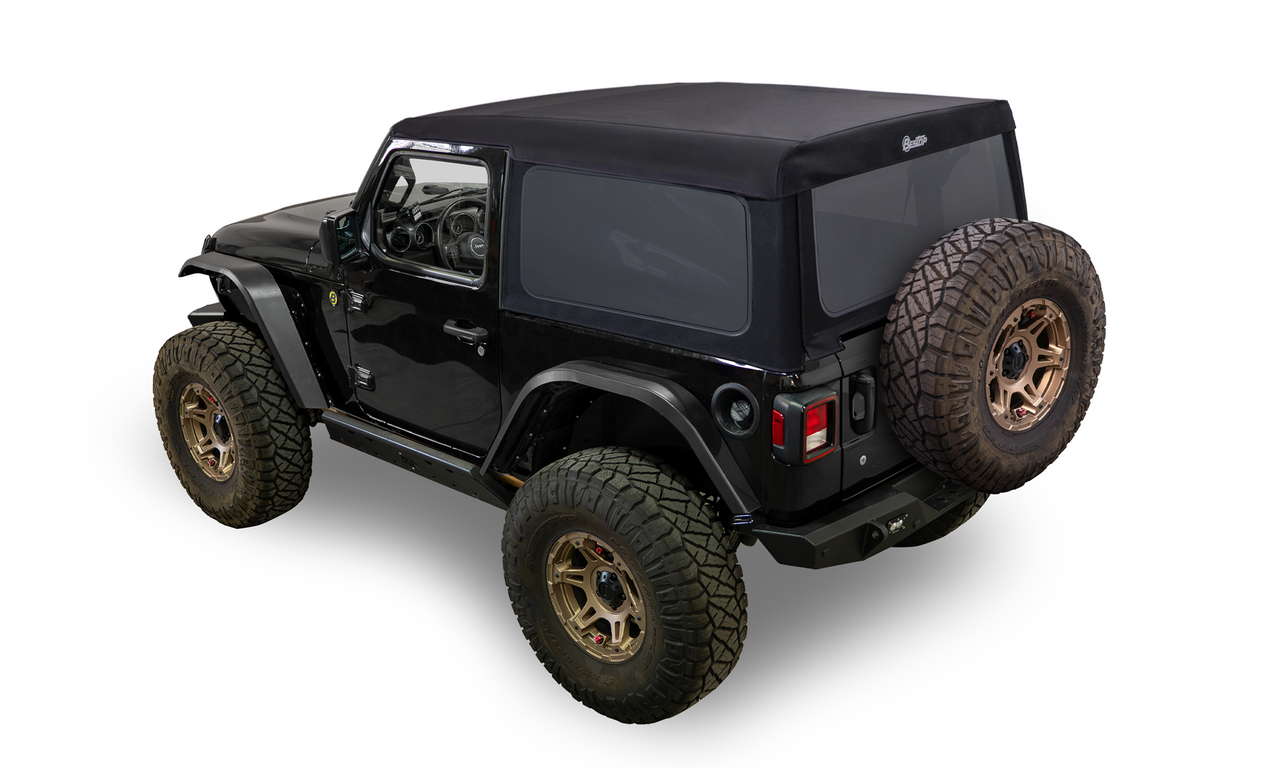
Soft tops are constructed from heavy-duty automotive fabrics, typically premium materials like Bestop’s Sailcloth or Black Twill, layered over a steel or aluminum frame that folds, retracts, or detaches depending on the design. Modern soft top fabrics resist UV damage, repel water, and hold up across years of use. The frame stays on the vehicle for most designs, so going from enclosed to open-air takes minutes, not hours.
Hardtops, on the other hand, are molded from fiberglass or composite panels that attach directly to the Wrangler’s body. They create a sealed, car-like cabin that blocks road noise and weather more effectively than fabric. Most factory hardtops include removable Freedom Panels over the front seats, giving you a partial open-air option, though removing the full top requires at least two people and a place to store it.
The choice between these two comes down to how you use your Jeep every day, not just on the weekends you plan for.
Soft Top Pros and Cons
Why Jeep Owners Love Soft Tops
For a lot of Wrangler owners, the whole point of owning a Jeep is the open-air experience. A soft top makes that experience part of your everyday routine, not something that requires a weekend project.
Are Jeep soft tops worth it? Yes, for most drivers. A quality soft top typically costs significantly less than a hardtop, installs without professional help, and gives you the ability to go from fully enclosed to completely open in minutes. Modern premium fabrics offer strong weather resistance and UV protection that hold up for years with basic care.
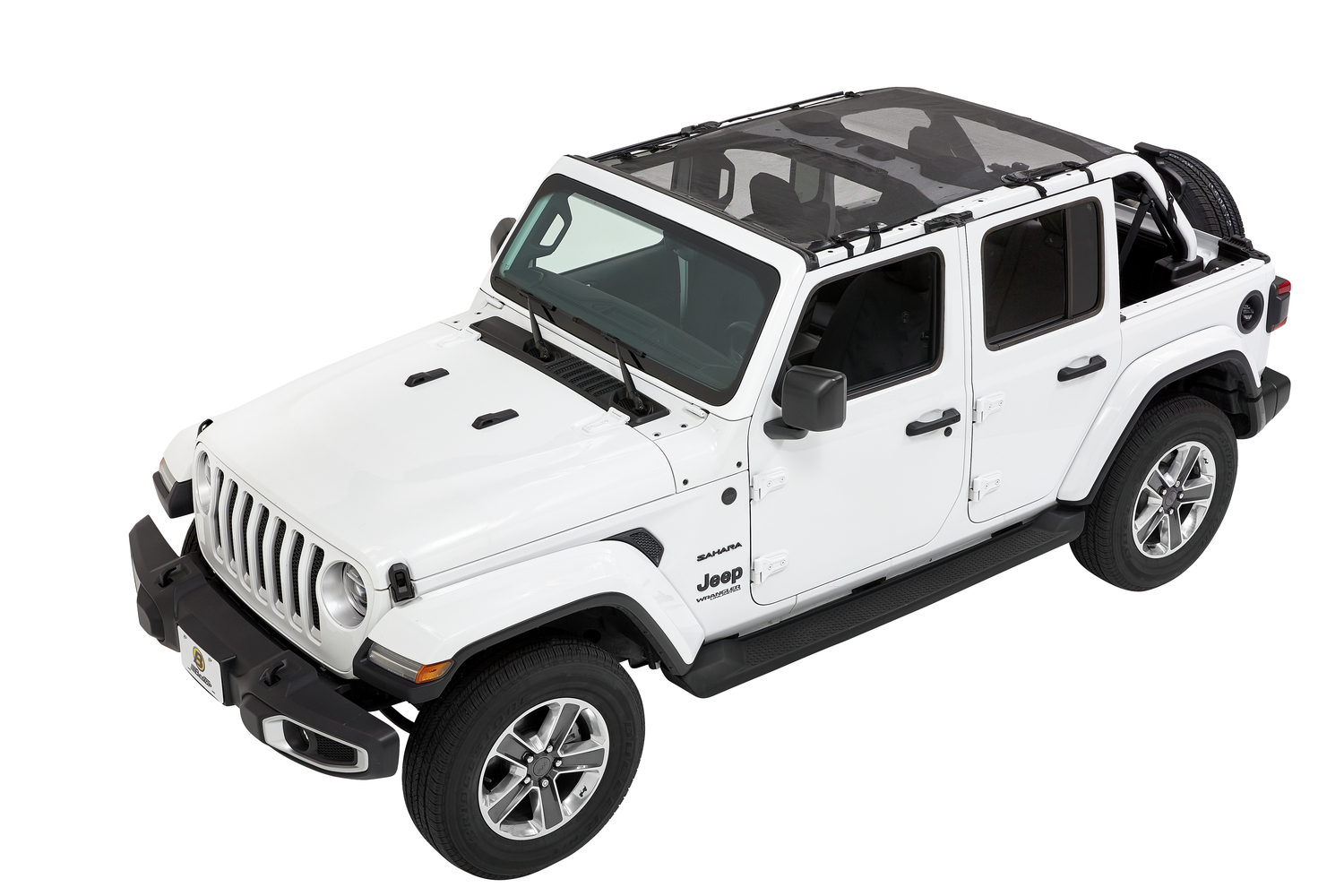
The biggest advantage is versatility. Depending on the design, you can fold back just the front section (like a sunroof), remove the rear windows for cross-breeze airflow, or take the entire top down for a fully open ride. Some designs, like Bestop’s Supertop family, keep the frame on the vehicle so you can go from enclosed to topless in under ten minutes without needing to store anything separately.
Weight is another real benefit. A soft top typically weighs 60 or more pounds less than a hardtop, which means better fuel economy and a lower center of gravity on the trail. And when it comes to cost, soft tops generally run well below the price of a factory or aftermarket hardtop, leaving room in your budget for other upgrades.
Browse the full lineup of Jeep soft tops to see which configurations match the way you drive.
Soft Top Drawbacks to Consider
What are the disadvantages of a soft top Jeep? The main drawbacks are higher road noise at highway speeds, less insulation in extreme cold, reduced theft deterrence compared to a locked hardtop, and the need for periodic fabric care. However, premium soft tops with multi-layer construction and proper seals minimize most of these concerns for daily drivers.
Road noise is the most common complaint. Fabric does not block sound the way a rigid shell does, so highway driving in a soft top is noticeably louder than in a hardtop. That said, modern multi-layer soft tops with headliners have narrowed the gap significantly.
Insulation is another consideration. In extreme cold, a soft top lets more heat escape, which means your heater works harder. If you live in a climate with harsh winters, you may notice a difference in cabin temperature on long drives.
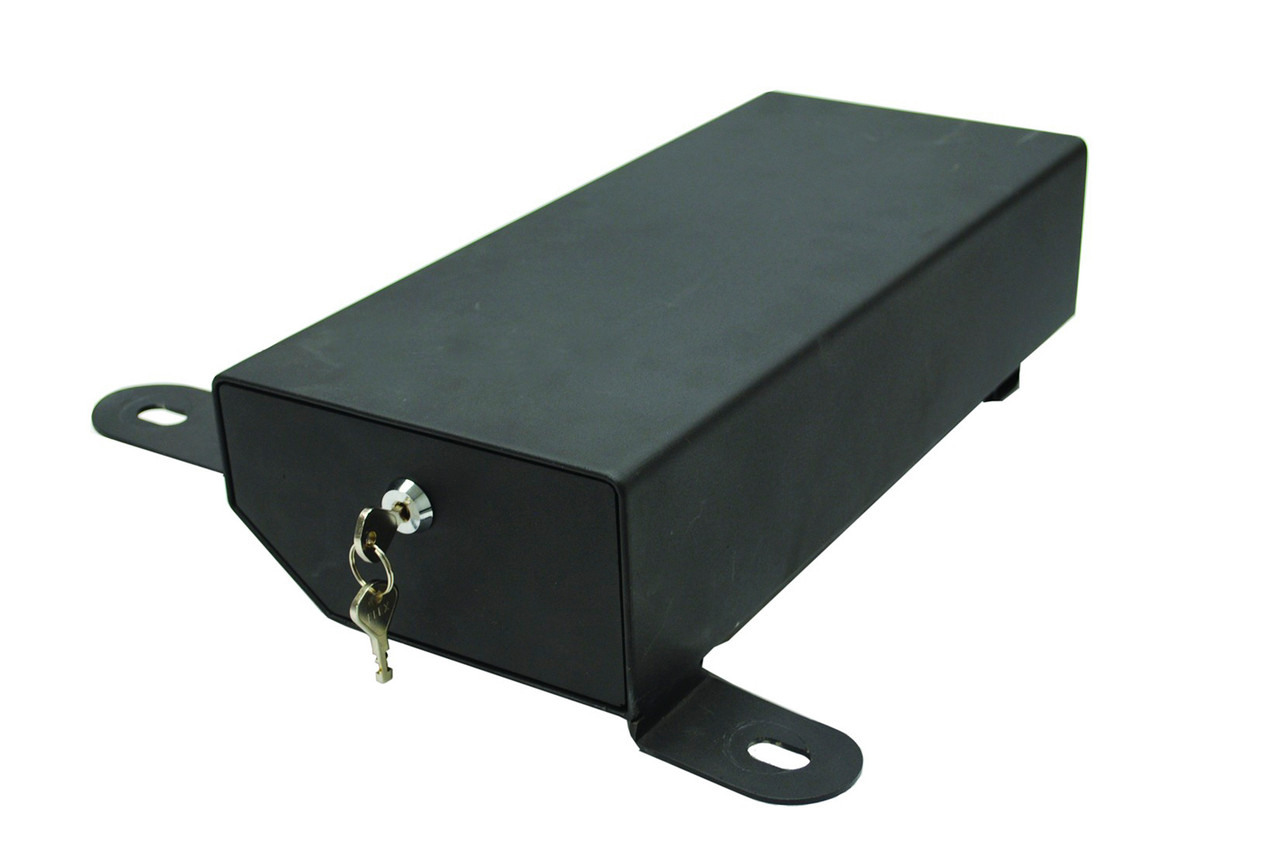
Security is worth thinking about, too. A fabric top can be cut, so it does not offer the same physical deterrent as a hardtop. Most experienced Jeep owners handle this by not leaving valuables visible and using a locking center console or cargo box.
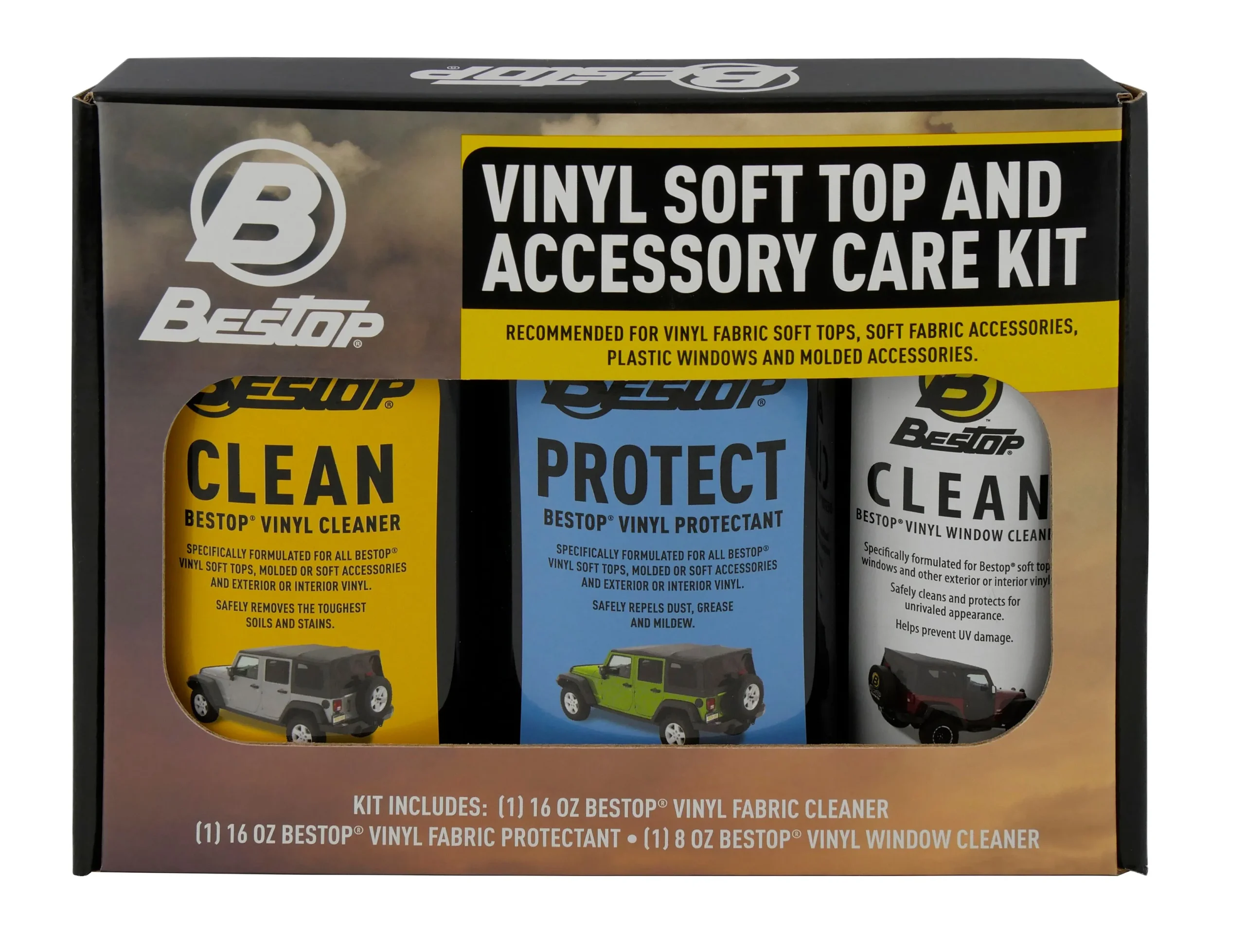
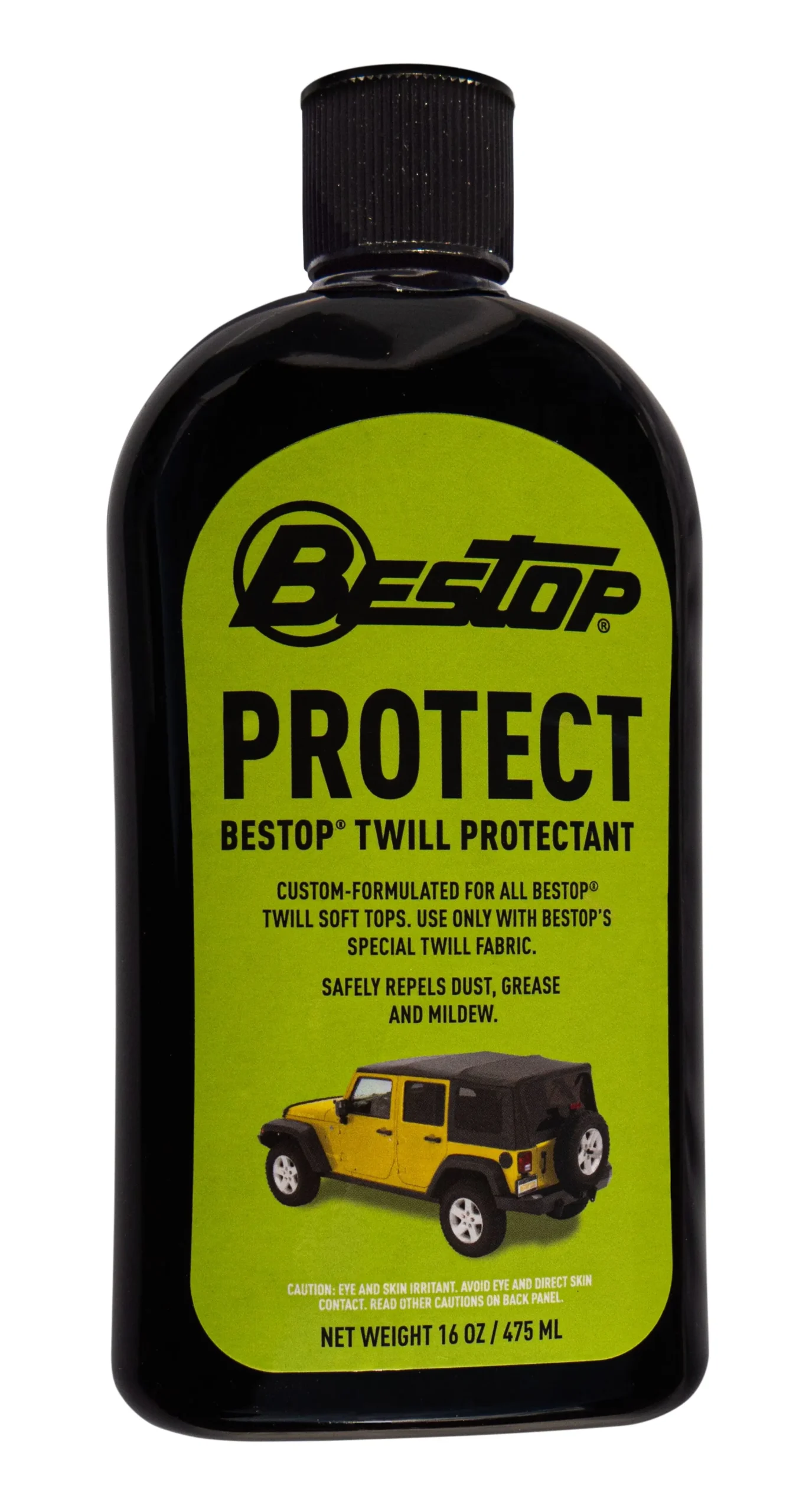
Finally, fabric tops do require some maintenance. Periodic cleaning, conditioning, and UV protectant application will extend the life of the material. With proper care, a quality soft top typically lasts five to ten years or more depending on climate and use.
Hardtop Pros and Cons
Why Jeep Owners Choose Hardtops
The hardtop turns your Wrangler into something closer to a traditional SUV. If you use your Jeep as a daily commuter and want a quiet, well-insulated cabin that feels solid in every season, a hardtop delivers.
Noise reduction is the biggest win. The rigid shell, combined with factory-installed insulation and weather stripping, creates a noticeably quieter ride at highway speeds. For drivers who spend long stretches on the interstate, the difference is meaningful.
Weather protection is also stronger. A hardtop seals out rain, wind, and cold more completely than fabric, and it handles heavy snow loads without concern. In regions with brutal winters, the extra insulation keeps the cabin warmer and reduces strain on the heating system.
Security is more straightforward, too. A locked hardtop with fixed windows provides a genuine physical barrier. While no Jeep is truly theft-proof (the doors themselves are removable), a hardtop adds a layer of protection that fabric cannot match.
Durability is the final factor. A fiberglass or composite hardtop does not degrade from UV exposure the way fabric can, and it requires minimal maintenance beyond the occasional wash. Barring physical damage, a hardtop can last the life of the vehicle.
Hardtop Drawbacks to Consider
The tradeoffs are real, though, and they all center around weight, storage, and spontaneity.
A factory hardtop typically weighs between 140 and 200 pounds depending on the model and door count. Removing it requires at least two people and a hoist, cart, or ceiling-mounted storage system. That means going topless is a planned event, not a spontaneous decision at a stoplight.
Storage is a genuine logistical challenge. You need dedicated space in your garage or a hardtop cart, and the panels need to be stored carefully to avoid scratches and damage.
How much does a Jeep hardtop cost vs soft top? A factory Jeep hardtop typically runs between $2,000 and $4,000 or more depending on the model year and configuration. Aftermarket premium soft tops generally range from roughly $800 to $2,500, making them a more accessible option. Powered soft tops like the Bestop eTop sit at a higher price point of approximately $5,000, offering push-button convenience that bridges the gap between traditional soft tops and hardtops.
Cost is also higher across the board. Beyond the initial purchase price, hardtop owners often invest in removal and storage solutions, which can add several hundred dollars to the total. And if a hardtop panel cracks or gets damaged, repair or replacement is more expensive than replacing fabric panels.
Soft Top vs Hardtop: Side-by-Side Comparison
| Feature | Soft Top | Hardtop |
| Road Noise | Moderate to noticeable at highway speeds; premium headliners help | Quiet, car-like cabin |
| Weather Protection | Strong with quality seals; slightly less insulation in extreme cold | Excellent; best-in-class sealing and insulation |
| Security | Fabric can be cut; rely on lockboxes and smart storage habits | Rigid panels with locking windows |
| Weight | Typically 50 to 80 lbs; lighter for better fuel economy and handling | Typically 140 to 200+ lbs |
| Cost | Generally $800 to $2,500 | Generally $2,000 to $4,000+ |
| Open-Air Access | Minutes to go fully open; some designs fold back in seconds | Requires removal, multiple people, and storage space |
| Maintenance | Periodic cleaning and UV protection for fabric | Minimal; occasional wash |
| Lifespan | Typically 5 to 10+ years with proper care | Can last the life of the vehicle |
Which is better, soft top or hardtop? Neither is objectively better. A soft top is the better choice if you value open-air freedom, lighter weight, lower cost, and the ability to change configurations quickly. A hardtop is the better choice if you prioritize a quiet cabin, maximum weather sealing, enhanced security, and minimal maintenance. Many Jeep owners find that running both (seasonally or with a hybrid solution like the Sunrider for Hardtop) gives them the best of both worlds.
The comparison table makes one thing clear: this decision is about your priorities, not about one option being universally superior. If your Jeep is your daily driver in a mild climate, a soft top offers more flexibility at a lower cost. If you commute through cold, wet winters and value a quiet cabin, a hardtop earns its premium. And if you want the spontaneity of open-air driving without giving up the hardtop you already own, there is a middle path worth exploring.
Best Soft Top Options for Jeep Wranglers

Not all soft tops are built the same. The right one depends on your Wrangler generation, door count, how often you want to go topless, and whether you prefer a classic squareback silhouette or a modern fastback look. Here are some of the most popular options from Bestop, Jeep’s sole OEM soft top supplier since 1986 and an OEM partner to Ford for the Bronco.
Bestop Supertop
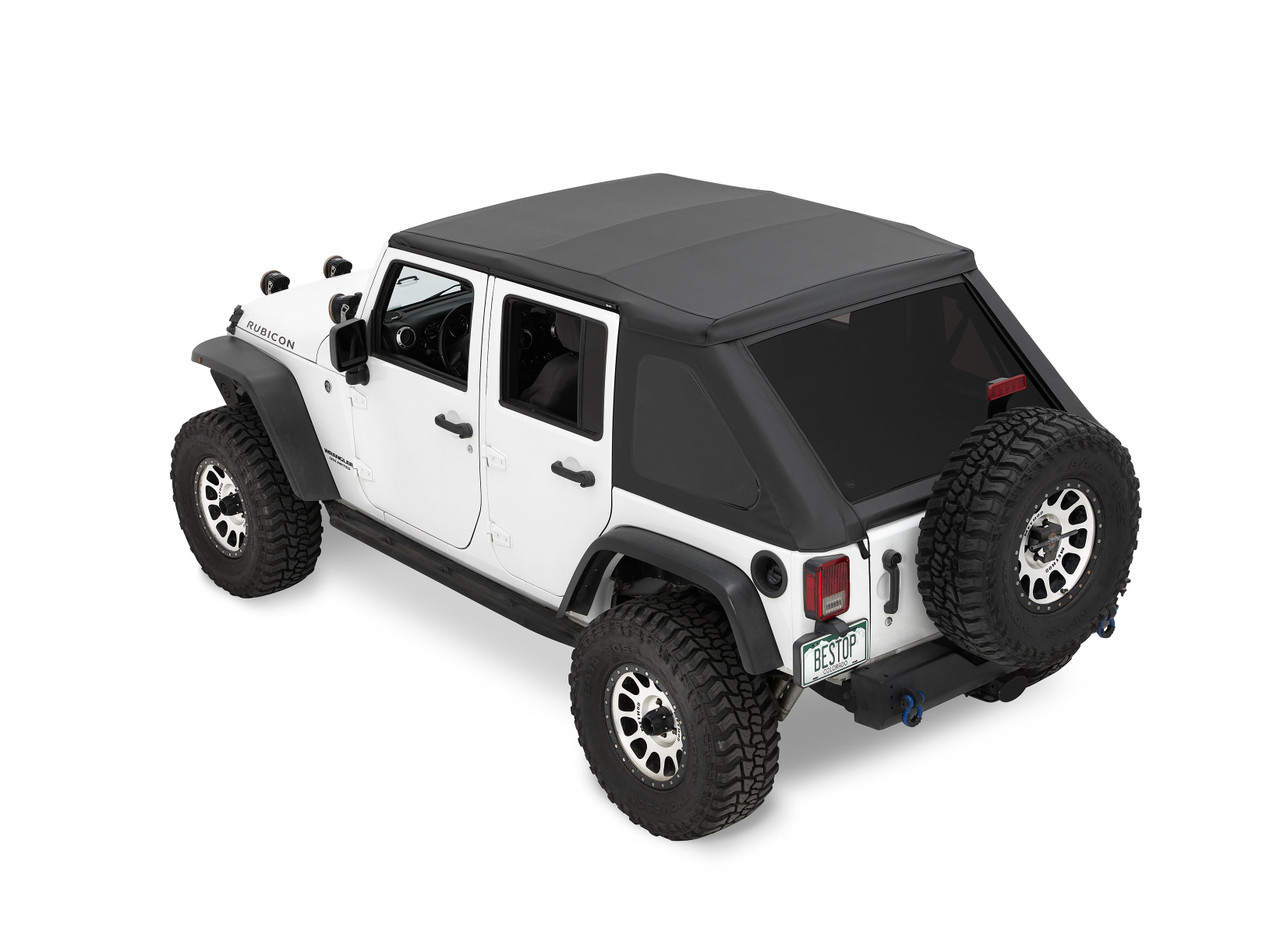
The Bestop Supertop is Bestop’s classic framed squareback design and the standard every other Jeep soft top is measured against. The rigid frame folds back and stays on the vehicle, so you can go from fully enclosed to completely topless in minutes without removing or storing anything separately. It is an ideal choice for JK owners who want the traditional Jeep look, maximum rear cargo headroom, and the fastest path to open-air driving.
Bestop Trektop
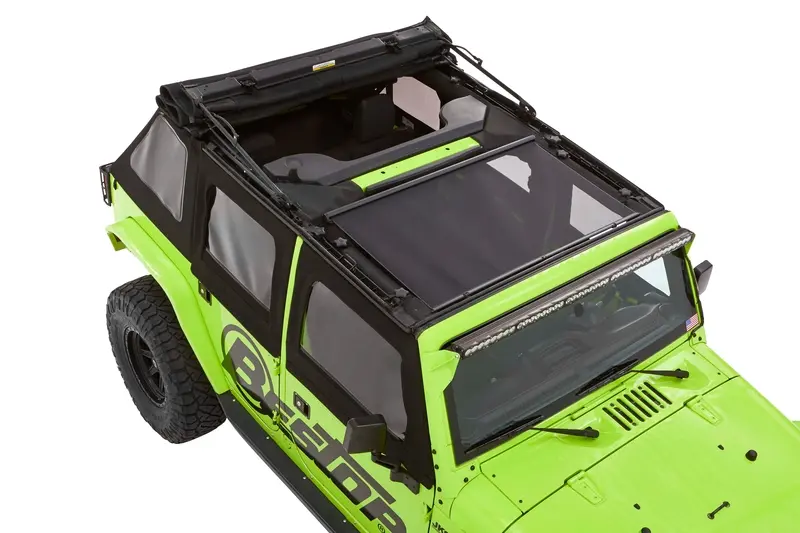
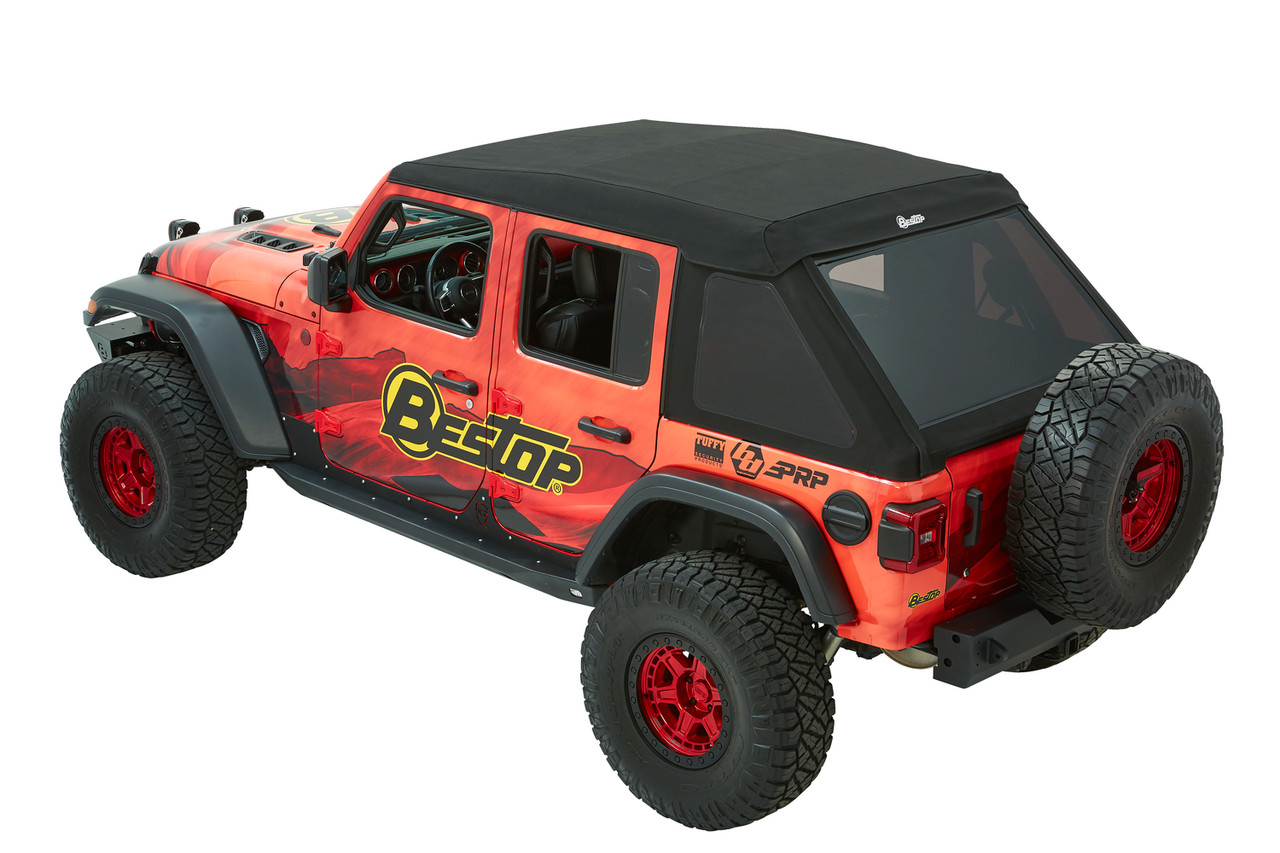
The Bestop Trektop delivers a modern fastback silhouette with no visible frame bars over the occupants. It is a style-first choice for JL owners who want their Wrangler to look sleek and athletic. Every Trektop includes integrated Sunrider access over the front seats, so you get a quick sunroof-style opening without folding down the whole top.
Bestop Trektop Ultra
The Bestop Trektop Ultra takes the fastback design to its highest level with patented Guide-Track retraction and Lift Assist. Built with premium Twill fabric, the Ultra slides open and retracts smoothly for an experience that feels closer to a powered convertible. It is designed specifically for JL 4-door owners who want the most advanced soft top retraction available.
Bestop Replace-A-Top
The Bestop Replace-A-Top is the smart refresh option for JK owners whose original soft top fabric has worn out but whose frame and hardware are still in good shape. It replaces the skin, windows, and seals without requiring a full new top assembly, which keeps costs down and reduces waste.
Finding the right fit starts with knowing your Wrangler generation. Browse soft tops for the Jeep Wrangler JL (2018+) or the Jeep Wrangler JK (2007-2018), and always use the YMM fitment tool on each product page to confirm compatibility for your specific year, model, and door count.
Can You Get the Best of Both Worlds?

One of the most common questions from Wrangler owners is whether they have to commit to one or the other. The answer is no. There are practical ways to enjoy the benefits of both a soft top and a hardtop without compromising.
The Sunrider for Hardtop
The Bestop Sunrider for Hardtop is one of the most popular accessories in the Jeep world, and for good reason. It replaces the factory Freedom Panels on your hardtop with a soft panel that flips back in seconds, giving you instant open-air access without removing, lifting, or storing anything. After the initial install, going from closed to open is literally a one-hand, one-motion action.
For hardtop owners who want everyday open-air moments without the commitment of a full soft top swap, the Sunrider is the most accessible entry point. It keeps the hardtop’s rear insulation, security, and noise reduction intact while adding spontaneous sunroof-style freedom over the front seats. Commutes, school pickups, errands, and golden-hour detours all become opportunities to let the sky in.
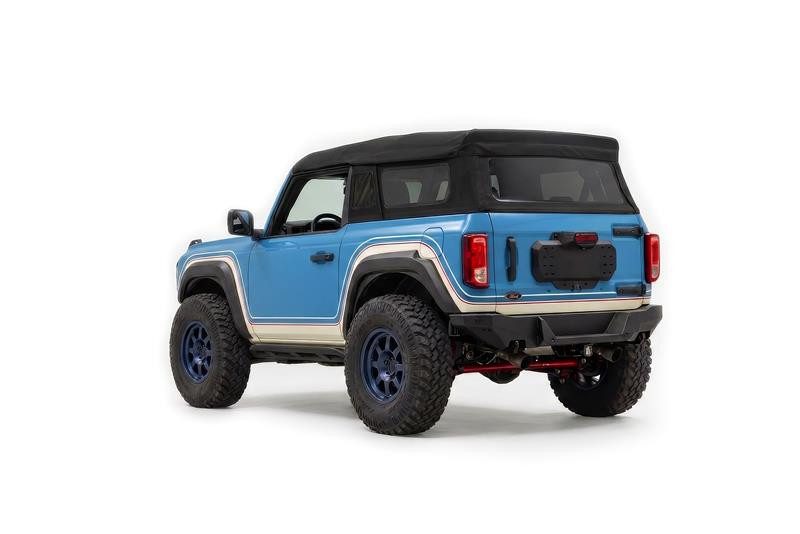
The Sunrider is available for JK, JL, Gladiator, and Ford Bronco models. Check fitment for your specific vehicle on the product page.
For a closer look at how a hardtop-to-soft-top swap works in practice, check out this walkthrough:
Switching Between Soft Top and Hardtop Seasonally
Can you switch from hardtop to soft top on a Jeep? Yes. All Jeep Wranglers (TJ, JK, JL) and Gladiators are designed to accept both soft tops and hardtops on the same body. Switching between them typically takes 30 minutes to an hour depending on the top style and your experience. Many owners run a soft top from spring through fall and reinstall their hardtop for winter.
Seasonal swapping is one of the most practical strategies for getting the most out of your Wrangler. The process is straightforward: remove one top, store it, and install the other. Most aftermarket soft tops are designed for owner installation with basic hand tools and no drilling.
If you are considering a seasonal approach, invest in a hardtop storage solution (hoist or cart) and keep your soft top clean and conditioned during the off-season. Bestop’s Soft Top Buyer’s Guide walks through the key factors to consider, including which style, fabric, and configuration match your Wrangler and your lifestyle.
How to Choose the Right Top for Your Jeep
After weighing the pros, cons, and options, the decision comes down to matching your top to the way you actually live with your Jeep. Here is a straightforward framework to guide you.
Choose a Soft Top If…
- You want open-air driving to be spontaneous, not planned
- You live in a mild to moderate climate where extreme cold is rare
- You prefer a lighter vehicle with better fuel economy on and off the trail
- You want a more affordable top with the flexibility to change configurations
- You enjoy the classic Jeep look with the top folded down
- You plan to remove doors and go fully open regularly
Choose a Hardtop If…
- You use your Jeep as a daily commuter and want a quiet, car-like cabin
- You live in a region with harsh winters, heavy rain, or extreme temperatures
- Security is a high priority and you frequently leave your Jeep parked in public
- You prefer minimal maintenance and long-term durability
- You rarely remove your top and do not need quick open-air access
Consider Both If…
- You want open-air summers and insulated winters
- You have garage space and a storage solution for whichever top is off-season
- You already own a hardtop and want to add a Sunrider for everyday open-air moments
- You like the idea of a soft top for trail days and a hardtop for highway commuting
Is a soft top or hardtop better for a Jeep Wrangler? The best top depends on how you use your Jeep. Soft tops are better for drivers who value open-air freedom, lighter weight, and affordability. Hardtops are better for those who prioritize quiet cabins, weather sealing, and security. For maximum flexibility, many owners run both seasonally or add a Sunrider for Hardtop to get open-air access without giving up their hardtop’s benefits.
No matter which direction you lean, the most important step is confirming fitment for your specific Wrangler. Year, model, and door count all affect which tops are compatible. Use the YMM fitment tool on any product page to verify before you buy.
Find the Right Top for Your Wrangler
Your Jeep should feel like freedom on every drive, not just the ones you plan for. Whether you are ready to commit to a soft top, add a Sunrider to your hardtop, or explore a seasonal setup, the right top is the one that matches the way you actually use your Wrangler. Browse the full collection of Bestop soft tops, explore the Soft Top Buyer’s Guide for a detailed walkthrough of styles and configurations, or check out fabric half doors to complete your open-air setup. Use the YMM fitment tool on any product page to confirm compatibility for your year, model, and door count.
Frequently Asked Questions About Jeep Soft Tops and Hardtops
Whether you are choosing between a soft top and a hardtop or looking to switch, these are the most common questions Jeep owners ask.
Can you put a soft top on a Jeep that came with a hardtop?
Yes. Most Jeep Wranglers and Gladiators accept both soft tops and hardtops on the same body. You will typically need a soft top hardware kit that includes the frame and mounting components. Bestop offers complete kits designed for a direct fit, so the conversion is straightforward without permanent modifications.
How long does a Jeep soft top last?
A quality soft top generally lasts five to ten years or longer, depending on climate, UV exposure, and maintenance. Premium fabrics like Bestop’s Sailcloth and Black Twill are engineered for extended durability. Regular cleaning and fabric protectant treatments help the material resist fading and wear over time.
Is a soft top loud on the highway?
Soft tops produce more road and wind noise than hardtops, but modern multi-layer fabrics have closed the gap significantly. Premium soft tops with thicker materials and tighter seals reduce cabin noise to comfortable levels for daily highway driving. Most owners find the trade-off well worth the open-air versatility.
Can you go through a car wash with a soft top?
Touchless car washes are generally safe for soft tops. Avoid brush-style washes, as the bristles can scratch windows and stress fabric seams. Hand washing with a mild cleaner designed for soft top materials is the best way to maintain appearance and extend the life of your top.
Do Jeep hardtops leak?
Hardtops can develop leaks over time, typically around the freedom panels, seals, or rear window gaskets. Worn or improperly seated seals are the most common cause. Inspecting and replacing weatherstripping periodically helps prevent water intrusion and keeps the cabin dry in heavy rain.
What is the Bestop Sunrider for Hardtop?
The Sunrider for Hardtop replaces your Jeep’s front freedom panels with a folding soft panel that opens and closes in seconds. It gives hardtop owners quick open-air access without removing the entire top. The Sunrider installs on your existing hardtop and folds back for an instant sunroof-style experience.
What are the disadvantages of a soft top Jeep?
Soft tops provide less insulation and sound dampening than hardtops, so cabin noise and temperature control are reduced. Security is another consideration, since fabric is easier to cut than a hard shell. However, the lighter weight, lower cost, and ability to open up quickly make soft tops the preferred choice for many drivers.
Is a soft top Jeep cheaper than a hard top?
Soft tops are typically less expensive than hardtops, both as factory options and aftermarket purchases. A premium aftermarket soft top generally costs a fraction of a comparable hardtop. The lower weight also means slightly better fuel economy, adding modest long-term savings beyond the initial price difference.