







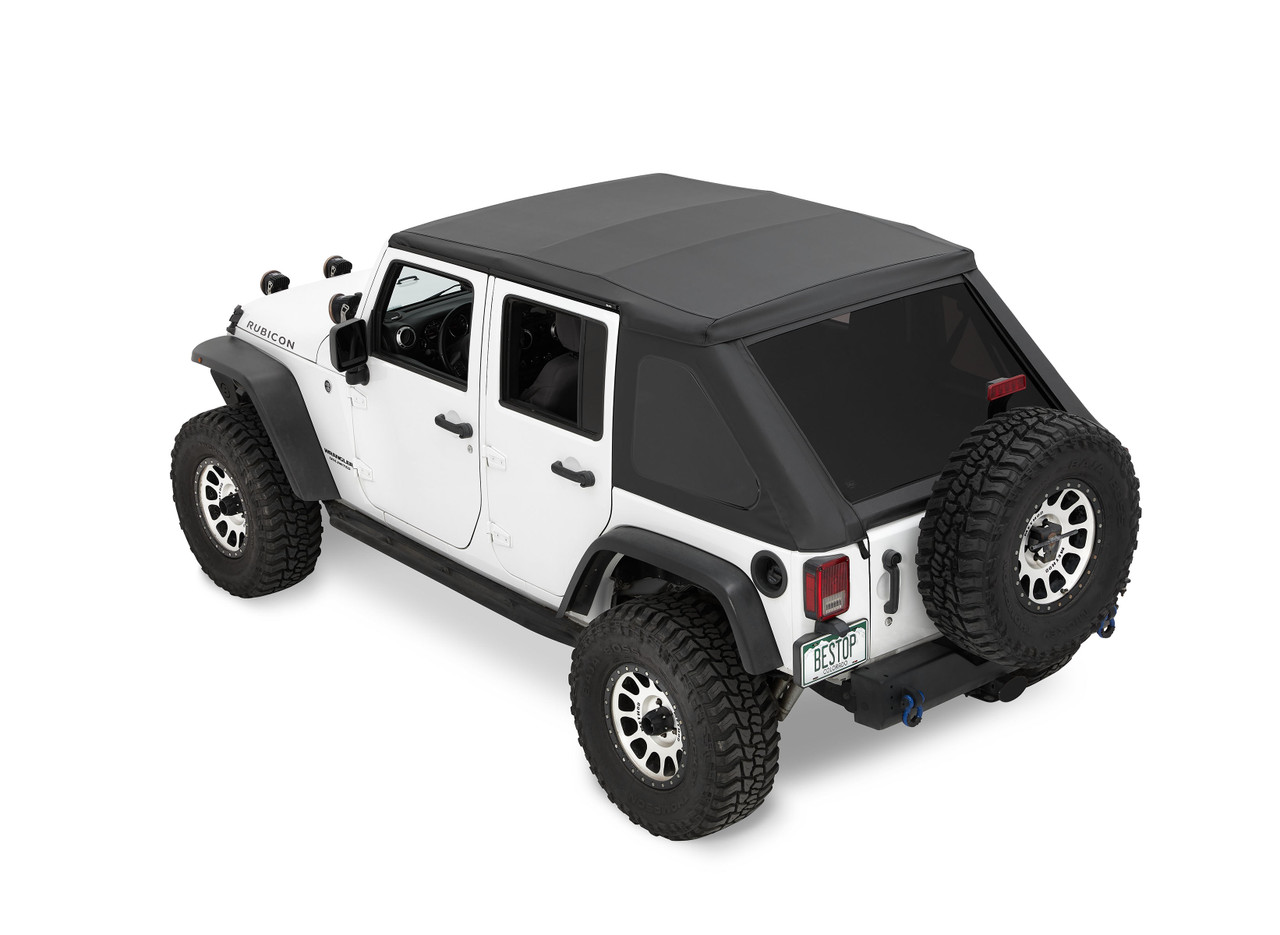
Open Air Dispatch - Bestop | Leading Supplier of Jeep Tops & Accessories

Bestop Sunrider vs Jeep Freedom Panels: The Everyday Open-Air Upgrade

Key Takeaways

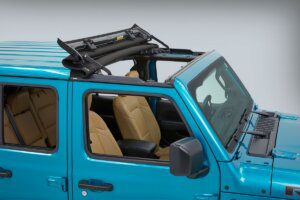
  • The Bestop Sunrider for Hardtop is a flip-back fabric panel that replaces your factory Freedom Panels and opens the front of your roof in seconds, right from the driver’s seat.
  • Comparing the Bestop Sunrider vs Jeep Freedom Panels really comes down to everyday friction: the Sunrider stays on the vehicle, so open air happens with a single flip instead of a multi-minute panel routine.
  • The Sunrider mounts to your existing factory hardtop with no drilling, and most owners complete the one-time install in around 30 minutes.
  • It fits the Jeep Wrangler JL and JK, the Jeep Gladiator, and the Ford Bronco, in 2-door and 4-door versions, so you can confirm your match with the Year/Make/Model fitment tool.
  • You can choose Black Diamond marine-grade vinyl for value or Premium Black Twill for a richer look and a quieter ride, both built four-season to Bestop’s OEM-certified standards.

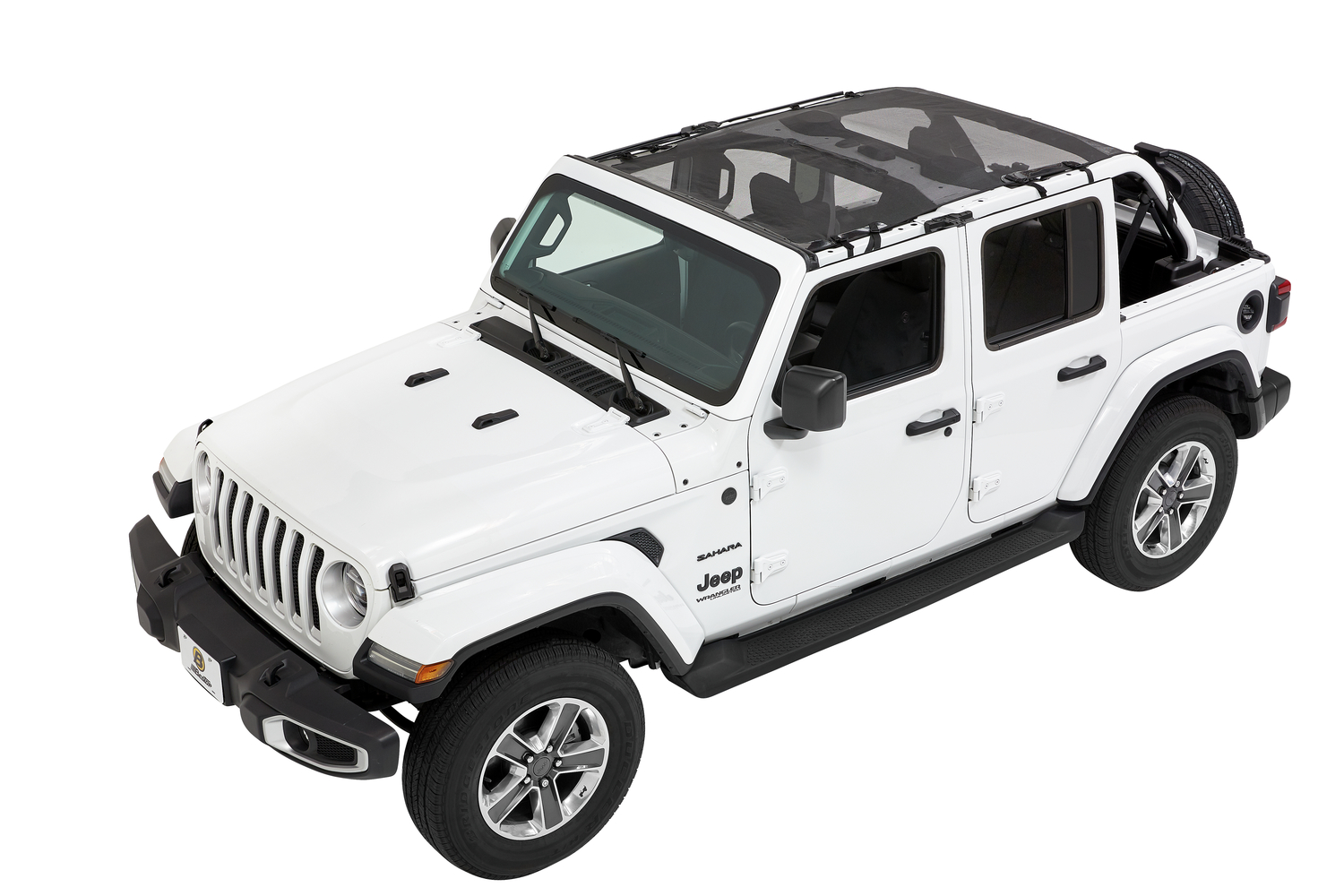
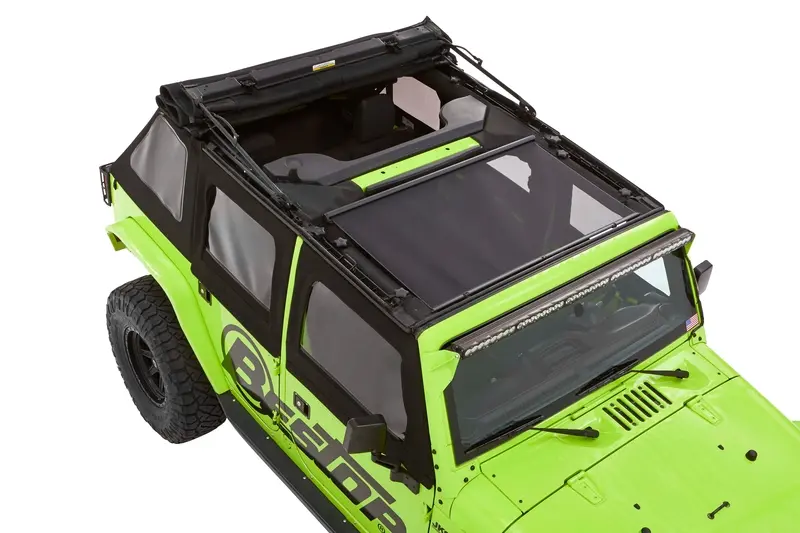
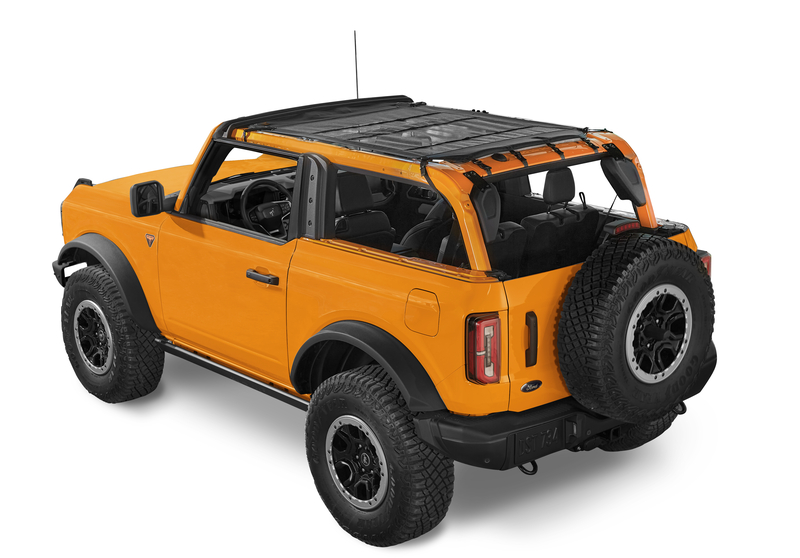
Some of the best drives start with a small decision: roof open, breeze in, the day suddenly feels bigger. That is the promise of open-air driving, and for a lot of Jeep and Ford Bronco owners it is the whole reason they bought a hardtop rig in the first place. If you have been comparing the Bestop Sunrider vs Jeep Freedom Panels, you are really weighing how often that open-air feeling actually fits into your day. The honest answer comes down to friction. The Bestop Sunrider for Hardtop is a flip-back soft panel that replaces your factory Freedom Panels and opens the front of your roof in seconds, right from the driver’s seat, so open air becomes part of the everyday instead of a weekend project.

What Are Jeep Freedom Panels?
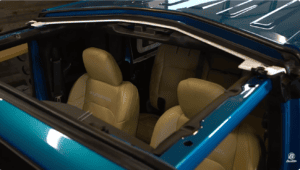
 

Jeep Freedom Panels are the two rigid roof panels that sit above the front seats on a Wrangler or Gladiator hardtop. Pop them out and you get open sky over the driver and passenger while the rest of the hardtop stays in place. The current Ford Bronco uses a similar idea with removable roof panels over the front row, giving Bronco owners that same taste of open air.

They are a genuinely clever piece of factory engineering, and plenty of owners love the look. In daily life, though, they ask a little more of you than most people expect on a busy morning. Each panel is rigid and has real weight to it, and freeing both of them takes a few minutes of latching, lifting, and setting them aside.

Then there is the question of where they go. The panels need a safe spot at home or a padded bag in the cargo area, and hard surfaces in a garage or trunk can leave marks on the finish if they shift around. Left in direct sun on a warm day, the panels themselves can get hot to handle. None of this makes them a poor design. It simply means the factory Freedom Panels reward planning, which is exactly why so many drivers start looking for a lower-effort way to get the same open front.

What Is the Bestop Sunrider for Hardtop?
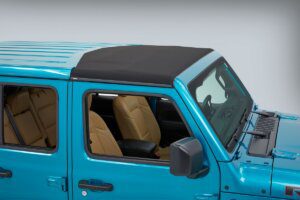
 

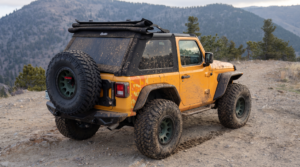
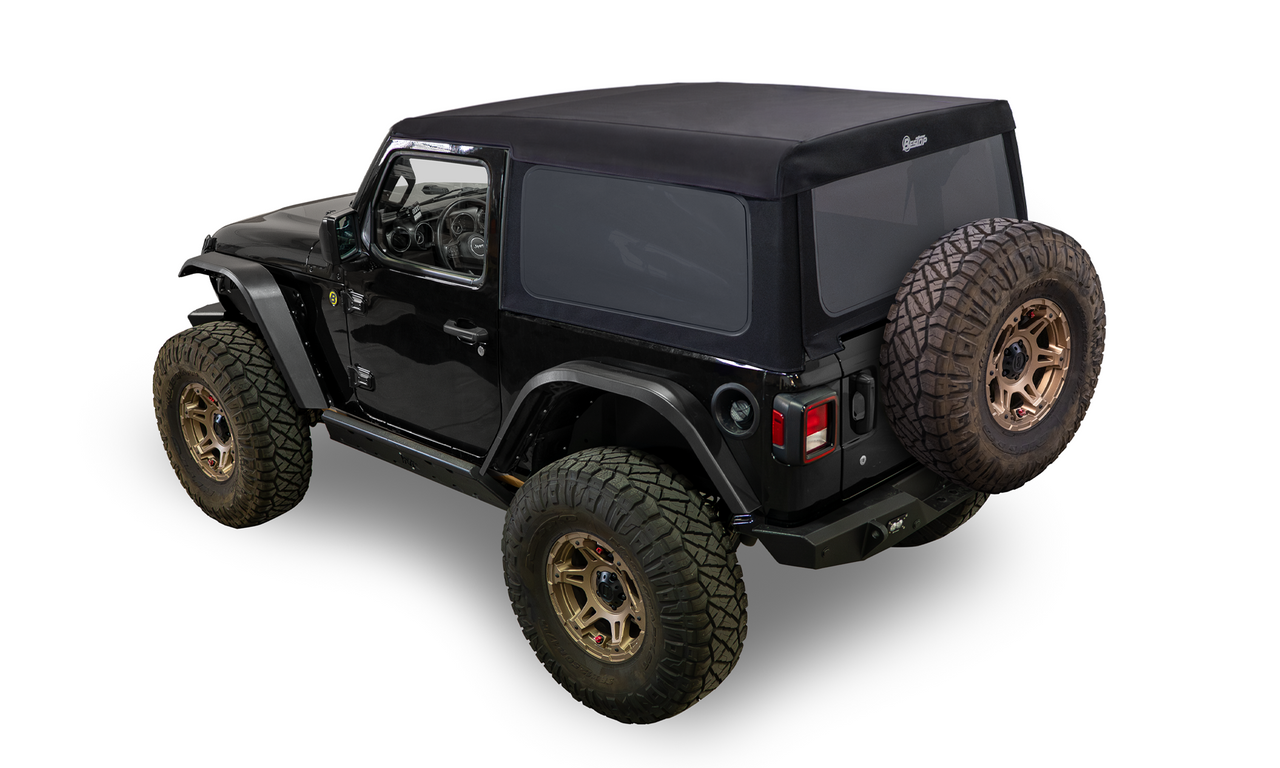
The Sunrider for Hardtop is a flip-back fabric panel that mounts to your factory hardtop in place of the Freedom Panels. Once it is installed, opening the front of your roof is a matter of releasing it and folding it back toward the rear, in seconds, from the driver’s seat. It stays with the vehicle, ready whenever the mood strikes.

That is what makes it the most accessible entry into everyday open-air driving in the Bestop lineup. A red light, a scenic backroad, a school pickup that suddenly has ten spare minutes of sunshine: the Sunrider turns those into open-air moments without a plan. It is a Bestop original, the design that made this kind of quick front-roof access a category of its own.

It is worth being clear about what the Sunrider is for. It is an everyday upgrade, the low-commitment way to bring open air into your routine. It works hand in hand with Bestop’s full soft tops rather than standing in for them. Think of it this way: the Sunrider is built for everyday spontaneity, while a full soft top is built for maximum transformation. Together they give hardtop owners one connected open-air ecosystem to choose from.

For a quick visual walkthrough, watch how the Sunrider flips back for instant open air:

Bestop Sunrider vs Jeep Freedom Panels: How They Compare
 

Here is the direct answer for anyone weighing the Bestop Sunrider vs Jeep Freedom Panels: both open the front of your roof to the sky, and the real difference is how much effort stands between you and that open air on an ordinary day. The factory panels deliver a fully open front and a clean hardtop look, with a routine of removing, carrying, and storing two rigid pieces. The Sunrider delivers a comparable open front through a single flip-back motion that happens while you stay in your seat.

That difference shapes how often open-air driving actually happens. When the payoff arrives in seconds and the panel travels with you, drivers tend to reach for it far more often, on commutes and errands as much as on weekend runs. That is the whole appeal of a Freedom Panels replacement like the Sunrider: it lowers the everyday friction so the roof spends more time open.

Everyday Detail Factory Freedom Panels Bestop Sunrider for Hardtop


How you open the front Unlatch and lift out two rigid panels Unlatch and flip the fabric panel back
Time to go open Several minutes Seconds
Stays on the vehicle Removed and set aside Stays mounted, ready anytime
Storage Needs a safe spot or a padded bag Folds back onto itself, nothing to store
From the driver’s seat Requires stepping out Flip back from your seat
Fitment Factory hardtop Mounts to your factory hardtop, no drilling
Material Rigid painted panels Black Diamond vinyl or Premium Black Twill
Best for Owners who want the exact factory panel look Owners who want open air to fit the everyday

This is not about crowning a winner, because the two answer slightly different questions. If you love the exact factory panel look and do not mind the handling and storage, the Freedom Panels serve you well. If you want open air to fit your routine on a whim, a Sunrider Freedom Panel alternative is built for exactly that rhythm.

Which Jeeps and Broncos Does the Sunrider Fit?

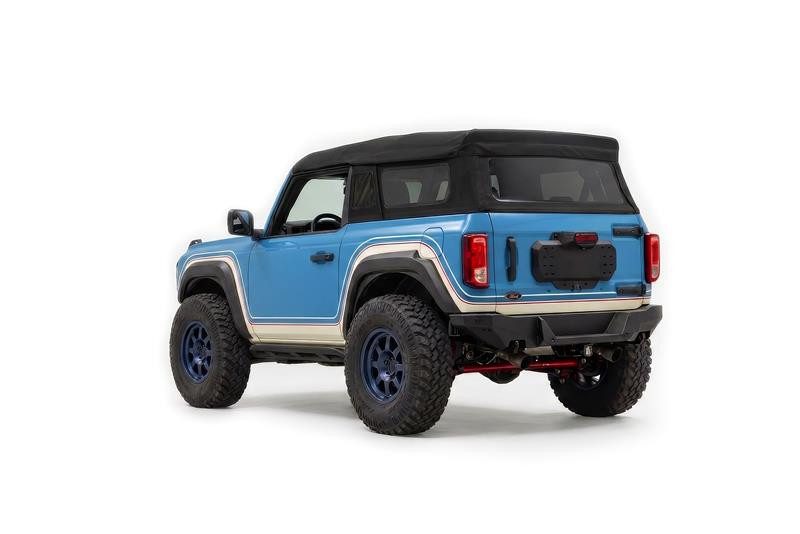
The Sunrider is engineered for specific hardtop platforms rather than as a one-size-fits-all part, which is how it delivers a proper factory fit. It covers the Jeep Wrangler JL (2018-2026) and the earlier Wrangler JK (2007-2018), the Jeep Gladiator (2020-2026), and the current Ford Bronco Sunrider (2021-2027).

It is available for both two-door and four-door configurations across those platforms, so most hardtop owners have a match. Because trim, roof type, and model-year details vary, the smartest move before you buy is to confirm your exact match with the Year/Make/Model (YMM) fitment tool. A minute there tells you precisely which Sunrider is built for your vehicle.

Black Diamond or Premium Twill: Choosing Your Sunrider

The Sunrider comes in two Bestop fabrics, and the choice is mostly about the look and feel you want overhead. Both are built to Bestop’s standards for real-world, all-season driving, so this is a matter of taste and finish rather than a ranking.

Black Diamond is Bestop’s proprietary marine-grade vinyl, a 28-ounce PVC-coated polyester with a smooth, glossy finish. It sits in the value tier and is a dependable, weather-ready choice for drivers who want the open-air experience at an accessible price.

Premium Black Twill is the premium tier, a 30-ounce triple-layer textile with a woven finish and a rich, true-black appearance. The layered construction gives it a more refined look and a quieter ride, and it has long been the favorite among drivers who want their Jeep or Bronco to feel a little more finished. You can see how the two stack up on our Black Diamond and Premium Twill comparison. Either fabric turns the Sunrider into a Jeep Freedom Panel alternative you will be happy to live with day after day.

Installation and All-Season Confidence


Getting into a Sunrider for Hardtop is a one-time job that takes about 30 minutes, with no drilling into your vehicle. It arrives with the fabric already fitted on its frame and with door rails included, so the install is a straightforward, tool-light setup that most owners handle in their own driveway.

Once it is on, it is built to stay on through the seasons. The fabric is water-repellent and UV-resistant, engineered for year-round driving to Bestop’s OEM-certified standards. For added cold-weather comfort, the Hothead headliner adds insulation and cuts road noise under the Sunrider. That grounding is earned: Bestop has been the sole OEM soft top supplier to Jeep since 1986, and is an OEM partner to Ford Bronco, building authorized aftermarket Bronco products to Ford OEM standards. Every Sunrider is built in the industry’s only OEM-certified soft top factory in North America.

Warranty coverage has real nuance across products and platforms, so for the specifics that apply to your Sunrider, see Bestop’s official warranty resources. That is the most reliable place to get terms that match your exact vehicle and fabric.

Where the Sunrider Fits in the Bestop Open-Air Lineup
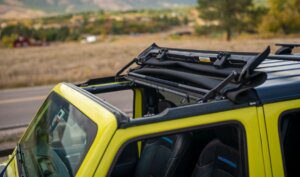
Everything Bestop builds starts from one belief: your vehicle should unlock more of your life, and open-air driving should feel like a natural part of the everyday. The Sunrider exists to make that feeling as reachable as possible, the first easy step into the open-air lifestyle for a hardtop owner.

The way it delivers that is by lowering the effort to almost nothing: a flip-back panel that lives on your Jeep or Ford Bronco and opens the front to the sky whenever you choose. It is the most accessible entry point, the one that turns ordinary drives into small escapes.

From there, the lineup opens up for drivers who want a fuller transformation. The Trektop family brings a modern, frameless fastback silhouette and full open-air convertibility, while the eTop, the world’s only aftermarket powered soft top, opens the whole roof at the push of a button. The Sunrider, the Trektop family, and the eTop are different doors into the same open-air experience, each built for a different rhythm of driving.

Explore the Lineup

Open-air driving was always meant to feel like freedom, the kind you reach for on a whim rather than schedule around. Whether you start with the everyday simplicity of a Sunrider or step into a fuller transformation, your Jeep or Ford Bronco was built to let the outside in. Explore the Sunrider for Hardtop lineup and the rest of the Bestop open-air lineup, confirm your fit with the Year/Make/Model fitment tool, and find the setup that puts more open sky into your everyday drive.

Frequently Asked Questions About the Sunrider for Hardtop and Freedom Panels

Quick, direct answers to the questions Jeep and Ford Bronco hardtop owners ask most when comparing the Bestop Sunrider for Hardtop with factory Freedom Panels.

Is the Bestop Sunrider a good alternative to Jeep Freedom Panels?

Yes. The Sunrider for Hardtop replaces your factory Freedom Panels with a flip-back fabric panel that opens in seconds from the driver’s seat. You keep everyday open-air access with nothing to unbolt, carry, or store, and it installs on your existing factory hardtop with no drilling.

What is the difference between the Sunrider and factory Freedom Panels?

Factory Freedom Panels are rigid roof sections you unbolt, carry, and store each time. The Sunrider for Hardtop is a soft flip-back panel that stays on the vehicle and folds open in seconds, then closes just as fast, so open-air driving becomes a single motion instead of a two-person project.

Does the Sunrider for Hardtop replace the Freedom Panels?

Yes. The Sunrider for Hardtop is installed in place of the factory front Freedom Panels on your Jeep or Ford Bronco hardtop. Once it is on, you flip the fabric panel back for instant overhead open air and flip it closed when the weather turns, with the rest of your hardtop staying in place.

How fast does the Sunrider open compared to removing Freedom Panels?

The Sunrider unlatches and flips back in seconds, often without leaving your seat. Removing, bagging, and storing factory Freedom Panels takes several minutes and usually a second set of hands. That speed is why many owners use the Sunrider far more often than they ever removed their panels.

Does the Sunrider work with my factory hardtop, and do I keep the hardtop?

Yes. The Sunrider for Hardtop is engineered to mount directly to your factory hardtop, and the rest of the roof stays in place. You keep the security and coverage of a closed hardtop for daily driving, with instant overhead open air whenever you flip the panel back.

Which Jeeps and Broncos does the Sunrider for Hardtop fit?

The Sunrider for Hardtop fits the Jeep Wrangler JL (2018-2026), Jeep Wrangler JK (2007-2018), Jeep Gladiator (2020-2026), and Ford Bronco (2021-2027), in 2-door and 4-door versions. Confirm your exact fit with the Year/Make/Model fitment tool before ordering.

Do you have to drill or modify the vehicle to install a Sunrider?

No drilling is required. The Sunrider arrives as a pre-installed fabric-on-frame assembly with door rails and full instructions, and mounts to your factory hardtop with no vehicle modifications. Most owners complete the one-time install in around 30 minutes, and after that it simply stays on.

Is the Sunrider for Hardtop weatherproof and all-season?

Yes. The Sunrider is built for four-season use with premium, water-repellent, UV-resistant fabric and precision-fit seals engineered to Bestop’s OEM-certified standards. It keeps the interior dry and comfortable year-round, so you can flip it open on a clear morning and close it quickly when the weather changes.

What material options does the Sunrider come in?

The Sunrider for Hardtop is offered in two Bestop fabrics: Black Diamond, a marine-grade vinyl in the value tier, and Premium Black Twill, a richer, quieter 30 oz textile weave in the premium tier. Both are water-repellent and UV-resistant; Twill is the longtime favorite for its refined look and quieter ride.

How much does the Bestop Sunrider for Hardtop cost?

Sunrider for Hardtop pricing varies by platform and fabric. Jeep Wrangler JL and Gladiator versions are listed around $799.99 for Black Diamond and $999.99 for Premium Twill, with Ford Bronco versions priced higher. Check the current price and your fitment on the product page before ordering.
How to Remove and Store Your Jeep Hardtop With a Hoist

Key Takeaways

  • A Jeep hard top hoist lifts a removed hardtop off your Wrangler and holds it for storage, so open-air season can start whenever you decide it should.
  • One person can remove and store a Jeep hardtop with the right tool, such as the Bestop LIFTnGO or TopLift PRO v2.0, both built for solo operation.
  • A full Jeep Wrangler hardtop is heavy and awkward, typically well over 100 pounds for the complete assembly, which is the main reason owners reach for a hoist.
  • Three approaches cover most garages: DIY ceiling strap systems, freestanding carts and frames, and patented one-person removal tools engineered for Jeep and Ford Bronco.
  • Store the hardtop up off the floor, evenly supported, and protected, whether you park it overhead on a hoist or aside on a rolling cart.

Your Jeep Wrangler was built for open air. The moment the top comes off, the whole drive opens up: sun overhead, wind through the cabin, and the trail feeling closer than ever. For a lot of owners, the hardtop itself is the one thing standing between them and that feeling. It is heavy, tricky to grip, and traditionally a two-person job.

A Jeep hard top hoist changes the math. The right hoist or removal tool lets you take the top off, roll the Jeep clear, and store the top on your own schedule. Open-air season starts the day you decide it should, and going back to a closed cabin is just as simple when the weather turns.

This guide walks through what a hoist is, how much a hardtop really weighs, how to remove it step by step, how to choose the approach that fits your garage, and how to store the top safely once it is off.

What Is a Jeep Hard Top Hoist?

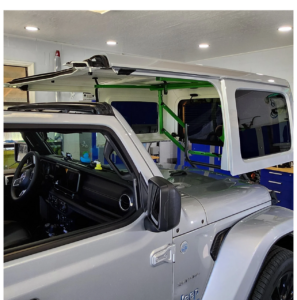
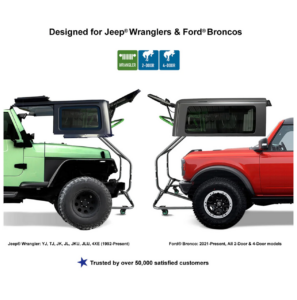
A Jeep hard top hoist is a device that lifts a removed hardtop off the vehicle and holds it for storage. It carries the weight for you and gives the top a dedicated place to live while you drive open. Options range from simple ceiling strap systems to freestanding carts and patented one-person tools like the Bestop HOSS Storage Hardtop Hoist, LIFTnGO, and TopLift PRO v2.0.

Owners reach for a hoist because a hardtop is heavy and unwieldy, and because a good hoist protects both the top and the person handling it. It also keeps the top clean, supported, and ready to reinstall, which matters when you swap between open-air and closed driving through the seasons. You can see the full range of hardtop handling gear in Bestop’s Storage & Security lineup.

How Much Does a Jeep Hardtop Weigh, and Why It Matters

A full Jeep Wrangler hardtop is heavy and awkward, typically well over 100 pounds for the complete assembly depending on model and configuration. Size and grip points make it feel heavier still, since there is nowhere natural to hold it and balance it at the same time.

That combination is exactly why a hoist or removal tool earns its place in the garage. Lifting a top of that weight by hand invites scratches, dropped glass, and strained backs. A hoist carries the load evenly, keeps the top level, and turns a job that once needed a helper into one you can plan around your own weekend.

Can One Person Remove a Jeep Hardtop?

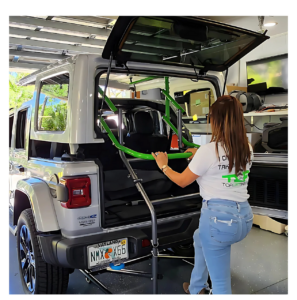
Yes. With the right tool, one person can remove and store a Jeep hardtop from start to finish. Bestop’s LIFTnGO removal tool is built for solo operation, working without help and without tools, and the TopLift PRO v2.0 does the same for a wide range of Jeep and Ford Bronco builds.

The idea is straightforward: the tool grips the top, lifts it off the tub, and holds it steady so you can roll the Jeep forward and set the top down or park it overhead by yourself. What used to be a scheduled event with a friend becomes a solo task you can do on any morning the weather looks right.

How to Remove a Jeep Hardtop: Step by Step

This is the general Jeep hardtop removal sequence. Your exact hardware varies by model and year, so check your owner’s manual and your hoist or tool instructions before you start.

  1. Clear a flat, open space in the garage or driveway and set up your hoist or removal tool nearby.
  2. Disconnect the rear wiper wiring and washer hose, plus any wiring for heated glass or a rear defroster.
  3. If your Jeep has Freedom Panels or a Sky top, remove and store those panels first so the rear section lifts cleanly.
  4. Unbolt the rear and side latches and the liftgate hardware, following the layout for your model.
  5. Attach the hoist or removal tool to the top at the recommended lift points.
  6. Raise the top evenly until it clears the tub, then roll the Jeep forward out from under it.
  7. Lower the top onto a cart or storage surface, or lift it overhead on a hoist for the season.
  8. To reinstall, reverse the steps, then reconnect the wiring and confirm the seals seat properly.

Take the removal at a steady pace and keep the top level throughout. That protects the glass, the paint, and the seals that keep your cabin dry when the hardtop goes back on.

Choosing a Jeep Top Lift: Three Ways to Hoist a Hardtop

There are three common ways to handle a hardtop, and the best jeep top lift for you comes down to your garage, your rig, and how often you plan to swap. The table below lays out how each approach works so you can match one to the way you drive.

Approach How It Works Best For  

Trade-Offs


DIY ceiling strap system Straps and pulleys mounted to garage rafters raise the top overhead. Budget builds and occasional swaps. Relies on solid rafters, careful balancing, and often a second person.
Freestanding cart or frame A wheeled cart or frame cradles the top at floor or waist level. Owners who want to roll the top aside. Uses floor space and keeps the top at ground level.
Patented one-person removal tool A wheeled device grips the top, lifts it off, and holds it for storage. Solo swaps and lifted or modified rigs. A larger upfront investment than a strap kit.

Bestop’s one-person tools fit the third category. The LIFTnGO and the TopLift PRO v2.0 (a direct alternative to the top lift pro category of tools) are engineered to lift, hold, and store the top in a single system, so a solo owner can go open-air on demand.

Bestop Hardtop Hoists and Removal Tools

Open-air freedom is the goal, and Bestop builds hardtop gear so getting there feels like part of the drive rather than a chore. Each tool applies the same fit-and-finish engineering that makes Bestop the sole OEM soft top supplier to Jeep and an OEM partner to Ford for the Bronco. Here is how the lineup fits different owners.

  • HOSS Storage Hardtop Hoist: Once the top is off, the HOSS gives it a home overhead in the garage and frees the floor for the Jeep. It handles all JL hardtops (2018-2026) and lets you remove and store a Jeep hardtop overhead. See the HOSS product page for current fitment.
  • LIFTnGO: A hardtop removal tool and storage device in one, the LIFTnGO works without help and without tools. It fits the Jeep Wrangler and the Ford Bronco 4-door (excluding Raptor), so one owner can lift, move, and store the top solo.
  • TopLift PRO v2.0: A patented one-person removal tool with fully adjustable legs that accommodate lifted builds and trailer hitches. Its broad Jeep Wrangler and Ford Bronco fitment makes it a flexible pick for modified rigs.

Confirm the right match for your vehicle with Bestop’s Year/Make/Model fitment tool or the product page, and check Bestop’s official warranty resources for coverage details before you buy.

How to Store Your Jeep Hardtop Safely

Store your Jeep hardtop up off the floor, supported evenly, and protected from dust and impacts. An overhead hoist like the HOSS keeps the top secure while opening up garage space, and a freestanding cart works well if you would rather roll the top aside. A window storage bag or duffle protects the glass and seals while the top is parked for the season.

Good hardtop storage does more than tidy the garage. Even support keeps the top from warping, and covered glass stays scratch-free, so reinstalling in the fall is clean and straightforward.

If you love open-air access but do not want to pull the whole top every time, the Sunrider for Hardtop is worth a look. It replaces the Freedom Panels and flips back in seconds for sun and sky, giving you a taste of open air on any drive while the full hardtop stays in place.

Explore the Lineup

Open-air season is yours to start whenever the mood strikes. Whether you want to store the top overhead, roll it aside, or pull it solo, there is a Bestop setup that matches your Wrangler, your garage, and the way you drive. Explore the Storage & Security lineup to find the hoist or removal tool that turns top-off day into part of the fun.

Frequently Asked Questions About Jeep Hardtop Hoists

Quick, direct answers to the questions Jeep owners ask most when they are ready to take the hardtop off and store it safely.

What Is a Jeep Hardtop Hoist?

A Jeep hardtop hoist is a device that lifts a removed hardtop off the vehicle and holds it for storage, so you avoid wrestling a heavy, awkward top by hand. Options range from simple ceiling strap systems to freestanding carts and patented one-person tools like the Bestop HOSS, LIFTnGO, and TopLift PRO v2.0.

Can One Person Remove a Jeep Hardtop?

Yes. With the right hoist, one person can remove and store a Jeep hardtop without a helper. Bestop’s LIFTnGO and TopLift PRO v2.0 are built for solo operation, lifting the top and holding it so you can roll the Jeep clear and set the top down or store it overhead by yourself.

How Much Does a Jeep Wrangler Hardtop Weigh?

A full Jeep Wrangler hardtop is heavy and unwieldy, typically well over 100 pounds for the complete assembly depending on model and configuration. That weight, combined with its size and awkward grip points, is exactly why a hoist or removal tool makes the job safer and protects both you and the top.

Do You Need a Hoist to Remove a Jeep Hardtop?

You do not strictly need one, but a hoist makes removal far easier and safer. Removing a hardtop by hand usually takes two people and risks scratches, drops, and strained backs. A hoist or removal tool lets one person do the job cleanly and gives the top a dedicated, protected place to live.

How Do You Store a Jeep Hardtop After Removing It?

Store it up off the floor, supported evenly, and protected from dust and impacts. Overhead hoists and freestanding carts keep the top secure while freeing garage space. Bestop’s HOSS lifts and parks a removed hardtop overhead, and a window storage bag or duffle protects the glass and seals while the top is off.

What Is the Difference Between a Hardtop Hoist and a Removal Tool?

A hoist mainly lifts and stores the top, often overhead, while a removal tool both takes the top off the vehicle and stores it. Bestop’s HOSS is a storage hoist for the Jeep Wrangler JL; the LIFTnGO and TopLift PRO v2.0 are removal tools that lift, hoist, and store in one system.

Will a Hardtop Hoist Work With a Lifted Jeep or a Trailer Hitch?

Many do. The Bestop TopLift PRO v2.0 has fully adjustable legs that accommodate lifted and modified builds with or without a trailer hitch, so fitment is not a question regardless of your setup. Always confirm your specific model and garage clearance before buying, and check the product page for current fitment.

Can You Take a Jeep Soft Top Through a Car Wash?

Key Takeaways

  • It is best to keep a Jeep or Ford Bronco soft top out of an automatic brush car wash, because spinning brushes can scratch vinyl windows and pull at seams and stitching.
  • A touchless wash is occasionally an option, but high-pressure water can force leaks past seams, zippers, and window seals, so use it with care and dry the top afterward.
  • Hand washing is the safe, manufacturer-preferred method: rinse, clean with a dedicated soft-top cleaner, rinse again, dry with microfiber, then protect.
  • Use fabric-specific care rather than dish soap or household cleaners, which strip protective coatings and dry out and crack the material over time.
  • Clean vinyl windows with a vinyl-safe cleaner and microfiber (never paper towels), and clean and lubricate zippers so they glide smoothly.

Few things beat the first warm morning when you fold the top back and let the road open up. Your Jeep Wrangler or Ford Bronco was built for that feeling, and your soft top is what makes it possible on your schedule. So a practical question tends to follow fast: can you take a Jeep soft top through a car wash? Keeping that top clean is how you keep the open-air freedom going, season after season.

This guide answers that question directly, then walks through the manufacturer-correct way to wash a soft top by hand. A little regular care protects the fabric, the windows, and the everyday freedom your top unlocks.

Can You Take a Jeep Soft Top Through a Car Wash?


It is best to keep a Jeep or Ford Bronco soft top out of an automatic brush car wash. The spinning brushes can scratch vinyl windows and tug at seams and stitching, and Jeep’s owner manual advises against sending fabric tops through automatic washes. Touchless washes are occasionally an option, though high-pressure water can force leaks around seams and seals. Hand washing stays the safe, dependable method.

Here is the why behind it. A soft top is a system of fabric, coated vinyl, stitched seams, zippers, and sealing surfaces, all working together to keep you comfortable and dry. Automatic equipment is designed around hard body panels and glass, so it treats your top far more roughly than it needs. When you wash by hand, you control the pressure, the products, and the pace, which is exactly what your top wants.

Car Wash Types, Explained: What’s Safe and What’s Not

Not every car wash treats a soft top the same way. Automatic brush washes are the ones to avoid, touchless washes call for real caution, and hand washing gives your fabric the gentle, controlled care it was built for. Understanding the differences helps you protect your investment and keep washing a Jeep soft top simple. Here is how the common options compare.

Car Wash Type Verdict Why


Automatic brush wash Avoid Spinning brushes can scratch vinyl windows and pull at seams and stitching.
Touchless / high-pressure Use with caution High-pressure water can force leaks past seams, zippers, and window seals.
Self-serve wand Okay with care Keep the wand well back, use a wide spray, and avoid aiming at seams or windows.
Hand wash Best Full control of pressure, products, and pace, which is what the fabric is built for.

Automatic Brush Washes

Skip automatic brush washes for any soft top. Those rotating brushes and stiff cloth strips are built to scrub paint and glass, and they can scratch or cloud vinyl windows, snag stitching, and stress the seams that keep water out. The pressure and pulling can also work zippers and fasteners loose over time. For a fabric top, this is the one wash type to rule out completely.

Touchless and High-Pressure Washes

Touchless washes can work occasionally, as long as you use them with care. The concern is water pressure: a strong stream aimed directly at fabric, seams, zippers, or windows can push moisture past the seals and lead to leaks. If you do use one, keep the pressure wand well back from the top, avoid blasting any seam or opening head-on, and dry the top afterward with a clean towel. When in doubt, a hand wash is always the safer call.

How to Wash a Jeep Soft Top by Hand

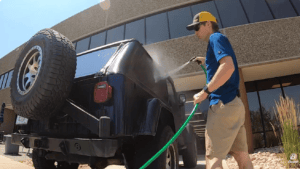
Washing a Jeep soft top by hand is straightforward and gives you full control over every surface. Rinse away loose dirt, clean the fabric gently with a dedicated soft-top cleaner, rinse again, dry with microfiber, and finish with a fabric-appropriate protectant. The whole routine works the same on a Jeep Wrangler or a Ford Bronco top, and it treats the fabric the way it was engineered to be treated.

  1. Rinse first. Rinse the entire top with a garden hose to lift loose dirt, dust, and grit before you touch the fabric. Rinsing first keeps abrasive debris from being ground into the surface as you clean.
  2. Clean gently. Apply a dedicated soft-top cleaner with a soft brush or a microfiber cloth. Work in gentle, even motions and let the product do the work, paying attention to seams and any spots where dirt collects.
  3. Rinse thoroughly. Rinse the top top to bottom until the water runs clear and no cleaner is left behind.
  4. Dry with microfiber. Dry the top with a clean, dry microfiber towel to lift standing water and prevent spotting.
  5. Protect. Finish with a fabric-appropriate protectant to help guard the surface and shed water. That last step is what keeps your top looking good between washes.

For a visual walkthrough, watch Bestop’s own step-by-step soft top cleaning demo:

Choosing the Right Cleaner for Your Soft Top

The right cleaner depends on your fabric, and matching the two is the single most important choice in soft-top care. Bestop formulates fabric-specific care because Bestop built the tops in the first place, so each product is tuned to the exact material it cleans. A vinyl top and a premium twill top have different surfaces, and using care made for each keeps that surface healthy far longer. If you are unsure what your top is made of, the Bestop soft top material comparison breaks down each fabric.

For vinyl tops such as Black Diamond, Bestop Cleaner is formulated to lift dirt from the coated surface without stripping it. For premium twill, Bestop Protectant for Twill Fabric is made to condition and shield that woven textile. Your vinyl windows have their own product in Bestop Vinyl Window Cleaner, and your zippers are covered by the Bestop Soft Top Zipper Cleaner and Lubricant. You can find all of it in the Bestop fabric-care line, so every part of the top gets what it actually needs.

It is worth understanding why household products fall short here. Dish soap and general cleaners are built to cut grease, and on a soft top that same strength can strip protective coatings and dry out the fabric. Over time, that drying leads to cracking, fading, and a top that ages before its time. Purpose-built care avoids all of it.

Caring for Vinyl Windows and Zippers

Your windows and zippers deserve as much attention as the fabric, because they carry a lot of the daily experience. For vinyl windows, rinse away grit first, then clean with a vinyl-safe product like the Bestop Vinyl Window Cleaner and a soft microfiber cloth. Reach for microfiber rather than paper towels, which can haze and scratch clear vinyl. For zippers, clean and lubricate them so they glide smoothly and stay snag-free.

Clear windows are what frame the view on a top-up day, so keeping them clean and free of fine scratches matters more than people expect. Always rinse before you wipe, so loose dirt washes away instead of dragging across the vinyl.

Zippers are the small hardware that makes the open-air routine feel seamless. A quick clean and a pass of the Bestop Soft Top Zipper Cleaner and Lubricant keeps them moving freely, which protects the fabric around them and makes opening and closing the top something you look forward to.

Protecting Your Soft Top for the Long Haul

Regular cleaning paired with a periodic protectant is what keeps a soft top performing for years. Together they guard against UV fading and mildew and help the fabric shed water instead of soaking it up. There is no need for a rigid schedule; let your climate, sun exposure, and trail time set the cadence. The more your top lives outdoors, the more it appreciates the attention. The Bestop Cleaner/Protectant Pack keeps the essentials together for routine care.

This same care protects whatever top you run. Whether you drive a Sunrider for Hardtop, a top from the Trektop family, or one from the Supertop family, on a Jeep Wrangler or a Ford Bronco, consistent cleaning and protection extend its life and keep it looking its best.

If you ever have questions about what your top’s coverage includes, Bestop’s official warranty resources have the details. Keeping up with routine care is simply the best way to get the longest, most enjoyable life out of your top.

Your soft top is the key to a life spent under open sky, and a little care is all it asks in return. When you are ready to keep that feeling going, explore the Bestop soft top lineup and the fabric-care line built for the exact materials your top is made from. The road is open, and your top is ready whenever you are.

Frequently Asked Questions About Washing a Jeep Soft Top

Quick, direct answers to the questions Jeep and Ford Bronco owners ask most about cleaning a soft top and running it through a car wash.

Can You Take a Jeep Soft Top Through a Car Wash?

It is best not to. Automatic brush washes can scratch vinyl windows and pull at seams and stitching, and Jeep’s owner manual advises against running a fabric top through them. A touchless wash is occasionally an option, but high-pressure water can force leaks around seams and seals. Hand washing is the safe method.

Are Touchless Car Washes Safe for a Soft Top?

Touchless washes avoid spinning brushes, so they are gentler than automatic washes, but they are not risk-free. The high-pressure jets can drive water past window seals, zippers, and seams and cause interior leaks. If you use one occasionally, dry the top afterward. For fabric health, a controlled hand wash is still the best choice.

Can You Pressure Wash a Jeep Soft Top?

Avoid aiming high-pressure water directly at the fabric, seams, zippers, or vinyl windows. Concentrated pressure can loosen stitching, damage seals, and force water inside. If you rinse at a self-serve bay, keep the wand well back, use a wide fan setting, and let a gentle stream do the work instead of blasting the top.

What Should You Use to Clean a Jeep Soft Top?

Use a cleaner made for your top’s fabric. Bestop offers Bestop Cleaner for vinyl tops and a Protectant for Twill Fabric for premium twill, plus a Vinyl Window Cleaner and a Zipper Cleaner and Lubricant. Avoid dish soap and harsh household cleaners, which strip protective coatings and can dry out and crack the material.

How Do You Clean Soft Top Vinyl Windows Without Scratching Them?

Rinse the windows first to float away grit, then clean with a vinyl-safe product like Bestop Vinyl Window Cleaner and a clean microfiber cloth. Never use paper towels or a dry rag, which can haze or scratch the vinyl. Work gently in straight passes and dry with a fresh microfiber towel.

How Often Should You Clean and Protect a Jeep Soft Top?

Wash your top regularly so dirt, bird droppings, and tree sap do not sit on the fabric, and reapply a Bestop protectant periodically to guard against UV fading and to help the top shed water. How often depends on climate, sun exposure, and how much you drive, so treat it like routine care rather than a fixed schedule.

Does Running a Soft Top Through a Car Wash Void Anything?

Warranty terms vary and are easy to misstate, so check Bestop’s official warranty resources for specifics. What matters for the top itself is that automatic brushes and high-pressure jets can cause scratches, leaks, and seam wear over time. Hand washing with fabric-specific products is the surest way to protect your investment.

Jeep Gladiator Tonneau Cover: Fitment and Installation Guide

Key Takeaways

  • Every Jeep Gladiator from 2020 through 2026 shares one 5-foot bed measuring about 60.3 inches, so fitment comes down to your trim and rail setup rather than bed length.
  • The Bestop EZ-Roll Soft Tonneau Cover installs with a no-drill, bolt-on clamp system in less than 30 minutes, so most owners handle the job at home with basic hand tools.
  • A soft roll-up cover rolls fully out of the way for complete bed access, while dual pull tabs and restraint straps keep the tailgate usable day to day.
  • The EZ-Roll comes in Premium Black Twill or Black Diamond vinyl, both treated for UV and mildew resistance and built as four-season, weather-resistant covers.
  • Bestop is Jeep’s sole OEM soft top supplier since 1986 and an OEM partner to Ford Bronco, and that same engineering goes into the Gladiator tonneau.

Why Your Gladiator’s Bed Deserves a Cover

Your Jeep Gladiator was built for open air, weekend hauls, and whatever the trail hands you. A Jeep Gladiator tonneau cover helps you live that way, keeping cargo shielded from sun and weather while the bed stays clean and ready for the next job.

An open bed is versatile, yet loose gear slides, collects road dust, and takes on rain on the highway. A bed cover turns that open space into usable, everyday storage you can count on, whether you load tools for work or gear for the weekend.

For the truck owner who values function and toughness first, a cover earns its place by working every day. The rest of this guide walks through Gladiator fitment, cover styles, and how the Bestop EZ-Roll goes on your bed.

Does One Tonneau Cover Fit Every Jeep Gladiator?

Yes. Every Jeep Gladiator built from 2020 through 2026 uses a single 5-foot bed that measures about 60.3 inches, so bed length stays the same across the lineup. A cover engineered for the Gladiator, like the Bestop EZ-Roll Soft Tonneau Cover, fits that one bed length across every model year.

Because bed length is a constant, your fitment questions center on trim and any factory or aftermarket rail systems in the bed. Those details decide how a cover mounts, which is why confirming your exact configuration matters before you order.

Gladiator Tonneau Fitment: Trail Rail and Trim

Trail Rail compatibility is the main fitment question for the Gladiator, because factory rail systems and bed accessories change how a cover mounts. The Bestop EZ-Roll installs with a no-drill, bolt-on clamp system designed for the Gladiator bed.

To confirm your exact configuration, use Bestop’s Year/Make/Model fitment tool as the authoritative option, or reach Bestop customer service before you order. That one step saves guesswork and makes sure the cover you choose matches the way your bed is set up.

Bestop soft tops and covers are engineered for specific vehicle platforms and body types, so a cover made for the Gladiator bed is designed around that bed. That engineering focus is what keeps the fit tight and the finished look clean, rather than a generic cover stretched to fit.

Tonneau Cover Styles for the Gladiator

The right cover comes down to how you use your Gladiator, not a single winner. Each style suits a different driver and a different day. Here is how the common tonneau styles line up so you can match one to your routine.

Cover Style How It Works Best For


Soft roll-up Fabric rolls forward to the cab for full bed access, then rolls back and secures flat. Owners who want quick, complete bed access and a low-profile look.
Soft folding (tri-fold) Fabric panels fold in sections toward the cab. Drivers who want sectioned access and a soft, low-weight cover.
Hard folding Rigid panels fold in stages over the bed. Owners who prefer solid panels and a firm surface.
Hard roll-up Linked slats roll into a canister at the cab. Drivers who want a rigid feel with roll-away access.
Retractable A rigid cover slides into a housing behind the cab. Owners who want a sealed canister and hands-off operation.

Think about your week when you choose. If you haul tools to the job site and want the bed open fast, a roll-up clears the way in one motion. If you run a bed rack or carry longer loads, sectioned or rigid covers give you a firmer surface to work around.

For many Gladiator owners, a soft roll-up fits the open-air mindset: it rolls fully out of the way for the whole bed, sits low over the rails, and comes off when you need the bed wide open. Explore Bestop soft tonneau covers to see the roll-up options, or browse bed covers and bed caps for the full range. If you want a fully enclosed cargo space, look at truck bed caps.

The Bestop EZ-Roll: A Jeep Gladiator Tonneau Cover Built for Real Life

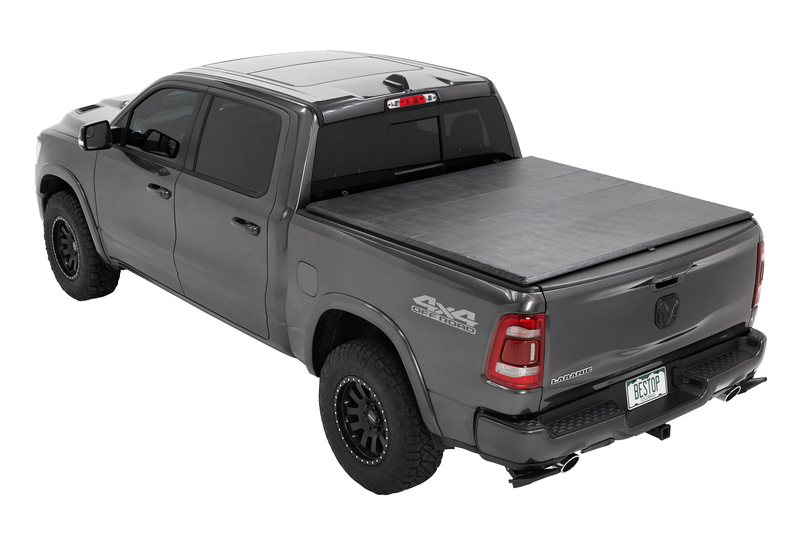
The Bestop EZ-Roll Soft Tonneau Cover brings Bestop’s fabric craft and OEM-level fit to the Gladiator bed. It is a low-profile soft roll-up, engineered for the Gladiator’s single 5-foot bed and finished to look like it left the factory that way.

Features and Benefits

  • Low-profile design: Bows integrated into the fabric sit the cover flush on the bed for a clean, factory-style look.
  • No-drill install: A bolt-on bed-clamp system with 3M-brand self-adhesive strips mounts the cover without cutting or drilling the truck.
  • Full bed access: Dual pull tabs at the rear corners release the cover so it rolls forward, and restraint straps secure it behind the cab.
  • Four-season fabric: Premium leather-grain vinyl-coated polyester, treated for UV and mildew resistance, handles year-round driving.
  • OEM-look rails: Black-finish aluminum rails give the cover a finished, integrated appearance on the bed.

The EZ-Roll comes in two Bestop fabrics. Premium Black Twill offers a rich textile weave that matches Bestop soft tops, while Black Diamond is a marine-grade vinyl with a smooth, easy-clean surface. See how the fabrics differ on the Bestop soft top material comparison page, then choose the finish that fits your rig.

Premium Black Twill is priced at $403.74 on bestop.com, with Black Diamond offered at a lower price point. Owners rate the EZ-Roll Soft Tonneau Cover 4.4 out of 5 across 7 reviews on bestop.com, citing a straightforward fit, a dry bed, and twill that matches their soft top.

Install It Yourself in Under 30 Minutes

You can install the Bestop EZ-Roll Soft Tonneau Cover in less than 30 minutes. The no-drill, bolt-on clamp system mounts to the Gladiator bed rails with basic hand tools, so most owners complete the job at home in one sitting.

  1. Set the black-finish aluminum rails along both bed walls and align them with the bed.
  2. Secure the rails with the included bolt-on clamps, no drilling required.
  3. Attach the fabric cover with its integrated bows to the rails.
  4. Adjust the tension so the cover sits taut and sealed.
  5. Roll the cover forward and back to confirm smooth, full bed access.

For a visual walkthrough, watch how the EZ-Roll goes on the Gladiator bed:

Once it is on, the EZ-Roll stays on. You roll it forward for the full bed, roll it back to cover a load, and adjust the tension over time as the fabric settles into place.

Living with Your Tonneau: Access, Weather, and Care

The EZ-Roll is built as a four-season, weather-resistant cover. Its leather-grain vinyl-coated polyester is treated for UV and mildew resistance, and the hook-and-loop attachment holds even in extreme cold. It keeps the bed protected through the seasons, and a soft cover is best understood as weather-resistant rather than fully waterproof.

Daily use stays simple. You can still use the tailgate with the cover installed: the dual pull tabs release the rear corners so you can roll the cover forward, and the restraint straps hold it behind the cab while you drive. Full bed access is always a roll away.

To keep the fabric looking its best, wipe it down and treat it with Bestop fabric cleaners and protectants. For care intervals and cleaning steps, follow Bestop’s official soft top care guidance so you treat the fabric the right way.

Pair It with the Rest of Your Open-Air Setup

Open air is not only about the bed. The Gladiator was made to open up top too, and a tonneau pairs naturally with the way you drive the cab. Match the bed cover to your top and the whole rig reads as one setup.

The Sunrider for Hardtop replaces your Freedom Panels and flips back for open-sky driving in seconds, so it is a quick-access upgrade rather than a full top replacement. For a full open-air change, a soft top from the Trektop family opens the whole cab. In matching Premium Black Twill, your bed cover and top share the same finish.

Your Gladiator is ready for whatever comes next. Explore the Lineup of Gladiator accessories and open-air gear, and set your truck up to carry more of your life, on the job and off the grid.

Frequently Asked Questions About Jeep Gladiator Tonneau Covers

Quick, straight answers to the questions Gladiator owners ask most before choosing a bed cover.

What Size Tonneau Cover Fits a Jeep Gladiator?

Every Jeep Gladiator from 2020 through 2026 uses one bed size, a 5-foot bed measuring about 60.3 inches, so bed length is not a variable. A cover engineered for the Gladiator, like the Bestop EZ-Roll Soft Tonneau Cover, fits that single bed length across all model years and trims.

Does a Gladiator Tonneau Cover Work With the Trail Rail System?

Trail Rail compatibility is the main fitment question for the Gladiator, since covers mount differently depending on your bed setup. The Bestop EZ-Roll installs with a no-drill, bolt-on clamp system designed for the Gladiator bed. Confirm your exact configuration using Bestop’s Year/Make/Model fitment tool or customer service before ordering.

Can You Install a Jeep Gladiator Tonneau Cover Without Drilling?

Yes. The Bestop EZ-Roll Soft Tonneau Cover uses a no-drill, bolt-on bed-clamp system with 3M-brand self-adhesive strips, so it mounts to the Gladiator bed without cutting or drilling into the truck. The black-finish aluminum rails give it a clean, OEM-style look once installed.

How Long Does It Take to Install a Gladiator Tonneau Cover?

The Bestop EZ-Roll Soft Tonneau Cover installs in less than 30 minutes using the included clamps and step-by-step instructions. Because it is a bolt-on, no-drill design, most Gladiator owners handle the job at home with basic hand tools, then adjust the tension for a taut, sealed fit.

Soft Roll-Up or Hard Folding: Which Gladiator Cover Is Right for Me?

It comes down to how you use your Gladiator. A soft roll-up like the EZ-Roll rolls fully out of the way for quick, complete bed access and a low-profile look, and it removes easily when you need the whole bed. Hard folding covers trade some of that quick access for rigid panels.

Is a Soft Tonneau Cover Weatherproof for All Seasons?

The Bestop EZ-Roll uses premium leather-grain vinyl-coated polyester treated for mildew and UV resistance, and it is built as a four-season cover with a hook-and-loop system that works even in extreme cold. It keeps the bed protected from the elements, though a soft cover is best described as weather-resistant rather than fully waterproof.

Can I Still Use the Tailgate With the Cover Installed?

Yes. The EZ-Roll Soft Tonneau Cover is designed to allow tailgate access without removing the cover. Dual pull tabs at the rear corners release the cover so you can roll it forward for full bed access, and restraint straps secure it behind the cab while you drive.

What Material Options Does the Bestop Gladiator Tonneau Come In?

The EZ-Roll Soft Tonneau Cover is offered in two Bestop fabrics: Premium Black Twill, a rich textile-weave finish that matches Bestop soft tops, and Black Diamond, a marine-grade vinyl with a smooth, easy-clean surface. Both are treated for UV and mildew resistance and built for year-round use.

Classic Jeep Soft Top Replacement: The Complete Fitment Guide

Key Takeaways

  • The Bestop Supertop Classic is the complete replacement top for vintage Jeeps, fitting the CJ5, CJ7, Scrambler CJ8, Wrangler YJ, and select TJ platforms.
  • Bestop also builds a Supertop Classic for the 1964-1984 Toyota Land Cruiser FJ40 and partial-coverage bikini options for the Geo Tracker and Suzuki Sidekick.
  • A complete Supertop Classic kit starts around $1,099.99, while a replacement skin or Replace-A-Top that reuses your factory frame starts near $300.
  • If your bows are solid, a skin refreshes the fabric and windows; if the frame is damaged, the complete kit includes everything.
  • Most classic tops are owner-installable with basic hand tools, though some vintage fitments require drilling to mount the door surround or brackets.

Your classic Jeep was built for open air, and the right top lets you feel it whenever you choose. A classic Jeep soft top replacement restores that freedom on a vintage rig. That can mean a complete convertible top, a fresh fabric skin, or new windows for a CJ, Scrambler, YJ, or early TJ.

This guide covers which Bestop top fits your vehicle, what it costs, and how to install it. Bestop has built soft tops since 1954 and has been the sole OEM soft top supplier to Jeep since 1986. The same engineering behind factory tops goes into every vintage fitment.

What Counts as a Classic Jeep Soft Top Replacement?

A classic Jeep soft top replacement is a new convertible top for a vintage 4×4 that left the factory with a fabric roof. It comes in three forms:

  • A complete kit with frame hardware, fabric, and windows.
  • A replacement skin that reuses your existing Bestop frame.
  • An OEM-hardware top that installs on your factory bows.

Which one you choose depends on the shape of your current hardware. Missing or bent bows point to a complete kit, while solid factory hardware or an intact Bestop frame lets you spend less on a skin.

To see how each fitment is organized by vehicle and year, browse the full range of vintage Jeep soft tops.

Which Bestop Top Fits Your Classic Vehicle?


For most vintage Jeeps, the answer is the Supertop Classic, and non-Jeep classics like the FJ40, Tracker, and Sidekick have dedicated fitments. Use the table below as a starting point. Then confirm your exact fit with Bestop’s Year/Make/Model fitment tool, because every top is engineered for a specific platform.

Vehicle and Years Recommended Bestop Top


Jeep CJ5 (1955-1983) Supertop Classic
Jeep CJ7 (1976-1986) Supertop Classic
Jeep Wrangler YJ (1987-1995) Supertop Classic
Jeep Scrambler CJ8 (1981-1985) Supertop Classic
Jeep Wrangler TJ (1997-2006, excl. Unlimited) Supertop Classic
Toyota Land Cruiser FJ40 (1964-1984) Supertop Classic
Early Ford Bronco (1966-1977) Supertop Classic
Geo Tracker / Suzuki Sidekick (1995-1998) Strapless Targa Bikini and Windjammer (partial coverage)

The Supertop Classic covers the broadest slice of the vintage lineup. Fitments include the Supertop Classic for the CJ7 and YJ and the Supertop Classic for the FJ40 Land Cruiser.

For a Geo Tracker or Suzuki Sidekick, the Strapless Targa Bikini for the Tracker and Sidekick pairs with a Windjammer. Together they add open-air shade and reduced wind buffeting.

The Supertop Classic: The Top That Set the Standard

The Supertop Classic is the vintage squareback that made Bestop’s name and remains the benchmark for classic Jeep tops. It folds back like a true convertible and stays on the vehicle, so you move between enclosed and open air on your own schedule. This is the heritage version of the framed squareback design, built for legacy platforms rather than the current Supertop Squareback.

Each kit uses an adjustable fold-back frame with the BeltRail attachment system and includes 30-mil clear side and rear windows. A tailgate bar keeps bed access clear, and the complete kit ships with frame hardware, fabric, and windows together.

Doors are sold separately, so plan to run your factory steel doors or add a Bestop door kit. You can review specs and options on the Supertop Classic hub page, where complete kits start around $1,099.99.

Reuse Your Frame: Replace-A-Top and Classic Replacement Skin

If your bows and hardware are still solid, you can renew your top’s look and sealing for far less than a full kit. Two options reuse what you already have: a replacement skin for an existing Bestop frame, and Replace-A-Top for factory OEM hardware.

The Classic Replacement Skin gives your existing Supertop Classic hardware fresh fabric and windows. It is the most economical way to bring a faded top back to life.

The Replace-A-Top for OEM hardware installs on original factory frames. It covers many older Jeep and 4×4 applications, including some Suzuki and Geo fitments.

Both refresh options start near $300. The right choice depends on your vehicle, so confirm the fit for your model before ordering.

Fabric and Window Options for Classic Tops

Classic tops carry heritage finishes that suit a vintage rig. The Supertop Classic offers colors such as Black Denim, Spice, Tan, and Black Crush, plus Black Diamond marine-grade vinyl on select fitments. Window choices run clear or tinted in a 30-mil thickness.

Available finishes vary by vehicle, so check what your specific top offers on its product page. To see how Bestop’s fabrics compare across the lineup, the soft top material comparison breaks down each current material. If only your glass has clouded or cracked, replacement window kits refresh the windows without a whole new top.

How to Install a Classic Jeep Soft Top

Yes, most owners install a Supertop Classic at home with basic hand tools. The frame hardware mounts to the windshield and body, and the bows set the roofline.

The windows fit into place once the top is on. Some vintage fitments require drilling to mount the door surround or brackets, so read your model’s instructions first.

For a visual walkthrough, watch Bestop’s guide to installing the Supertop Classic:

  1. Mount the windshield brackets to the top of the windshield frame.
  2. Install the tailgate retainers along the rear of the tub.
  3. Set the horizontal rod and bows to establish the roofline.
  4. Attach the top fabric to the rear bow.
  5. Install the tailgate bar to keep bed access clear.
  6. Adjust the bows so the fabric sits taut and square.
  7. Fit the side and rear windows into their channels.
  8. Install the door panels or run your factory steel doors.

Fitment and hardware differ across vintage platforms. Confirm the exact top for your vehicle with Bestop’s fitment tool or customer service before you order. For warranty details, refer to Bestop’s official warranty resources.

How Much Does a Classic Jeep Soft Top Replacement Cost?

A complete Bestop Supertop Classic kit, including adjustable frame hardware, fabric, and windows, starts around $1,099.99. If your factory frame is still solid, a Classic Replacement Skin or Replace-A-Top refreshes just the fabric and windows starting near $300.

The condition of your existing hardware is the main factor. Sound bows point to the lower-cost refresh, while missing or bent hardware points to the complete kit.

Partial-coverage options for the Geo Tracker and Suzuki Sidekick include the Strapless Targa Bikini and Windjammer. They sit below full-top pricing and suit owners who mainly want open-air shade. Confirm current pricing and finishes on each product page before you order.

Ready to bring your classic back to open-air life? Explore Bestop’s vintage Jeep soft tops, confirm your fit with the Year/Make/Model fitment tool, and choose the top for your rig.

Frequently Asked Questions About Classic Jeep Soft Top Replacement

Answers to the most common questions vintage Jeep and 4×4 owners ask when replacing a classic soft top.

How Much Does a Classic Jeep Soft Top Replacement Cost?

A complete Bestop Supertop Classic kit, including adjustable frame hardware, premium fabric, and windows, starts around $1,099.99. If your factory frame is still solid, a Replace-A-Top or Classic Replacement Skin refreshes just the fabric and windows starting near $300, a more economical way to renew your top.

Which Bestop Top Replaces a Classic Jeep CJ or YJ Soft Top?

The Supertop Classic is Bestop’s complete replacement for vintage Jeeps, fitting the CJ5, CJ7, Scrambler CJ8, and Wrangler YJ, plus select TJ platforms. It includes adjustable fold-back frame hardware, premium fabric, and 30-mil clear windows, and folds back like a true convertible while staying on the vehicle.

Does Bestop Make a Soft Top for a Toyota Land Cruiser FJ40?

Yes. Bestop offers a Supertop Classic for the 1964 to 1984 Toyota Land Cruiser FJ40, a full squareback replacement with premium fabric and clear DOT-approved windows. It ships as a complete kit built to fold back like a convertible, bringing the same engineering and fit found across the vintage lineup.

Can I Get a Bestop Top for a Suzuki Samurai, Sidekick, or Geo Tracker?

Bestop serves these classic 4x4s with partial-coverage options rather than a full top. The Strapless Targa Bikini and Windjammer fit the 1995 to 1998 Geo Tracker and Suzuki Sidekick for open-air shade and reduced wind buffeting. Confirm your exact year and model with Bestop’s fitment tool before ordering.

Do I Need a Whole New Top or Can I Reuse My Frame?

If your bows and hardware are still solid, Replace-A-Top and the Supertop Classic Replacement Skin reuse your existing frame and give you all-new Bestop fabric and windows, the most economical refresh. If the frame is damaged or missing, choose the complete Supertop Classic kit, which includes everything you need.

What Is the Best Soft Top Replacement for a Classic Jeep?

For most vintage CJ, YJ, and early TJ owners, the Supertop Classic is the benchmark: it is the top that made Bestop famous, folds back like a true convertible, and uses OE-grade materials. Use Bestop’s Year/Make/Model fitment tool to confirm the exact top for your vehicle.

Can I Install a Classic Jeep Soft Top Myself?

Most owners install a Supertop Classic at home with basic hand tools by mounting the frame hardware, setting the bows, and fitting the windows. Some vintage fitments require drilling to mount the door surround or brackets, so check your model’s instructions or Bestop customer service before you start.

What Fabrics and Windows Come on a Classic Jeep Top?

The Supertop Classic offers heritage finishes such as Black Denim, Spice, Tan, and Black Crush, plus Black Diamond marine-grade vinyl on select fits, with clear or tinted 30-mil windows. Options vary by vehicle, so confirm what your specific top offers on its product page.

Soft-Top Jeep Comfort: How to Cut Wind Noise, Drafts, and Buffeting

Key Takeaways

  • Soft-top wind noise usually traces back to fabric flex, worn or loose seals, and turbulence from roof-mounted add-ons, so finding the loudest source first is the fastest route to a calmer cabin.
  • The quickest wins cost almost nothing: reseat and re-tension the top and refresh tired weatherstripping before you spend on any bigger upgrade.
  • A Windjammer is a behind-the-seats fabric wind break for Jeep Wranglers that calms rear buffeting and drafts while still letting some air flow through the cabin.
  • The Windjammer’s vinyl window and lower cut-out also turn the space behind the seats into a covered rear cargo area, so gear stays shielded when the top is off.
  • Premium Twill is Bestop’s quietest, best cold-weather soft-top fabric tier, which makes it the pick for daily drivers who want the calmest all-season cabin.

Why Open-Air Comfort Is Worth Dialing In


Open air is why you chose a soft-top Jeep in the first place: sun overhead, breeze in the cabin, and the freedom to drop the top on a whim. Soft-top Jeep comfort is about keeping that feeling wide open while calming the soft top wind noise, drafts, and buffeting that can build at highway speed. A few smart fabric choices keep every mile feeling easy and every weekend spontaneous.

Your Jeep Wrangler and Ford Bronco were built for this. The goal here is a cabin that stays breezy and conversational, so the open-air life fits into your everyday drive instead of asking you to plan around it. This guide pulls the scattered forum advice into one place and walks through what actually moves the needle. When you are ready to browse the foundation of the whole setup, start with Bestop soft tops.

Why Is My Jeep Soft Top So Loud?

Jeep soft top wind noise comes from a handful of predictable sources: fabric flexes and drums where a rigid panel would stay still, small seal and fit gaps let air whistle through, roof-mounted add-ons stir up turbulence, and everything gets louder once you climb past roughly 55 mph. Understanding which one is talking to you is the fastest path to a calmer cabin.

Fabric is the first factor. A soft top moves with the wind in a way a rigid roof does not, and thinner, stiffer materials transmit more of that sound into the cabin. The material tier you choose sets your baseline noise level before you touch anything else, which is why it pays to review the soft top material comparison when you plan an upgrade.

Fit is the second factor. Weatherstripping, door seals, and window edges do quiet work every day, and as they age or loosen, air finds the gaps and turns them into whistles and drafts. A top that has shifted out of tension will do the same thing.

The third factor sits on your roof. Light bars, roof racks, hood protectors, and antennas all create turbulence as air tumbles over them, and that turbulence rolls straight back over a fabric top. Speed multiplies all of it, so the same rig that feels serene around town can get loud on the interstate.

The takeaway is encouraging: each source has a matching fix. Fabric noise responds to a better material tier, gaps respond to fresh seals and proper tension, and turbulence responds to how you mount your gear. Diagnose which one you hear most, and you can spend your effort where it actually pays off.

Are Soft Tops Noisier Than Hardtops?

Yes, a soft top generally carries more cabin noise than a rigid hardtop, and that is a fair trade for open-air freedom you can have any day you want it. The good news: the gap is smaller than most drivers expect. A premium fabric tier, healthy seals, and a behind-the-seats wind break bring a soft top remarkably close to hardtop calm while keeping the fun fully intact.

How to Reduce Wind Noise in a Jeep Wrangler Soft Top

To reduce wind noise in a Jeep soft top, work from the simple and free toward the bigger upgrades: reseat and tension the top, refresh worn seals, add a behind-the-seats wind break, tame roof-mounted add-ons, and step up to a quieter fabric. Most drivers feel a real difference after the first two or three steps.

  1. Reseat and Tension the Top: Walk the perimeter, reseat the fabric in its channels, and bring it back to proper tension so the panels stay taut and quiet at speed.
  2. Check and Replace Worn Seals: Inspect weatherstripping and door seals for cracks, gaps, and flattened sections, then replace what has aged so air stops finding a way in.
  3. Add a Behind-the-Seats Wind Break: A fabric wind break like the Windjammer curbs the swirling air that rolls in from behind, which cuts both buffeting and the roar it creates.
  4. Address Roof-Mounted Add-Ons: Reposition, lower, or streamline light bars, racks, and antennas that churn up turbulence, and your fabric top has far less noise to transmit.
  5. Step Up to a Quieter Fabric: When you are ready for the biggest gain, move to a premium material tier engineered for lower cabin noise and better cold-weather comfort.


Order matters here. The first two steps cost little and often deliver the largest single improvement, because a loose top and tired seals create the whistles that stand out most on the highway. Start there, take a drive, and listen for what remains before you invest in bigger changes.

A wind break is the natural next move for drivers who spend time topless or with the doors off, since it targets the rear swirl that seals alone can never reach. From there, streamlining your roof gear and choosing a premium fabric round out a cabin that stays calm at speed.

Stopping Drafts and Cold Air with the Top or Doors Off

The fastest way to stop cold air from swirling into the cabin with the top or doors off is a behind-the-seats wind break. It puts a fabric barrier between you and the air rolling in from the rear, so drafts settle down and the front seats stay comfortable. Pair that with tight seals and the right door and window choices and you can run open far later into the season.

Drafts behave a lot like noise: they follow the gaps. Fresh weatherstripping and a well-tensioned top keep cold air from sneaking in around the edges, while a wind break handles the bigger swirl that comes over the tailgate area. Together they let you enjoy fresh air on cool mornings while keeping the cabin settled.

This is what makes shoulder-season driving so rewarding in a soft-top Jeep or Ford Bronco. With the swirl under control, a crisp fall morning becomes an invitation rather than a reason to button up. You get the sensory payoff of open air with a cabin that stays comfortable for the people in the front seats.

Your openings are the other lever. Full doors, half doors, and soft upper windows each change how much air moves through the cabin, so you can dial the setup to the weather and the drive. Explore the range of Jeep doors and soft windows to match your openness to the season.

What Is a Windjammer?

The Windjammer is a fabric wind break for your Jeep that mounts behind the front seats, like a curtain between you and everything blowing in from behind. It calms wind buffeting in the cockpit and helps hold back dust and debris while still letting some air flow through, so you keep the open feel with far less swirl. It is the single most targeted fix for rear buffeting.

The Windjammer attaches to the center sport bar and the lower rear floor, drawing a clean barrier across the cabin. A vinyl rear window keeps your rearward visibility clear, and a lower cut-out gives you access to the rear cargo area, which turns the space behind the seats into a covered rear cargo spot at the same time.

For a hands-on look, watch our Bestop walkthrough of setting up a warm-weather Windjammer combo:


The build is made to live outdoors. Premium fabric holds its shape in any temperature and resists mildew and UV fading, and high-strength thread reinforces the stress points that take the most load. By design, a small gap remains where it meets the roll bar, so a bit of air still flows through for that open-air feel.

There are two versions to match how much calm you want. The Standard Windjammer starts around $97.99 and delivers the core behind-the-seats wind break. The Wrap-Around Windjammer wraps further around the center and sport bars for a more complete seal against rear wind, dust, and debris.

What makes the Windjammer such a favorite is how it changes the drive without closing you in. Highway miles get calmer and conversation gets easier, yet you still feel the air moving and the open sky overhead. That balance is the whole point of open-air driving done right.

The Windjammer fits the Jeep Wrangler TJ, JK, and JL, plus the vintage CJ and YJ. It pairs naturally with a Bikini top and a Duster Deck Cover for a warm-weather combo that keeps sun off your head and a clean cover over the rear while the breeze still moves through.

Fabric Accessories That Make an Open-Air Jeep or Bronco More Comfortable

Comfort in an open-air Jeep Wrangler or Ford Bronco comes from layering the right fabric accessories for how you drive. Each one plays a different role, from calming rear buffeting to shading the cabin to lowering baseline noise, and they work well together. Use the table below to match the job to the piece.

Accessory What It Does for Comfort Keeps Air Flowing? Best For


Windjammer (wind break) Blocks rear swirl behind the seats to calm buffeting and drafts (Jeep only). Yes, some air still flows through Cutting cockpit buffeting and cold air with the top or doors off
Bikini or Bimini top Shades the front cabin while leaving the sides and rear wide open. Yes, fully open air Hot, sunny days when you want maximum breeze with overhead shade
Duster Deck Cover Covers the rear cargo area for a finished look and cleaner space. Yes, pairs with an open cabin Warm-weather, topless setups that still want a tidy rear
Full soft-top upgrade (quieter fabric) Lowers baseline cabin noise and improves cold-weather comfort. Open it whenever you choose Daily drivers who want the calmest all-season cabin
Sunrider for Hardtop Flips the front roof panels back in seconds for instant overhead air. Yes, quick overhead opening Hardtop owners who want everyday open-air moments


Most drivers land on a combination. A wind break plus a shade top covers hot-weather freedom, while a premium full soft top carries you comfortably through the cold months. Mix and match to fit your climate and your routine.

Think of these pieces as one open-air ecosystem rather than competing options. A Sunrider gives you spontaneous everyday moments, a bikini or bimini opens the cabin wide on hot days, and a full soft top anchors year-round comfort. Layered together, they let your Jeep Wrangler or Ford Bronco flex with the season and the plan.

Is a Wind Deflector Worth It?

Yes, a wind deflector is worth it once you match the type to the problem you are solving. The term covers a few different accessories, so the answer depends on what you feel in the cabin. For rear buffeting and drafts in an open-air rig, a behind-the-seats wind break is the piece that delivers, and that is exactly what most drivers searching for a Jeep wind deflector actually need.

It helps to sort the categories. Window visors and rain guards clip along the door glass to ease airflow at a cracked window and keep light rain off. Hood and bug deflectors ride at the front to steer air and debris up over the hood. Both do their jobs well for their own purposes.

Cabin comfort is a different job. When your concern is the wind swirling in from behind with the top or doors off, the relevant answer is a behind-the-seats wind break such as the Windjammer. If your soft-top Jeep comfort issue is buffeting and cold air rather than glass-level airflow, that is the deflector worth reaching for first.

A simple way to decide: name where you feel the disturbance. If it arrives at your ear near the window, a visor may help. If it hits your head and shoulders as a rolling swirl, that is rear turbulence, and a wind break is the piece built for it. Matching the tool to the location is what makes any deflector genuinely worth the spend.

Choosing a Quieter, More Comfortable Soft Top

Choosing a soft top is a style and identity decision first, and a quieter cabin comes along for the ride. Picture the silhouette you want and the driving life you picture, then let comfort guide the fabric tier. The Trektop family gives you a modern fastback look, the Supertop family carries the classic squareback identity, and both are legitimate paths to open-air freedom.

Think about the shape that feels like you. The Trektop family brings a sleek, athletic slantback profile for drivers who love a modern stance. The Supertop family keeps the timeless squareback lines that defined the Jeep look and folds back to stay on the vehicle. Start from the identity you want, and the rest follows.

Fabric tier sets your comfort baseline. Bestop offers three soft-top materials: Black Diamond, a marine-grade vinyl in the value tier; Sailcloth, a distinct canvas-like fabric in the middle; and Premium Twill, the premium tier that runs quietest and flexes best in cold weather. For a daily driver chasing the calmest all-season cabin, Premium Twill is the tier to reach for.

It also helps to weigh how you use the rig. Daily drivers and cold-climate owners lean toward Premium Twill for its quiet, all-season feel, while warm-weather adventurers who prize a specific look often choose their fabric around style and budget. Both roads lead to real open-air freedom; the difference is the character you want your Jeep or Ford Bronco to carry.

Fitment is engineered per platform, so the right choice depends on your vehicle. Availability differs across the Jeep Wrangler JL, JK, and TJ, the Jeep Gladiator, and the Ford Bronco, and each top is built to that body. Confirm your exact match with the Year/Make/Model fitment tool, and use the soft top comparison to weigh the styles side by side.

Ready to feel the open air the way your Jeep Wrangler or Ford Bronco was built for? Explore the lineup, picture the setup that fits your weekends and your everyday drives, and build an open-air rig that stays breezy, calm, and always ready when the mood strikes.

Soft-Top Comfort, Wind Noise & Draft FAQ

Quick, straight answers to the most common questions Jeep Wrangler and Ford Bronco owners ask about reducing wind noise, drafts, and cabin discomfort in a soft-top or open-air setup.

How do I reduce wind noise in a Jeep Wrangler soft top?

Start by reseating the top and checking that front clamps, seals, and door surrounds are tight. Loose spots create whistles. Add fabric solutions like a soft-top headliner or sound mat, and use a behind-the-seats wind break (windjammer) to cut cockpit buffeting. Removing turbulence-causing add-ons also helps at highway speed.

Why does my Jeep sound like wind is coming in?

Air is finding a gap. Soft tops rely on tight seals at the windshield header, doors, and rear corners; when fabric loosens or a clamp isn’t fully seated, air rushes through thin openings and whistles. Cold drafts, dust, and noise usually trace back to these gaps or worn weatherstripping.

Why does my Jeep soft top whistle or howl at highway speed?

Whistling is typically a small opening exposed to fast airflow, an unsealed seam, a gap at an interior panel, or a partially latched top. As speed rises, turbulence over the windshield and any add-ons (light bars, hood protectors) increases, amplifying the noise. Tightening seals and smoothing airflow usually solves it.

Are Jeep and Bronco soft tops noisy compared to hardtops?

Yes. Fabric transmits more wind and road noise than a rigid hardtop, so soft tops are generally louder, especially above 55 mph. The trade-off is open-air freedom and quick access. You can close much of the gap with a soft-top headliner, snug seals, and a behind-the-seats wind break.

Why does my Jeep sound like it’s whining?

A whine or howl at speed usually points to airflow across a gap or edge rather than a mechanical issue. On soft-top Jeeps it’s often a loose top, an unsealed window zipper, or turbulence from roof-mounted accessories. Isolate the source by adjusting one variable at a time, starting with the top’s fit.

What is a Windjammer and how does it help?

A Windjammer is a fabric wind break that mounts behind the front seats, acting like a curtain between the cabin and everything blowing in from the rear. It reduces wind buffeting, dust, and debris while letting some air flow through, and its lower cut-out and vinyl window create a covered rear cargo area.

What fabric accessories improve soft-top comfort?

Several work together: a behind-the-seats wind break (windjammer) to cut buffeting and drafts, a soft-top headliner or sound mat to dampen noise and insulate, wind/window deflectors to steer airflow, and bikini or cargo covers to manage sun and gear. Layering these targets noise, drafts, and cabin comfort at once.

How do I stop drafts and cold air with the top or doors off?

Block the airflow path behind you and seal remaining gaps. A behind-the-seats wind break greatly reduces cold air swirling into the cabin, while snug seals, a soft-top headliner, and closed rear windows keep drafts down. Many owners run a wind break on cold mornings even with the top on.

How do I stop my soft top from flapping or buffeting at speed?

Flapping means the fabric isn’t held taut or airflow is disrupted. Make sure the top is fully tensioned and all clamps, zippers, and rear retainers are secured. Aftermarket add-ons like hood protectors can change airflow over the windshield and trigger flapping, so evaluate those too. A wind break steadies cabin turbulence.

Windjammer vs. soft-top headliner vs. window deflectors, which reduces noise best?

They solve different problems. A soft-top headliner or sound mat best dampens overall noise and insulates; a windjammer best blocks rear drafts and buffeting; window/wind deflectors best steer airflow around openings. For the quietest, most comfortable cabin, combine a headliner with a behind-the-seats wind break.

Is a wind deflector worth it for a Jeep?

For many owners, yes. Window and wind deflectors let you crack the windows or run open-air with less buffeting, rain, and noise intrusion, and they’re inexpensive and easy to install. They won’t silence a soft top on their own, but paired with good seals and a wind break they noticeably improve comfort.

Does a Windjammer also create a rear cargo enclosure?

Yes. Because it spans behind the front seats, a Windjammer effectively curtains off the rear area, and its vinyl window plus lower cut-out let you see and reach cargo while keeping it shielded from wind, dust, and view. It’s a comfort upgrade and a practical way to cover gear when the top is off.

Are Bestop soft tops good, and where are they made?

Bestop is a long-established maker of premium soft tops and open-air fabric accessories for Jeep Wrangler, Ford Bronco, and trucks, known for durable fabrics, weather seals, and OEM-style fit. For specific manufacturing locations and warranty details, check current information on Bestop’s official site, as product sourcing can change over time.

What is the best soft top for a Jeep Wrangler?

The best top depends on your priorities, quick open-air access, all-weather sealing, quietness, or budget. Convertible-style tops with fastback or squareback designs suit daily open-air use, while premium twill fabrics run quieter. Match the top to your climate and how often you go topless, and pair it with comfort accessories.

Jeep Cover for When the Top Is Off: How to Protect Your Open Jeep

Key Takeaways

  • Match the cover to the moment: an All-Weather Trail Cover protects a parked open Jeep, while a Bikini, Wrap-Around Windjammer, and Duster Deck Cover keep sun, dust, and wind in check as you drive.
  • The All-Weather Trail Cover is built for a parked Jeep at the trailhead, campsite, or driveway, shedding surprise rain, sun, and dust; keep it cinched taut so water runs off.
  • A Bikini puts shade over the seats while you drive open; when rain is likely on the move, a full Bestop soft top gives sealed, all-season coverage that still opens to the sky.
  • Bestop’s Summer Combo pairs the Bikini, Wrap-Around Windjammer, and Duster Deck Cover so you can drive open with sun, dust, and light-weather coverage working together.
  • Fitment varies by product and top hardware across the Wrangler JL, JK, TJ, and Gladiator, so confirm your exact year, make, and model with Bestop’s fitment tool before ordering.

Your Jeep was built for open air. Dropping the top turns an ordinary drive into something you feel, from the breeze overhead to the wide-open view. The only thing that gives owners pause is the sun, dust, and surprise rain that come with running open. The right Jeep cover for when the top is off puts that worry to rest. You keep the sky open and still protect the cabin and cargo. Bestop builds a full lineup for exactly this moment, matched to how and where you drive.

Which Jeep Cover for When the Top Is Off Fits Your Day?

Match the cover to the moment. When your Jeep is parked with the top off, an All-Weather Trail Cover drapes over the open tub to guard against rain, sun, and dust. When you are driving open, a Bikini, Wrap-Around Windjammer, and Duster Deck Cover work together. They keep sun, dust, and wind in check while the sky stays open above you.

Here is a quick way to match your top-off moment to the right Bestop cover:

Your Moment Recommended Bestop Cover Best For


Parked with the top off (trailhead, campsite, driveway) All-Weather Trail Cover Quick, all-weather protection for the open cabin
Driving open in the sun Bikini or Sun Bikini Shade over the driver and passenger
Driving open with dust and wind Wrap-Around Windjammer Diverting wind, dust, and debris from the cockpit
Driving open, protecting the folded top and gear Duster Deck Cover Covering the folded top and rear cargo area
Rain likely while you drive Full Bestop soft top (Sunrider for Hardtop, Trektop, or Supertop) Sealed, all-season coverage that still opens on demand

Covers for a Parked Jeep: The All-Weather Trail Cover

The All-Weather Trail Cover is a fitted cover that slips over your open Jeep to protect the interior when it is parked with the top off. Its heavy-duty, water-resistant fabric sheds a surprise shower, blocks the sun, and keeps trail dust off the seats at the trailhead, campsite, or driveway.

A few details make it easy to live with:

  • Heavy-duty water-resistant fabric: Sheds rain, blocks the sun, and keeps dust off your seats and dash.
  • Adjustable straps: Cinch the cover taut so it stays put and water runs off instead of pooling.
  • Door-opening protection flaps: Reach into the cabin without pulling the whole cover off.
  • Fits over most accessories: Leaves room for the gear that stays mounted on your Jeep.
  • Packs into a stuff sack: Stows small so it rides along until the weather turns.

The Trail Cover fits the Wrangler JK, JL, and Gladiator. It is built for a parked Jeep, so cinch it taut and let it dry before it goes back in the sack. When you want coverage while you are actually moving, the Summer Combo below takes over. Browse the full range in All-Weather Trail Covers.

Driving With the Top Off: Sun, Dust, and Wind Coverage

To drive open with sun, dust, and wind under control, reach for Bestop’s Summer Combo. It brings together a Bikini for shade, a Wrap-Around Windjammer to divert wind and dust, and a Duster Deck Cover over the folded top. Together they let you roll with the top down while the cabin stays comfortable and your gear stays covered.

Bikini and Sun Bikini Tops (Shade While You Drive)

A Bikini stretches over the sport bars to put shade right where you sit. The sun stays off the driver and passenger while the sky stays open. A Mesh Bikini filters the light for a cooler cabin, and a Sun Safari Bikini extends the shade over both the front and rear seats.

A Bikini is built for warm-weather driving. When rain is in the forecast, a full soft top such as the Sunrider for Hardtop keeps you covered. Explore shade options in Bikini tops.

The Wrap-Around Windjammer (Divert Wind and Dust)

The Wrap-Around Windjammer seals around the sport bars and center section behind the front seats. It redirects wind, dust, and debris out of the cockpit while air still flows freely. A rear vinyl window keeps your view clear, and a lower cut-out leaves cargo within reach. The result is a calmer cabin on the highway with the top off.

The Duster Deck Cover (Protect the Folded Top and Cargo)

A Duster Deck Cover lays over your folded-down top and rear cargo area. It shields both from sun, rain, and dust while keeping gear out of sight. Fabric collars seal around the rear sport bars, and on most fitments the tailgate still opens without removing the Duster.

The Duster works with a soft top, Supertop, or factory hardtop hardware, and covers the rear of the Jeep back to where the tub begins. See the options in Duster Deck Covers.

For a visual walkthrough, watch our Top Talk guide on installing the Summer Combo (Bikini, Windjammer, and Duster Deck Cover):

When You Want Real Weather Protection: A Full Soft Top

When rain is likely while you are driving, a full Bestop soft top keeps you dry and still opens to the sky on demand. The Sunrider for Hardtop flips back in seconds for quick sky overhead. The Trektop family brings a modern fastback silhouette, and the Supertop family carries the classic squareback look.

This is where you choose the Jeep life you want, and you let style lead the pick. Sealed seams, fitted windows, and Bestop engineering come standard across the lineup. Start with the full Bestop soft top hub, then compare Bestop soft tops to find the style and material that fit how you drive.

How to Choose (and Use) Your Top-Off Cover

A little planning keeps your cover working season after season. Follow these steps:

  1. Define your use case: Decide whether you need parked protection, driving-open coverage, or a full soft top for real rain.
  2. Confirm fitment: Check your exact year, make, and model with Bestop’s fitment tool or customer service before you order.
  3. Keep covers taut: Cinch straps snug so water sheds and fabric does not flap at speed.
  4. Let fabric dry: Allow a cover to dry fully before folding it into its sack to keep it fresh.
  5. Protect the fabric: Refresh water repellency with a fabric cleaner and protectant made for your top.

Round out your open-air setup with floor mats and cargo liners that shrug off trail grit and spills. If you drive a newer Wrangler, the Wrangler JL lineup shows the covers and tops built for your platform.

Open air is the whole point of a Jeep, and the right top-off setup lets you enjoy it on your terms. Whether you want quick protection for a parked rig, all-day shade on the trail, or a full soft top that opens whenever the mood strikes, there is a Bestop match for how you drive. Explore the lineup, picture your favorite kind of day behind the wheel, and build the open-air setup that keeps you out there longer.

Frequently Asked Questions About Jeep Covers for When the Top Is Off

Quick answers to the questions Jeep owners ask most when they run with the top off and want to protect the cabin and cargo.

What Can I Use to Cover My Jeep When the Top Is Off?

Match the cover to the moment. For parked or quick protection from rain, sun, and dust, a Bestop All-Weather Trail Cover slips over the open tub. For driving open, pair a Bikini for shade, a Wrap-Around Windjammer to divert wind and dust, and a Duster Deck Cover over the folded top.

What Is the Best Jeep Cover for When the Top Is Off?

There is no single best cover, because it depends on the situation. The All-Weather Trail Cover is best when the Jeep is parked and the top is off. For open-air driving, the Bikini, Windjammer, and Duster Deck Cover trio, Bestop’s Summer Combo, keeps sun, dust, and wind in check while you roll.

Can I Drive My Jeep With a Trail Cover On?

No. The All-Weather Trail Cover is designed for a parked Jeep, protecting the open interior from rain, sun, and dust at the trailhead, campsite, or driveway. For coverage while you are actually driving, use a Bikini, Wrap-Around Windjammer, and Duster Deck Cover, which are built to stay put at speed.

How Do I Keep Rain Out of My Jeep When the Top Is Off?

If you are parked, drape a Bestop All-Weather Trail Cover over the tub; its water-resistant fabric, adjustable straps, and door-opening flaps shed a surprise shower. Because covers can pool water, keep the fit taut so it cannot sag. If rain is likely while driving, a full Bestop soft top is the reliable answer.

What Is a Duster Deck Cover?

A Duster Deck Cover is a fitted fabric cover that lays over your folded-down top and rear cargo area, protecting it from sun, rain, and dust while hiding gear from view. Fabric collars seal around the rear sport bars, and on most fitments the tailgate still opens without removing the Duster.

What Does a Windjammer Do?

The Wrap-Around Windjammer seals around the sport bars and center section behind the front seats, diverting wind, dust, and debris out of the cockpit while still letting air flow. It includes a rear vinyl window for visibility and a lower cut-out for cargo access, and it helps keep the cabin more comfortable.

Will a Bikini Top Keep Rain Out of My Jeep?

A Bikini top is built for shade, not weather. It blocks sun over the occupants while you drive open, and a mesh version filters light for a cooler cabin. It is not a rain barrier, so if you need to stay dry, reach for a full soft top or a parked All-Weather Trail Cover instead.

Which Jeeps Do These Covers Fit?

Bestop builds these top-off covers for specific platforms, including the Wrangler JL, JK, TJ, and Gladiator, with fitments varying by product and top hardware. The Duster, for example, requires soft top, Supertop, or factory hardtop hardware. Always confirm your exact year, make, and model with Bestop’s fitment tool before ordering.

Jeep Seat Covers: How to Choose the Right Fit and Material

Key Takeaways

  • Jeep seat covers slip over your factory seats to protect the upholstery from trail dust, rain, and UV, and the two choices that matter most are a generation-specific fit and a durable water-repellent material.
  • Bestop seat covers are water-repellent rather than waterproof, using a DWR outer coating over a polyurethane underside to shed splashes and rain while staying breathable against your seats.
  • Bestop patterns covers per Jeep generation for the Wrangler JL, JK, and TJ, so confirm your exact year and body style with the Year/Make/Model fitment tool before ordering.
  • Seat covers protect seats you still have, while TrailMax II replacement seats bolt in a new assembly for CJ, YJ, and TJ restorations where the originals are worn or missing.
  • Covers install with an elastic attachment system, require no permanent modifications, are fully reversible, and are engineered to be compatible with side-impact airbag systems.

Open doors, a dropped top, and dust kicking off the trail: your Jeep cabin sees more weather and grit than almost any seat parked in your driveway. Jeep seat covers are patterned fabric layers that slip over your factory seats and guard the upholstery from trail dust, rain that blows in through open doors, and UV on topless summer drives. That is a lot to ask of any interior, which is exactly why owners who drive their rigs hard reach for real protection. If you use your Jeep the way it was built to be used, two decisions shape how well that protection holds up: fit and material. Get both right, and your seats keep looking sharp season after season.

What to Look for in Jeep Seat Covers

The best Jeep Wrangler seat covers are the ones patterned for your exact generation and built from a water-repellent material that shrugs off the mess of open-air driving. Fit and material carry the load here. Everything else is refinement on top of those two.

Fit Comes First

A cover only protects what it actually reaches. Bestop patterns its Jeep seat covers per generation rather than selling one universal size, so the fabric follows the contours of your seats, seat backs, and bolsters instead of bunching at the edges. That precision matters for more than looks: the covers are engineered to be compatible with side-impact airbag systems, so the seat can do its job. Because the pattern changes across TJ, JK, and JL, the surest move is to confirm your setup with the Year/Make/Model (YMM) fitment tool on the product page before you order.

Material and Water Resistance

Bestop seat covers use a vinyl fabric with a soft cotton backing, so the surface stands up to abuse while the underside sits comfortably against your seats. The water resistance comes from a dual-layer system: a DWR (durable water repellent) coating on the outer face over a polyurethane underside. Plenty of owners search for “waterproof” Jeep seat covers, and it is worth being precise here. These covers are water-repellent, engineered to shed splashes, drizzle, and the rain that finds its way through open doors, rather than sealed against full submersion. For a rig that lives with the top down and the doors off, water-repellent fabric is the layer that keeps a surprise shower from soaking into your seats.

Everyday Features That Matter

The details below are what you live with every day, long after install day is behind you.

  • No permanent modifications: An elastic attachment system holds the covers securely in place without permanently modifying your vehicle, and the fit is fully reversible when you want to return to bare seats.
  • Airbag-aware engineering: The covers are engineered to be compatible with side-impact airbag systems, so protection and safety work together.
  • Colors that match your build: Choose Black, Tan, or Charcoal to suit a blacked-out trail rig or a warmer classic interior.
  • Part of a complete interior: Covers pair with floor mats, cargo liners, and storage to protect the whole cabin, not just the seats.

Seat Covers vs. Replacement Seats: Which Do You Need?

If your factory seats are still solid and you want to shield them from the trail, seat covers are the answer. If the original seats are worn out or missing, the TrailMax II line replaces the whole assembly. Here is how the two lines compare.

Feature Seat Covers TrailMax II Replacement Seats


What it does Slips over your existing factory seats to shield them from dust, spills, sun, and moisture. Removes the factory seat and bolts a new assembly to the frame.
Best for Owners whose seats are still in good shape and want to keep them that way. Restorations where the original seats are worn or missing, popular on CJ, YJ, and TJ builds.
Installation Elastic attachment system: Secures the covers in place without permanent modifications and is fully reversible. Bolts to the frame; some Wrangler years (1997-2002 and 2003-2006 TJ) need seat adapter, slider, or riser brackets sold separately.
Standout features Dual-layer water-repellent fabric, airbag-compatible engineering, choice of Black, Tan, or Charcoal. Atlas Frame construction, V-ROR variable-resistance springs, Ultimate Foam closed-cell cushioning, FMVSS 302 and 207 compliant. Styles include Pro, Sport, Standard, and Classic fronts plus Fold-N-Tumble and Fixed-Back rear benches. Seats are sold individually.

Browsing a full-frame refresh instead of a cover? The replacement Jeep seats lineup lays out every TrailMax II style, and a seat adapter and slider kit handles the years that call for one.

Finding the Right Jeep Seat Covers by Generation

Because Bestop patterns covers per generation, the right choice depends on what you drive. Below is where each Jeep platform lands and how to confirm the exact match.

Wrangler TJ (1997-2006)

The TJ is a favorite among owners who have logged real trail miles, and covers patterned for the TJ let you protect seats that still have life in them. If your TJ seats are worn through from years of open-air driving, the TrailMax II line gives you a fresh assembly instead. Keep in mind that TJ years split into two ranges, 1997-2002 and 2003-2006, and some setups call for adapter, slider, or riser brackets that ship separately. The YMM fitment tool sorts out which parts your year needs.

Wrangler JK and JL

For the JK and JL, Jeep Wrangler seat covers are patterned to follow the modern seat shape and work with side-impact airbag systems. These are the daily-driven, top-down rigs where trail dust and sudden rain are part of the routine, so the water-repellent fabric earns its keep. Confirm your two-door or four-door configuration with the YMM fitment tool on the product page so the pattern matches your seats.

Gladiator and Classic CJ/YJ

Gladiator owners protect an interior that works as hard as any Wrangler, so check current cover fitment for your truck through the YMM fitment tool, and round out the cabin with floor mats, cargo liners, and storage. For classic CJ and YJ restorations, where original upholstery is often long gone, the TrailMax II line is the path back to trail-ready seating, with front and rear styles that suit a vintage build.

How to Install and Care for Jeep Seat Covers

Living with your covers comes down to two simple routines: getting them on the seats and keeping them clean after the trail.

Installing Without Permanent Modifications

  1. Confirm your fit with the YMM fitment tool on the product page so the pattern matches your generation.
  2. Clear the seats of loose gear and vacuum away surface dirt before you begin.
  3. Slide the main cover over the seat back and pull it down so the seams line up with the seat’s contours.
  4. Fit the lower cushion section, working the fabric into the bolsters and creases for a clean line.
  5. Secure the elastic attachment system underneath and along the edges to hold everything in place. The installation requires no permanent modifications to your vehicle, and the fit can be fully reversed whenever you want.

Cleaning After the Trail

  1. Rinse loose dirt and mud off the covers with a garden hose or low-pressure water.
  2. Wipe the fabric with a mild soap solution and a soft cloth to lift what the rinse leaves behind.
  3. Skip harsh chemicals and abrasive scrubbers, which wear down the water-repellent coating over time.
  4. Let the covers air dry fully before you close up the top, so no moisture gets trapped inside the cabin.

Why Bestop for Your Jeep Interior

Your Jeep was built for open air, and the interior deserves gear that can live that life with you. Bestop has been Jeep’s sole OEM soft top supplier since 1986, and the same pattern precision and fit testing behind those tops goes into its seats and covers. That is the engineering foundation under a water-repellent cover that fits your generation and a TrailMax II seat that bolts in for the long haul. If you love top-down driving, a Sunrider for Hardtop keeps that open-air convenience close, and covers keep your seats ready for it.

The payoff is an interior that keeps up with the way you drive: seats protected from trail dust and weather, plus a cabin that pairs covers with floor mats and cargo liners, secure storage solutions, and a Duster Deck Cover for the rear cargo area. Confirm your fit with the YMM fitment tool, then explore the lineup and set up your Jeep for the next trail.

Frequently Asked Questions About Jeep Seat Covers

Quick, direct answers to the most common questions Jeep owners ask before choosing seat covers for their Wrangler, Gladiator, or CJ.

What Are the Best Seat Covers for a Jeep Wrangler?

The best Jeep Wrangler seat covers combine a generation-specific fit, durable water-repellent material, and airbag compatibility. Bestop seat covers use a vinyl fabric with soft cotton backing and a dual-layer water-repellent coating, install without drilling on Wrangler JL, JK, and TJ, and come in Black, Tan, and Charcoal to match your interior.

Are Jeep Seat Covers Waterproof?

Bestop Jeep seat covers are water-repellent rather than fully waterproof. They use a dual-layer system, a durable water-repellent (DWR) outer coating over a polyurethane underside, that sheds rain, trail splashes, and spills while staying breathable. That design keeps moisture from soaking your factory upholstery without trapping humidity against the seat.

Do Jeep Seat Covers Fit All Jeep Models?

No. Bestop patterns each seat cover for a specific Jeep generation and body style, not as a one-size-fits-all product, so it fits tightly without bunching. Covers are offered for Wrangler JL, JK, and TJ. Always confirm your exact year and model with the Year/Make/Model fitment tool on the product page before ordering.
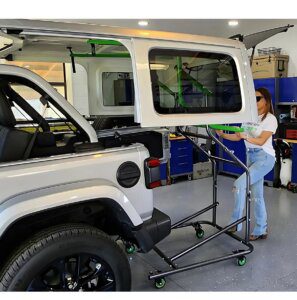
What Is the Difference Between Jeep Seat Covers and Replacement Seats?

Seat covers slip over your existing factory seats to protect the upholstery from wear, stains, and moisture. Replacement seats, like the Bestop TrailMax II line, remove the factory seat and bolt a new assembly to your Jeep’s frame, adding features such as V-ROR variable-resistance springs and Ultimate Foam cushioning. They are popular for CJ, YJ, and TJ restorations.

Do Jeep Seat Covers Work With Side Airbags?

Bestop seat covers are engineered to be compatible with side-impact airbag systems. The cover design accounts for airbag deployment paths so safety functionality is not obstructed. Because airbag placement varies by year, always verify compatibility for your specific model year using the fitment information on the product page before installing.

How Do You Install Jeep Seat Covers Without Drilling?

Bestop seat covers use an elastic attachment system that wraps around your factory seat, so no permanent modifications are needed. Slip the cover over the seat, route and secure the elastic straps underneath, then adjust for a snug, wrinkle-free fit. The process takes a few minutes per seat and can be fully reversed when needed.

What Seat Covers Fit a Jeep TJ?

Bestop offers Jeep TJ seat covers patterned specifically for the 1997 to 2006 Wrangler TJ body style, matching the TJ’s seat dimensions and contours for a precise fit. If your TJ’s original seats are worn or missing, the TrailMax II replacement seat line includes multiple styles built for TJ mounting points instead.

How Do You Clean Jeep Seat Covers After Off-Roading?

Rinse loose dirt and mud off with a garden hose or low-pressure water, then wipe the covers down with a mild soap solution and a soft cloth. Avoid harsh chemicals or abrasive scrubbers, which can wear the water-repellent coating over time. Let the covers air dry fully before closing up your top to prevent moisture buildup.

Jeep Half Doors: The Open-Air Upgrade That Keeps You Connected to the Trail

Key Takeaways

  • Jeep half doors keep a lower body panel while opening the cabin above, giving you open-air freedom, better trail visibility, and a natural arm-rest height.
  • Fabric half doors lean toward everyday versatility, while HighRock 4×4 Element tube doors are open welded-steel frames built for maximum visibility and airflow on the trail.
  • Lower half doors alone leave the upper open, so add Bestop Upper Fabric Half Doors or a 2-Piece Fabric Door setup with zip-in windows when you want a weather-tight cabin.
  • Bestop half doors are engineered per platform, covering the Wrangler JL, JK/JKU, TJ, YJ, vintage CJ, and Gladiator, so confirm your exact fit before you order.
  • Bestop Lower Fabric Half Doors start at $299.99 and HighRock 4×4 Element tube doors start at $519.99, so there is an open-air door for most builds and budgets.

Your Jeep was built for open air, and jeep half doors are one of the most satisfying ways to feel it every day. They trim your rig down to the essentials so wind, sound, and scenery become part of the drive, without going all the way doorless. The result is that freeing, top-down feel with a lower panel still in place for comfort and control.

If you have been weighing whether half doors are worth it, or wondering which style fits how you actually drive, this guide walks through it. We cover what half doors are, how they compare to tube doors and 2-piece doors, how fitment works across Jeep platforms, what they cost, and how to build the complete open-air setup you want.

What Are Jeep Half Doors?

Jeep half doors replace your full doors with a lower panel that keeps a natural resting spot for your arm while opening the cabin above the belt line. That lower section preserves a sense of enclosure and helps keep gravel, brush, and trail splash out, while the open upper lets the breeze and the view flood in. It is the open-air experience with a little more everyday comfort than running fully doorless.

Jeep has offered factory half doors on the JL Wrangler and Gladiator, though availability and pricing shift by model year and trim. Aftermarket half doors give you more flexibility and are easy to add whenever you want them. Bestop builds fabric Lower Fabric Half Doors and HighRock 4×4 Element tube doors engineered for specific Jeep platforms, so you can add or replace half doors on your own timeline.

Why Jeep Owners Choose Half Doors

Half doors are about the experience first. Drop the uppers and the whole cabin opens up, so you feel more connected to the trail, the coastline, or the back road you take the long way home. That lower belt line is what owners love.

  • Better trail visibility: A lower door line makes it easier to see your tires, read the terrain, and lean out to spot your line over obstacles.
  • Comfortable arm-rest height: The lower panel gives your arm a natural place to rest, so cruising feels relaxed and open.
  • Cleaner look with the top down: A lower belt line gives your Jeep a sleeker, more classic open-air silhouette.
  • A barrier that keeps mess out: The solid lower panel helps shield you from gravel, brush, and puddle splash while you stay in the open air.

The Trade-Offs to Know

Half doors are built for openness, so it helps to know what that means day to day. On their own, lower half doors leave the upper opening exposed, which means less wind and weather coverage, more road noise, and no side glass. They also offer less security than full doors. The good news is the fix is simple: add Bestop Upper Fabric Half Doors or step up to a 2-piece setup to bring back zip-in windows and a weather-tight seal whenever you want a fully enclosed cabin.

Half Doors vs. Tube Doors vs. 2-Piece Doors

The right door comes down to the feel and the use you want, not a winner. Fabric half doors are the versatile everyday choice, HighRock 4×4 Element tube doors are the open, trail-focused option, and 2-Piece Fabric Doors give you a convertible setup you can run open or fully enclosed.

What Matters Lower Fabric Half Doors HighRock 4×4 Element Tube Doors 2-Piece Fabric Doors


Style and look Classic lower panel, clean open-air belt line Rugged open welded-steel tube frame Modular lower plus zip-in upper
Trail visibility High Highest, fully open frame High with uppers off
Weather protection Add uppers for coverage Open by design Full coverage with uppers on
Windows and uppers Accepts fabric uppers Optional upper door panels Included zip-in vinyl windows
Best for Everyday open-air versatility Wheeling and maximum airflow All-season drivers who switch often

If pure trail feel is the goal, the HighRock 4×4 Element tube doors deliver wide-open visibility and airflow. If you want everyday flexibility, the Lower Fabric Half Doors are the easy place to start.

How to Choose the Right Half Doors for Your Jeep

Start with the feeling you want behind the wheel, then match it to how you actually drive. A simple way to decide:

  • You want spontaneous open-air weekends: Choose Lower Fabric Half Doors and add fabric uppers so you can flex with the weather and your plans.
  • You live for the trail: Go with HighRock 4×4 Element tube doors for the most visibility and airflow when you are picking a line.
  • You drive year-round and switch often: A 2-Piece Fabric Door setup lets you run open on clear days and close up when the weather turns.

Weekend adventurers who want a rig that is always ready, and overlanders who value quick garage-to-trail transitions, tend to land on different setups, and that is the point. Choose the door that matches your style.

Adding Uppers and Windows

Lower half doors alone will not keep the rain off you, because the upper opening stays exposed. To close things up, pair your lowers with Bestop Upper Fabric Half Doors or choose Full 2-Piece Fabric Doors, which add zip-in clear vinyl windows and a weather-tight seal. You can run open air on a clear morning and add the uppers when the forecast changes, so one door investment covers more of the year.

Jeep Half Doors by Model (JL, JK/JKU, TJ, YJ, Gladiator)

Half doors are engineered for specific Jeep platforms and body styles, so a door built for a JK is not the same as one for a TJ or a JL. Bestop half doors cover the Wrangler JL, JK and JKU, TJ, YJ, vintage CJ models, and the Gladiator, with the right door frame, pins, and seals for each. Because fitment varies by product and body style, confirm the exact door for your Jeep with Bestop’s Year/Make/Model fitment tool before you order, or reach out to customer service if you are unsure. You can also browse doors by platform, from Wrangler JL to Wrangler JK.

Are Half Doors Legal? Quick Rules of the Road

In most U.S. states you can drive with your doors off or with half doors, as long as required equipment stays in place, most commonly a driver-side mirror. Half doors help here because they keep a lower panel and can mount factory-style mirrors, so you stay road-legal while enjoying the open air. Rules vary by state, so confirm your local mirror and equipment requirements before you head out.

What Jeep Half Doors Cost

Pricing depends on the style and your platform. Bestop Lower Fabric Half Doors start at $299.99, HighRock 4×4 Element tube doors start at $519.99, and Upper Fabric Half Doors start at $499.99. A full 2-piece fabric door setup runs higher because it combines lowers with zip-in uppers and windows. Pricing can change, so check the product page for the current price on your specific Jeep before you order.

Build Your Open-Air Setup with Bestop

Open-air freedom is the whole reason to run half doors, and it lands best when you plan your setup as a system: your doors, your top, and the feel you want every time you climb in. That is where Bestop engineering earns its place. As Jeep’s sole OEM soft top supplier since 1986, and an OEM partner to Ford for the Bronco, Bestop brings real fit, sealing, and durability to every product it builds.

The proof shows up in the details. HighRock 4×4 Element tube doors use fully welded steel frames with rotary paddle handle latches, replacement door striker pins, and door-stop straps, plus mounting points for Bestop mirrors. Fabric half doors add adjustable pins and double-bulb weather stripping for a secure, sealed fit. To complete the open-air picture, pair your doors with the top that matches your style: the Sunrider for Hardtop flips back in seconds for quick overhead sky, the Supertop family delivers the classic squareback convertible feel, and the Trektop family brings modern fastback lines. Browse it all in the Doors & Windows lineup and the soft top collection.

However you like to feel the breeze, there is a Bestop half door and top combination that fits your Jeep and your style. Explore the lineup, picture your next top-down drive, and build the open-air setup you will actually use.

Frequently Asked Questions About Jeep Half Doors

Common questions Jeep owners ask when weighing half doors for open-air driving, pulled from real search and community discussion.

What Is the Point of Jeep Half Doors?

Half doors give you an open-air, doors-down feel while still keeping a lower body panel in place. That means better trail visibility, an easy arm-rest height, and a cleaner look with the top down, plus a barrier that helps keep gravel, brush, and trail splash out of the cabin. They deliver the topless vibe without going fully doorless.

Does Jeep Still Make Half Doors for the Wrangler?

Jeep has offered factory half doors on the JL Wrangler and Gladiator, but availability and pricing change by model year and trim. Aftermarket half doors are widely available and often more flexible. Bestop builds fabric Lower Half Doors and HighRock 4×4 Element tube doors engineered for specific Jeep platforms, so you can add or replace half doors without waiting on factory stock.

What Are the Disadvantages of Half Doors?

Half doors trade some enclosure for openness. Without uppers you get less weather and wind protection, more road noise, and no side glass, so rain can reach you. They also offer less security than full doors. Adding fabric upper halves or window kits restores much of that coverage when you want a fully enclosed setup again.

Why Are Doorless and Half-Door Jeeps Legal?

In most U.S. states, Jeeps can be driven with doors off or with half doors as long as required equipment stays in place, most commonly a driver-side mirror. Because half doors keep a lower panel and can mount factory-style mirrors, they help you stay road-legal while still enjoying the open-air experience. Always confirm your local mirror and equipment rules.

What Is the Difference Between Half Doors and Tube Doors?

Fabric half doors use a solid lower panel with weather stripping and can accept zip-in fabric uppers, giving you protection plus open-air style. Tube doors, like Bestop’s HighRock 4×4 Element doors, are open, high-strength welded steel frames built for maximum trail visibility and airflow. Half doors lean toward daily versatility; tube doors lean toward pure wheeling.

Do Half Doors Keep the Rain Out?

Lower half doors alone leave the upper opening exposed, so they will not keep rain off you on their own. Pair them with Bestop fabric upper half doors or a 2-piece door setup to add zip-in vinyl windows and a weather-tight seal. That combination lets you run open on clear days and close up when the weather turns.

Do Bestop Half Doors Fit My Jeep?

Bestop designs half doors for specific platforms, including Wrangler JL, JK/JKU, TJ, YJ, vintage CJ models, and the Gladiator. Fitment varies by product and body style, so the door that fits a JK is not the same as a TJ or JL. Use Bestop’s Year/Make/Model fitment tool to confirm the correct door for your exact Jeep before ordering.
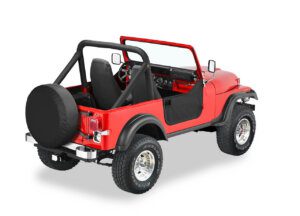
How Much Do Jeep Half Doors Cost?

Pricing depends on style and platform. Bestop Lower Fabric Half Doors start at $299.99, HighRock 4×4 Element tube doors start at $519.99, and Upper Fabric Half Doors start at $499.99. A full 2-piece fabric door setup runs higher because it combines lowers and zip-in uppers. Check the product page for current pricing on your specific Jeep.

Are Half Doors Better Than Full Doors for Wheeling?

Many off-roaders prefer half or tube doors on the trail because the lower belt line improves visibility and makes it easier to lean out and spot your line over obstacles. Full or 2-piece doors are better when you want weather protection, glass, and security for daily driving. Many owners keep both and swap by season.

Can You Add Upper Halves to Lower Half Doors?

Yes. Bestop fabric upper half doors and 2-piece fabric door setups let you add zip-in uppers with clear vinyl windows to lower half doors or factory lowers. That turns an open half-door setup into a more enclosed configuration for cooler mornings or wet weather, then back to open air when you want it. Confirm compatibility for your platform.

Jeep Spare Tire Cover Buyer’s Guide: How to Size, Fit, and Choose the Right One

Key Takeaways

  • Match a jeep spare tire cover to your spare’s overall mounted diameter, not the wheel size, and most Jeep spares fall between 28 and 33 inches.
  • To size correctly, measure straight across the face of the mounted tire, edge to edge through the center, and size up when your measurement lands between two covers.
  • Many 2018-and-newer Jeep Wrangler JL models mount the rear camera behind the spare, so choose a cover built to keep a tailgate-mounted camera clear.
  • A cover shields your spare from UV rays, dirt, and weather that crack and fade rubber over years of exposure, while giving the back of your Jeep a clean, finished look.
  • Bestop spare tire covers are size-specific with a sewn-in elastic band, so you pick the size that fits your spare rather than settling for a one-size guess.

Your Jeep is built to live outside, and so is the spare bolted to the back of it. A jeep spare tire cover is a fitted cover that slips over your rear-mounted spare to protect it from the elements and finish off the look of your rig. It is one of the simplest upgrades you can make, and the right one comes down to a snug, correct fit. This guide walks you through sizing, backup-camera fit, materials, installation, and care so you can choose with confidence.

Why Put a Cover on Your Jeep’s Spare Tire?


A spare tire cover protects your spare from UV rays, dirt, and harsh weather, the same exposure that causes rubber to crack and fade over years on an open rear carrier. It also gives the back of your Jeep a clean, finished look. Because a Jeep spare rides outside in full sun and road grime, a cover helps keep it ready for the day you actually need it.

There is a lifestyle payoff, too. Open-air driving means your Jeep spends its life in the sun and the weather, and a cover lets you enjoy that freedom while your spare stays shielded and your rig looks dialed in. When it is time to keep everything looking its best, a little routine care with the right cleaners and protectants goes a long way.

What Size Jeep Spare Tire Cover Do You Need?

Match the cover to your spare’s overall mounted diameter, not the wheel diameter. Most Jeep spares land between 28 and 33 inches, though lifted rigs on oversized tires can run larger. Measure straight across the face of the tire, and if your measurement falls between two cover sizes, choose the larger one so the cover slips on and seats snugly. The right size is the whole game with a spare tire cover.

The size printed on your sidewall, like 255/75R17 or a named size like 33×12.50R15, is a helpful reference point. Off-road and mud-terrain tires often measure a little larger than the printed number suggests because of tread depth, so the measured overall diameter is what your cover is truly built around.

How to Measure Your Spare

Measuring takes about a minute and a tape measure:

  1. Stand the mounted spare upright so you are looking at the face of the tire.
  2. Run a tape measure straight across the center, from the outer tread edge on one side to the outer tread edge on the other.
  3. Record that number in inches. That is your overall diameter, and the size your cover is built around.
  4. Cross-check the sidewall code if you like, then size up if your diameter lands between two available covers.

Jeep Spare Tire Covers and the Backup Camera

Many 2018-and-newer Jeep Wrangler JL models mount the rear backup camera on the tailgate, directly behind the spare, so your cover has to account for it. If your Jeep has a rear-mounted camera, choose a cover designed to keep the lens clear so your camera view stays unobstructed. If there is no camera behind your spare, a standard closed cover is the right choice.

Not sure whether your rig has one? Look for a lens on the carrier arm or tailgate behind the spare. This single detail is the most common reason a cover fits the tire but still needs the right version, so confirm it before you order.

What Bestop Spare Tire Covers Are Made Of

Bestop spare tire covers are built from the same premium soft-top fabrics Bestop uses on its Jeep tops, including Black Diamond, a marine-grade vinyl, offered in finishes such as Black Denim, Black Crush, and Spice. The weather-resistant material resists UV fading and mildew, and a sewn-in elastic band pulls the cover taut for a snug, wrinkle-free fit. Covers are offered in multiple sizes, so you match the cover to your spare.

That fabric heritage matters. Bestop has been the sole OEM soft top supplier to Jeep since 1986, and the fit, sealing, and fabric know-how behind its Bestop soft tops carries into its accessories. You can compare fabric options on the soft top material comparison page, and browse the lineup of Bestop Jeep spare tire covers (starting at $59.99, so verify current pricing) to see available sizes and finishes. The Bestop Tire Cover keeps the same finish family as your top for a cohesive look.

Soft Cover vs. Hard Shell

Spare tire covers come in two broad styles. A soft cover is a fitted fabric or vinyl cover that stretches over the tire with an elastic band, installs in seconds without tools, and matches the fabric look of a soft-top Jeep. A hard shell is a rigid plastic or molded cover that snaps over the wheel and offers a firmer surface for graphics. For most Jeep owners, a soft cover delivers the weather protection, snug fit, and finished appearance they want with the easiest install.

Fitment by Jeep Model (and Other Vehicles)

Bestop spare tire covers fit across the Jeep family, including the Wrangler JL, JK, TJ, and YJ, plus the Gladiator, as long as the cover size matches your measured spare diameter. Start from your model hub, such as Wrangler JL, Wrangler JK, or Gladiator, then confirm the size against your measurement.

Because a cover is built around tire dimensions rather than a specific badge, a correctly sized cover also fits a Ford Bronco, an SUV, or a trailer spare of the same diameter. These covers are sized to fit, so the key is always your measured diameter, not a one-size assumption. When your spare rides oversized tires, measure the real tire before you order.

How to Install and Care for Your Spare Tire Cover

Installing a soft spare tire cover is tool-free and takes a minute:

  1. Center the cover on the face of your mounted spare.
  2. Stretch the top edge over the top of the tire.
  3. Work the cover down and around both sides until the sewn-in elastic band tucks behind the tire all the way around.
  4. Adjust so the fabric sits taut and wrinkle-free, which helps it resist flapping at highway speed.

To keep it looking sharp, wipe the cover clean and treat it with a fabric-safe UV protectant when you care for the rest of your top. Bestop’s cleaners and protectants are formulated for the same fabrics, so your cover and your top age together.

Beyond the Cover: Spare Tire Storage

Your spare can do more than carry a backup wheel. Bestop RoughRider Spare Tire Organizers mount to the spare and add secure, trail-ready storage for tools and gear, with options that fit tires from 30 to 33 inches, 34 to 37 inches, and 38 to 40 inches. Pairing a cover with an organizer turns unused space behind your Jeep into a practical part of your setup.

Choose the Right Jeep Spare Tire Cover

Choosing a jeep spare tire cover comes down to one honest measurement and a few quick decisions: the size of your spare, whether you need to keep a backup camera clear, and the finish you want. Measure the face of your spare, size up if you land between covers, then explore Bestop’s spare tire cover lineup to find the size and finish that match your rig and keep your spare ready for the road ahead.

Frequently Asked Questions About Jeep Spare Tire Covers

Quick, direct answers to the questions Jeep owners ask most when choosing a spare tire cover.

What Size Spare Tire Cover Do I Need for My Jeep?

Match the cover to your spare’s overall mounted diameter, not the wheel size. Most Jeep spares land between 28 and 33 inches, though lifted rigs can run larger. Measure straight across the tire face, and if you fall between two sizes, choose the larger one so the cover slips on and seats snugly.

How Do I Measure My Jeep Spare Tire for a Cover?

Stand the mounted spare upright and run a tape measure straight across the center, from the outer tread edge on one side to the outer tread edge on the other. That number is your diameter. You can cross-check the sidewall code (like 255/75R17), but the measured overall diameter is what the cover is built around.

Do Jeep Spare Tire Covers Work With a Backup Camera?

Many 2018-and-newer Jeep Wrangler JL models mount the rear camera on the tailgate behind the spare, so the cover has to account for it. Choose a cover designed for a tailgate-mounted camera so the lens stays unobstructed. If your Jeep has no rear-mounted camera, a standard closed cover is the right choice.

Are Jeep Spare Tire Covers Universal or Size-Specific?

They are size-specific, not truly one-size-fits-all. Bestop tire covers are offered in multiple sizes with a sewn-in elastic band, so each cover fits a snug range rather than every tire. Measure your spare’s diameter first, then pick the matching size for a clean, secure fit that stays put on the highway.

What Are Bestop Jeep Spare Tire Covers Made Of?

Bestop builds its spare tire covers from the same premium soft-top fabrics used on its Jeep tops, including Black Diamond, with finishes such as Black Denim, Black Crush, and Spice. The weather-resistant material resists UV fading and mildew, and a sewn-in elastic band holds the cover firmly over your spare.

Do Spare Tire Covers Actually Protect the Tire?

Yes. A cover shields the spare from UV rays, dirt, and harsh weather that cause rubber to crack and fade over time, which is especially useful for a tire that sits exposed on a rear carrier for years. It also gives the back of your Jeep a clean, finished look.

Will a Jeep Spare Tire Cover Fit a Ford Bronco or Other Vehicle?

It can, as long as the diameter and width match. A cover is built around tire dimensions, not a specific badge, so any correctly sized cover works on a Bronco, SUV, or trailer spare. Always verify the measured diameter before ordering, since off-road tires often run larger than their printed size.

How Do I Install a Jeep Spare Tire Cover?

Installation is tool-free. Center the cover on the face of the spare, stretch it over the top, then work it around the sides until the sewn-in elastic band tucks behind the tire all the way around. The elastic pulls the cover taut for a wrinkle-free fit that resists flapping at speed.