










Open Air Dispatch - Page 4 of 8 - Bestop | Leading Supplier of Jeep Tops & Accessories

Chris Quade is Ready to Run the Rubicon

Last year Bestop hosted the Run the Rubicon Giveaway – a chance to win an all-expenses-paid adventure to wheel on California’s celebrated Rubicon Trail with the famous (and infamous) Fred Williams at the 2024 Jeep Jamboree USA Rubicon Trail Run. All you had to do was purchase a qualifying Bestop product and you were automatically entered to win. We’re thrilled to announce the winner of the Run the Rubicon sweepstakes is Pennsylvania’s Chris Quade!

Chris Quade and his TJ Wrangler.

What is the Rubicon Trail?

For the uninitiated, the Rubicon Trail (sometimes known as the Rubicon Springs Trail) is perhaps the most notorious and renowned off-road track in North America. Situated East and North of Sacramento, California, it runs for 22 tortured miles through the high Sierra Nevada from near the small town of Georgetown to the shores of Lake Tahoe. Cresting at over 7,000 feet in elevation, the Rubicon is characterized by Jeep-swallowing mud holes, extremely narrow passageways through walls of unforgiving granite, and puckering cross-axle boulder hopping. So venerable is the trail, that Jeep gives the Rubicon moniker to its most trail-capable Wranglers.

California’s Rubicon Trail

What does it take to run the Rubicon Trail? Front and rear lockers, 37-inch tires, and comprehensive underbody protection are a must, but more importantly, a calm head, good communication with your trusted trail mates, and confidence in your skills behind the wheel will get you through. Short-wheel base 4x4s do best on this famed track, but wheelers of all stripes try their luck on the Rubicon, from side-by-sides to motorbikes, and even on foot.

Every year Jeep Jamboree USA hosts its Rubicon Trail Run for a select number of participants, and Bestop is a proud sponsor of this bucket-list event. This year, one of the most recognizable names and faces in the 4×4 community, Fred Williams, will be joining the Bestop team and Chris for the trail run of a lifetime.

A Jeep Guy’s Jeep Guy

I had the pleasure to chat with Chris Quade recently to find out more about how he got into four-wheel drives and exploring off-road, as well as what the Rubicon Trail means to him. From central Pennsylvania, Chris is a genial guy with an undeniable passion for Jeeps. Like many of us, his Jeep projects start out modestly, but spiral into more and more modifications as we search added capability and durability. His unique WJ model Grand Cherokee now sports a winch-equipped ARB front bumper, and a long-arm suspension upgrade to complement its 3-inch lift. Chris says it gets all kinds of attention, since the WJ is not a common platform for big mods like those, but he loves the comfort of the larger truck as well as the V8 power.

Chris Quade’s WJ Jeep Grand Cherokee.

Also like many Jeep enthusiasts, Chris can’t have just one – he also runs two TJ Wranglers in addition to his Grand Cherokee. One, a 2003 model, is currently a project car, the other is a 2001 model and sports some thoughtful upgrades, including a Bestop OEM factory-replacement top. Chris does most of his wheeling at the Anthracite Outdoor Adventure Area (AOAA), a trail network near Allentown, Pennsylvania. At AOAA, he works with other off-roaders and team members to offer 4WD education, maintain the current trail network, and build new trails on the property. Chris grew up exploring the backwoods and river valleys of Pennsylvania on quads and motorbikes, so the evolution to Jeeps was a natural one. Tread Lightly! principles (an organization that AOAA is closely connected with) play a central role in how Chris travels in the backcountry, and he enjoys sharing his knowledge with other off-road enthusiasts, both rookies and veterans

The Rubicon is naturally one of the true brass ring trail destinations for Chris. He says it really symbolizes the best of the Jeeping world – tackling off-road challenges that push your abilities, all with the support of the Jeep community. He’s not sure yet if he’ll bring one of his Jeeps to California, or borrow a rig from Bestop, but either way he can’t wait for July. We can’t wait to see him there.

Chris Quade’s Best Bets from Bestop

It’s no surprise that Chris is also a long-time Bestop customer. He has several different tops for his TJs, including the OEM-style replacement top with our rugged sailcloth material and tinted windows. He also rocks a couple of bikini tops, in the safari and targa styles for warm weather adventures. Chris says the Bestop all-weather cover is, “a great addition also for quick cover ups when I don’t feel like throwing the doors and top back on.” He’s looking at purchasing a set of our soft doors and windows for even more summer enjoyment. Chris also points out that, “It all comes down to quality. Bestop designs and produces a great product, so you get lifelong customers. [There are] plenty of other cheaper options but personally, but when something wears out [Bestop] builds it better than when it was when new.”

We couldn’t agree more.

Join Chris and Fred Williams at the Jeep Jamboree USA Rubicon Trail Run July 11-14, 2024 in Georgetown, California. Keep your eyes peeled also for more great giveaways and promotions from Bestop.

Images: Chris Quade, Fred Williams, Bestop, Jeep Jamboree USA, Anthracite Outdoor Adventure Area

Cold Weather Adventures, Part 2 – Preparing Your Camp

Last time, we rousted you out of your cozy chair in front of the fireplace, and got you going on preparing your vehicle for a winter off-road adventure. With confidence in your rig, you can turn your attention to making your trip a great experience for everyone in your group. 

The flip side of the coin when preparing for a winter adventure is making sure you and your crew are ready to tackle harsher expedition conditions than normal. This runs two ways – planning out your adventure before you leave, and having the kinds of equipment that make a winter campsite more efficient and even downright comfortable.

Preparation and Planning

Pre-trip planning takes on an even more crucial role for cold-weather adventures than it might for warm weather ones. During the summer, it’s easy to toss the cooler in the back of the rig, and hit the road for a long weekend without much of a second thought. Campsites will be open and available, temperatures mostly mild, and weather conditions less severe. 

The weather is key here. Not only keeping close track of the local forecast, but also maintaining a constant eye on it while you are on the road is essential. Winter weather can change more quickly and more unexpectedly than at other times of the year, both in terms of temperature fluctuation and the potential for storms. 

A winter expedition will require more careful scouting of potential campsites, as well as the roads that lead to them. A trail that may be open to you as you begin your journey, could become impassable if it’s subjected to multiple freeze and thaw cycles, or a storm that dumps a ton of snow overnight. Plan for multiple exit strategies and alternate routes – be flexible and maybe a little less ambitious in your route selection than you might in more mild seasons. Sticking to paths you already know is a good idea, but keep in mind that forest road you might not think twice about in August, could be a nightmare in a blizzard.

Lastly, prepare mentally. This goes for everyone in your party – especially if you are traveling with multiple vehicles (which is a good strategy for winter expeditions, in any case). Set clear expectations about where you’re headed, and what conditions will be like. Winter travel is necessarily slower than in the summer, so plan for longer days and extra time. It often also means using more fuel than usual – carry extra and make careful calculations about your consumption. Be reasonable in your expectations about what you can accomplish. Be ready to accept that you may need to turn back, change your plans dramatically, or end your trip early altogether should things become unsafe. 

Getting Comfortable in Camp

Another set of challenges for cold weather expeditions revolve around life in camp. For me, the watchword for winter camping is efficiency. The more quickly you can get set up and fed, the more time you have for gathering around the fire and relaxing, or throwing snowballs with the kids. This goes for any overland campsite, but it takes on extra urgency when things get really cold. Know where your equipment is stored, practice putting up and taking down that ground tent or roof tent. Put everyone to work – less slacking off means more warmth! 

Pre-prepared meals that can simply be reheated, or freeze-dried backpacking meals that only require boiling water are my preference for food on winter expeditions. Trying to cook a gourmet three-course camp meal when it’s 15 degrees and windy is not much fun, but cradling a steaming mug of soup in your gloved hands while the snow falls gently around you is amazing. Really good insulated cups and thermoses can keep hot beverages on the simmer and at the ready for hours. 

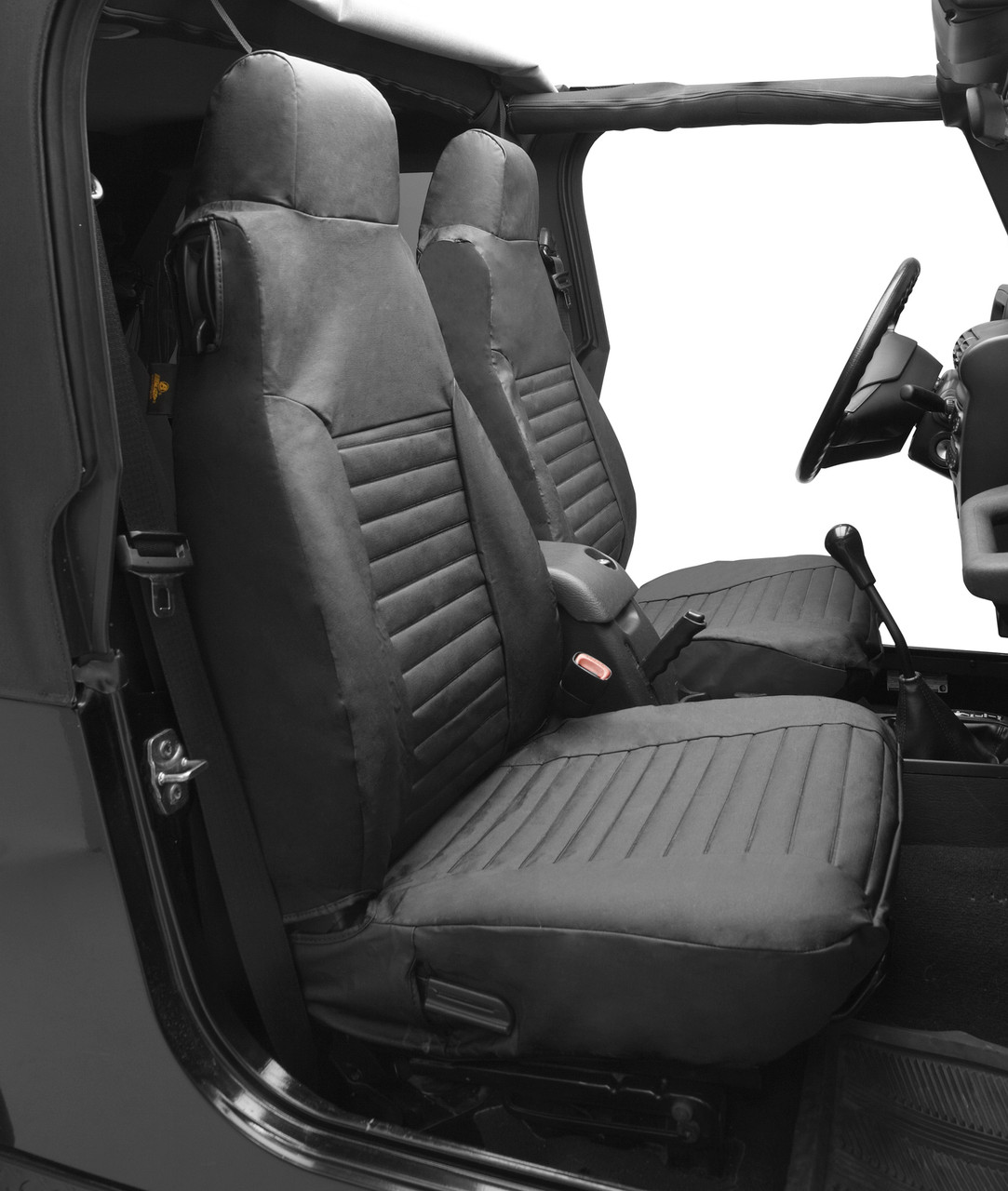
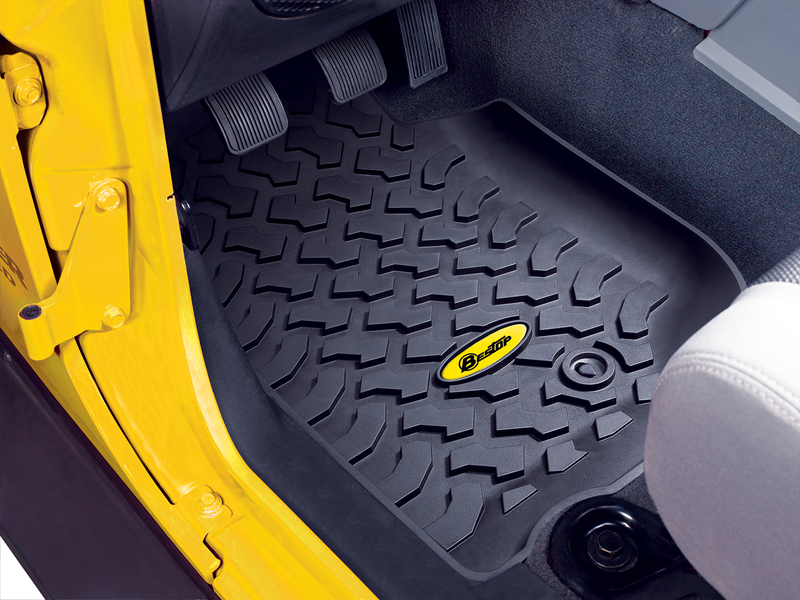
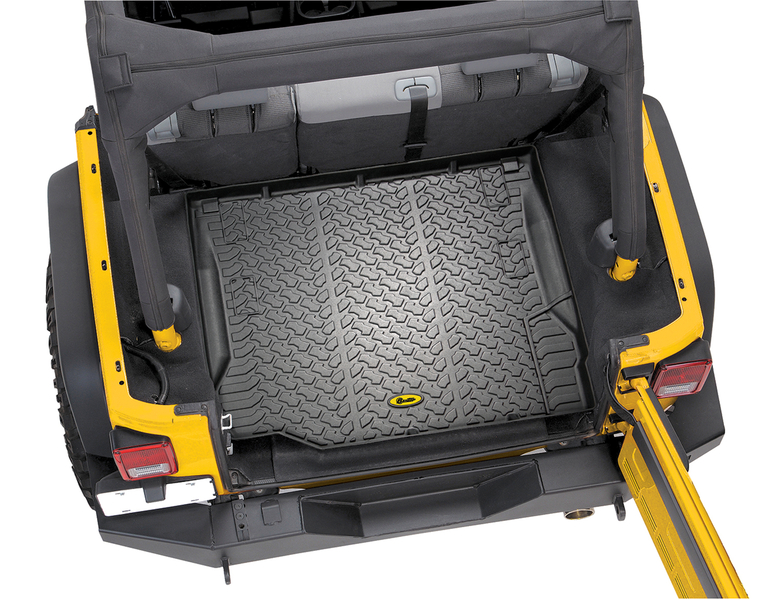
Staying clean and dry in winter environments also takes some preparation, especially in and around the vehicle. An extra layer of protection for your interior not only defends against water damage and wear and tear, it also makes clean-up after the adventure much easier. Custom-fit seat covers can repel moisture, and tough floor mats and cargo liners keep muddy feet, snow, and water off of floors and carpets. 

With winter comes darkness, and energy-efficient lighting in and around your camp will not only create a cozy atmosphere, but also add to the safety factor by reducing tripping hazards on slippery surfaces. Baja Designs work lights, rock lights, and dome lights shine the lumens exactly where you need them, and come in an array of useful and funky colors.

Turning Up The Heat

Of course, the main thing on everyone’s mind on a winter expedition is staying warm. This is not just an issue of comfort, it’s also one of safety. Know the signs of hypothermia, and keep an eye on your companions, especially in contexts where you may be likely to get wet, or repeatedly build up a sweat, and then quickly cool off – such as during a vehicle recovery. Check in regularly to make sure nobody is suffering unduly because of the cold. Remember, you can always retreat to the warmth of your vehicle’s cab if those toes get a little too frozen.

Packing more layers than you think you need, especially socks, breathable base layers, and storm shells, will go a long way to keeping you comfortable. Make sure your sleeping bags are temperature rated for the conditions you expect, and consider adding a sleeping bag liner. Some can bump the temperature rating of the bag in your favor by 10 degrees. Plan on a strategy for keeping wet and grimy boots out of tents or campers – you want to stay as dry as possible in your sleeping space. 

A steel portable fire pit adds to the atmosphere of any campsite, but it comes in particularly useful in snowy conditions to get the fire up off the ground. You may need to pack in your own firewood if it’s especially wet where you’re headed. While you may scoff at such crutches, chemical or paraffin fire starters are a go-to for me in the winter when dry kindling is hard to track down, and you want the fire NOW.

Embrace the Cold

Above all, take advantage of the unique experiences cold weather adventures have to offer – solitude, the muffled silence of a snow-covered camp, skiing or snowshoeing, the chance to see new birds and wildlife… feeling way tougher than your friends who stayed home in front of the fire. 

Driving Adventures for Cold Weather – Don’t Fear Old Man Winter

I can see you there now, perhaps relaxing in your favorite chair near a wood stove, swiping through Bestop’s amazing Insta feed, or reading a gripping adventure travelog – maybe Ernest Shackleton’s miraculous escape from Antarctica, or Anatoli Boukreev’s harrowing account of the 1996 Everest tragedy. It’s cozy, and the soft flickering glow from the stove wards off the biting winds swirling outside. Perhaps you’re even daydreaming about your next overland or off-road trip… maybe when things warm up.

But what if I told you you didn’t need to wait for spring’s thaw? A winter overland or 4WD adventure is uniquely rewarding. It takes a little bit of extra planning, and some particular kinds of preparation, but it opens a whole new world of exploration. But you don’t need to saddle up all the way for Tuktoyaktuk to have a cold-weather overland journey of your own, even if you drive a Jeep or a Bronco with a soft top.

Winter conditions present a certain set of challenges that require some careful planning and specialized equipment. You will need to take into consideration your vehicle’s needs as well as your own in ways that a summer trip might not require. This dance with Old Man Winter takes a lot of preparation, so we’ll take a look at cold weather travel in two parts – here we’ll go over your vehicle, and next, we’ll talk about preparing you and your crew for a great experience.

There are five major areas to address when getting your rig ready for a winter trip: prepping your vehicle’s insides and exterior, electricals, fluids, traction, and recovery.

Warmth and Protection – Inside and Out

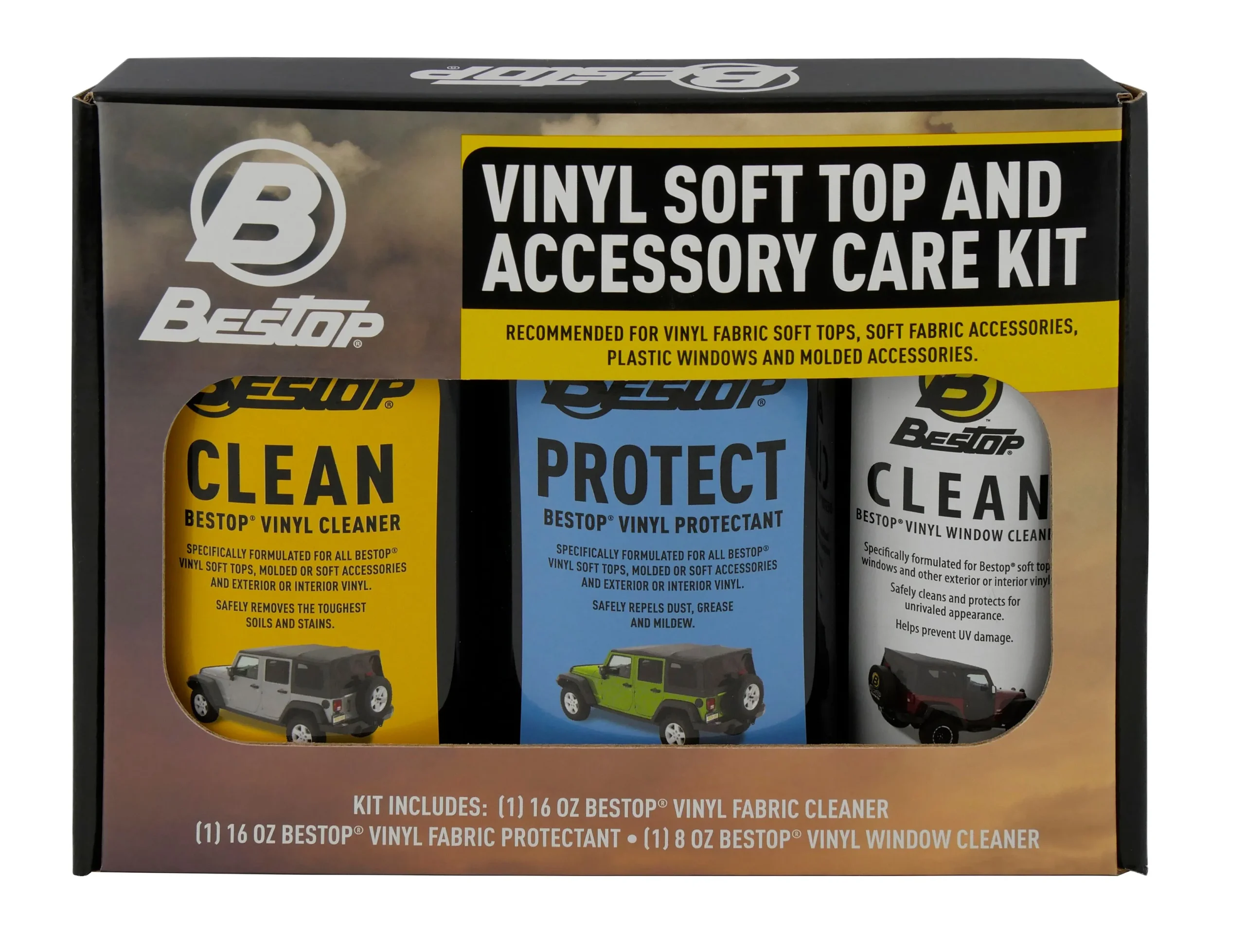
It’s no surprise that colder temperatures and the damp, ice, and road salts from winter weather all do a number on both the interior and exterior of your vehicle. It may seem like a repetitive chore to constantly be washing your rig in the winter, but it’s key to keeping corrosive and abrasive materials off the chassis and the finish, and is especially important for those of us with Jeeps or Broncos that have soft tops. A specifically formulated cleaner and protectant for these fabrics will keep your top looking like new for many seasons to come.

Setting up defenses for your interior is equally important – robust rubber or composite floor mats and cargo liners, as well as tight-fitting custom seat covers keep grit and moisture away from carpeting and seating surfaces. And, if your Wrangler is feeling a little bit drafty these days, now is the perfect time to upgrade to a new rugged top that fits properly and includes options like a defrosted rear window and wiper, like Bestop’s Trektop Pro Hybrid.

Electrical Systems

Cold weather is hard on batteries, no matter their construction. Make sure yours sits at the proper voltage (12.4-12.7 volts), and kicks up to 14 volts or more when the engine is running. Carrying a portable battery jump pack and jumper cables can save your trip if your battery dies. Check the condition of your lights, particularly your headlights, as travel in the dark and low visibility conditions is much more likely in winter. You can consider a high quality LED light bar or driving lights, but remember to use them only off-road.

Your house or auxiliary battery, if you have one, also suffers in colder weather. Lithium batteries can stop working altogether at extremely low temperatures. Measure the health of your house battery as you would your main battery, and keep an eye on the power you draw. Due to the very nature of winter, if you rely on solar power to keep your battery topped up, you may need to recalculate your charging cycles. With shorter days, lower-angle sunlight, and often overcast weather, solar panels will drop in efficiency. You can consider adding a portable solar panel to compensate for the lost photons. Because they’re more easily moved, you can adjust them to catch the rays more directly as the sun moves low across the sky.

Vehicle Fluids

Have your engine coolant tested to make sure it’s within the specifications required by the manufacturer for the low temperatures you might expect. Remember, coolant also keeps you warm by circulating through your heater core, so its condition is doubly important to consider for winter travel. Coolant testers are inexpensive, and available at any auto parts store. Visually and physically inspect the condition of your radiator and heater hoses – there should be no cracks, excessive softness, or rusty clamps. And, make sure your thermostat is functioning properly.

Low temperatures are also hard on lubricating fluids, especially your engine oil. Check to see that your oil’s weight and grade are within range for your particular vehicle, also specified by the manufacturer. In general, lighter weight oils distribute through the engine more efficiently in cold weather, saving wear and tear on engine internals, and guarding against hard starts. Drivetrain lubrication normally won’t need to be swapped out for freezing temps, but be sure to check their condition and level – in the differentials and your transmission. And don’t forget the washer fluid! Keeping your windshield, and in the case of many SUV’s, your rear window clear in winter road conditions requires a lot more washer fluid than it does in summer.

Tires

Traction is another major consideration. On our off-road vehicles most of us run either all-terrain or mud-terrain tires. Nearly all these tires, regardless of brand, are rated for “mud and snow” (the M+S designation stamped on the sidewall of your tire). However, they are not all created equal.

Most mud-terrain tires will struggle in icy and snowy conditions – their large tread blocks designed to shed mud efficiently and dig deep for traction on sloppy trails can have a hard time gripping on ice and packed snow. All-terrain tires do better on this front, especially those that have a high degree of siping – small grooves cut into tread blocks that create more flexibility for the tire’s traction surface, and more surface area for cold-weather grip. All-terrain tires tend to have softer rubber compounds as well, which contribute to maintaining pliability as temperatures plunge.

Some all-terrain tires are actually rated for snow traction, symbolized by the “Three Peak Mountain Snowflake” stamped in the sidewall, and many can also be studded for even greater levels of traction on snow-packed roads and trails. Remember that correct tire pressures are key to maintaining good traction for all road conditions regardless of the season, so carrying an accurate tire pressure gauge and a compressor is key. Be sure to confirm the good condition of that spare tire, too.

Recovery

Lastly, you need to be prepared for vehicle recovery – both in terms of your equipment and knowledge. Slippery roads and deep snow are variables that can make recovery situations in winter more likely than in summer on the very same roads. A reliable and easy to use set of tire chains is nearly a must for remote travel in winter. Practice installing them and removing them before you load up and leave for the trails.

Traction boards can also be useful for getting a vehicle unstuck, and they’re quite good for shoveling snow as well. Of course, a regular shovel is important to have along – ones with rectangular or delta shaped blades, tend to be more efficient for moving large quantities of the white stuff. Of course, a variety of tow and snatch straps, and their accompanying hardware, like shackles, should be a standard part of your recovery kit, no matter the season.

One note regarding jacks – either bottle jacks or HiLifts – when you need to jack up your vehicle in snowy conditions, you may find that the jack sinks down, rather than lifting the truck up. Soft surfaces demand more surface area for the base of your jack. Sturdy wooden planks or dedicated attachments will help spread out the force of the jack, helping to get your vehicle in the air safely.

Should you be traveling solo in the winter, a winch is not a bad idea – it requires a much more significant investment in your vehicle, particularly with regards to fitting a winch-capable bumper, and the winch itself. But, for efficient self-recovery, especially when it’s well below freezing, there is no better tool. Make sure your winch has been maintained properly, and that you possess the knowledge to use it safely.

Taking The Next Steps

In addition to these 4WD-specific steps, you should also be packing the right tools for your vehicle, and the other general gear that makes a wilderness trip possible and safe in the other three seasons. Now that we’ve got your rig in shape to brave the cold, in the next installment we’ll dive into how to make your experience in a winter camp that much more enjoyable.

Bestop Attends Jeep Beach 2023

Our Experience

Jeep beach was an amazing experience, the energy of the stadium was palpable and it was an amazing feeling being in the center of where the Daytona race is.

On The Track

We've never seen anything like the Jeep parades on the actual beach - Jeeps of all kinds of shapes and sizes along with creative wraps as far as the eye could see. The Jeep community was thriving and it was fun to see people in the stands overlooking the off-road course at the center of the stadium.

Get Inspired

Celebrating Women Trailblazers

Honoring the women in the 4×4 community is about recognizing their strength, perseverance, and passion for off-roading. These trailblazing women have broken barriers and challenged stereotypes, proving that off-roading is not just a man’s world.

MEET CASSIE

Cassie

@Aka_Ginger

Cassie, also known as #CassieAtBestop or Aka_Ginger, currently rocks a Bestop Trektop Glide in the summer and a Trektop Pro in the winter.

Her Jeep, the Purple Monster, is far from stock with a Genright cage, PRP seat covers, PRP Shreddy detachable steering wheel, Baja Designs XL80s and a S8 windshield light bar, and many more!

She has always loved the outdoors and enjoys spending time with her fiancé and stepson, Damien, who’s taken an interest in wheeling.

The Jeeping community has been so welcoming to her, and she loves seeing more women jump into the driver’s seat.

Brandy

@Brandys_Jeep_Garage

Brandy lives and breathes Jeep, so much so that she owns five of them! 

Her favorite build, the ‘Blu J’, rocks the Bestop Trektop Glide along with several modifications that make her Jeep stand out among the crowd. 

When she’s not in the garage tinkering with her Jeeps, she’s out on the trail enjoying the thrill of off-roading. 

Her love for Jeep stems from their unique design, customizability, and overall representation of fun.

Christina

@TheRubistina

Christina went from a child hauler to a rock crawler when
she traded in her minivan for a Jeep Wrangler.

Her Jeep, nicknamed the Rubistina, has become more than just her daily driver. 

It now sits on 40” tires, sporting numerous lights from Baja Designs, and uses suspension seats from PRP

The many parts and accessories from the Bestop family make it ready for adventure. Christina and her family will be attending Rock Junction from 6/1 – 6/4, the Overland Expo West on 8/28, and Trail Hero on 10/1 – 10/9.

Julie

@AquaJeepGirl

Julie, best known as Aquajeepgirl, had a great time in her Jeep Roxxie at Easter Jeep Safari 2023

A 2018 6-speed Jeep Wrangler JLU Sport S with the Bestop Sunrider and Granite Series Fenders. She lights up her ride with Baja Designs LP6 and Squadron lights. 

Julie also added the PRP custom seat covers in matching aqua to complete the design! 

Her favorite days are spent with her family on the trails in Utah or spending the week at Jeep events around the country.

GET INSPIRED BY THE TRAILBLAZING WOMEN OF THE OFF-ROAD JEEP COMMUNITY AND TAKE YOUR JEEP TO THE NEXT LEVEL!

Product not found. Please check the SKU: Default value

More Updates from Bestop

Bestop Attends 2023 Easter Jeep Safari in Moab, Utah

The Bestop staff had a phenomenal time attending Easter Jeep Safari 2023 in Moab, Utah from April 3rd – 7th. It was a great opportunity to meet our customers in person and hear valuable feedback about our products first-hand.


Fred Williams and Dave Chappelle, as seen on MotorTrend’s Dirt Every Day, joined for a meet and great appearance Thursday morning at the Bestop Garage. Free donuts and coffee from Doughbird made it a great time to chat with fellow Jeepers heading out on the trail later that day.

Fred Williams and Dave Chappelle of Dirt Every Day meet with Bestop customers at Easter Jeep Safari 2023.

The Bestop staff’s best part of the week was getting to know their customers. Everyone who attended had an amazing time handing out free swag to families attending the events, and having conversations about family, Jeeping, and off-roading with those who stopped by.

Heather Storm Shares Tips for Beginner Off-Roaders

Living in Colorado, it became clear to me that many of the best adventures were found down a dirt road. So I got a new Ford Bronco and began to explore the roads less traveled. Over the past year of off-roading, I’ve learned so much! I also met lots of folks who bought a new Bronco and were excited to get out in nature but hadn’t been off-roading before and really weren’t sure where to start learning.

Last summer, my friend Cassie Hughes took me out on Medano Pass in Southern Colorado, a sandy trail that starts inside Great Sand Dune National Park. Cassie’s been in the off-road scene for nearly a decade and she has a 2010 JKU Sport with a Bestop Glider that’s had everything upgraded for wheeling except the skid plates. During our day out on the trail she dropped a ton of knowledge and I was grateful to learn from a humble pro.

Meet Cassie Hughes

“What’s the best way to learn?” I asked Cassie. “Lean into your community,” Cassie told me confidently.  “Learn from other women”.  So, as part of the community, and with Cassie’s input, I put together a few tips for folks just getting started and some resources where you can find more support.

KNOW YOUR VEHICLE.

Although it’s a simple concept, many people wait until they are in a risky situation to understand the capabilities of their vehicle. Test your vehicle and understand it’s limits first so you are prepared.

As a new Bronco owner, I was invited to attend Bronco Off-Roadeo an immersive experience that teaches new Bronco owners how to use the vehicle’s built-in 4×4 features where I was fortunate enough to learn from off-road experts.

START ON EASY TRAILS.

Always research the trail ahead of time and make sure you are comfortable with the obstacles along the trail. Don’t go out on any trail that’s beyond your capabilities. Start on trails with easier obstacles then work your way up. It’s a progression so just enjoy learning as you go. Also, remember that some trails are seasonal, so just check it out before you go.

PRACTICE TRAIL ETIQUETTE.

Everyone is out there to enjoy the natural beauty and have fun on the trail, so be conscious of others and keep a few things in mind:

  • Vehicles uphill have the right of way.
  • Signal the amount of people in your group to oncoming traffic.
  • Stay on marked trails.
  • Be friendly.
  • If you can go and the other one can’t, go, regardless of the ‘rules’.

DON’T GO OUT ALONE.

Obviously it’s never a good idea to venture far into the wild without a friend, and off-roading is no exception. Don’t drive remote trails alone. Also tell someone else (who isn’t in your group) where you’re going.

FULL GAS TANK.

Fill up right before you leave civilization to maximize your time remotely. Also, off-roading requires more fuel awareness so pay attention to your vehicle fuel mileage on tough terrain to understand how far you can venture.

BE PREPARED.

Your recovery and safety gear can usually just stay in your vehicle. I always pack a cooler with lunch, snacks and beverages. It gets hot out there and it’s nice to have cold refreshing hydration.

  • Recovery & Safety Gear
  • Snacks, Lunch
  • Water
  • Sunscreen

MAKE IT YOURS.

The off road accessory industry offers a plethora of options to customize your vehicle to get the comfort, efficiency and/or protection you crave. A few of the gear I’ve added to my Bronco so far includes:

REACH OUT TO YOUR COMMUNITY.

Connect with others who enjoy the same thing. It’s a great way to learn, get support and make friends. You can find off-roading groups on Facebook or online.

OFF-ROADING GROUPS, ORGANIZATIONS & RESOURCES:


The Bronco Off-Roadeo Experience

Immerse yourself in everything Bronco at the one-of-a-kind Bronco Off-Roadeo experience.

Folks who ordered a new Ford Bronco are invited for an off-road adventure at one of four locations: Texas, Moab, Nevada and New Hampshire. I spent one and a half days at a 360-acre ranch at the Texas location, just an hour outside of Austin.

Led by industry experts, the first part of the day is spent learning about the engineering and design of the new Bronco and its built-in capabilities. After the educational component, we all got into the driver’s seat for the 12-part Obstacle Course. Corey, my personal off-road guide, walked me through each obstacle showing me how to use the GOAT modes, Trail Turn Assist, and Sway Bar Disconnect Features. I was amazed how the Bronco handled and it was so much fun doing donuts in the sand!

The catered lunch with live music offered a nice opportunity to bond with other members of the Bronco community, who were just as stoked as me to be there! Plus, there were a ton of Broncos on display outfitted with a variety of cool accessories. I really loved the Bestop Trektop Soft Top and the Tuffy Security Swing Gate Table, plus there were some cool rooftop tents!

The next day I drove the Bronco on the trails, guided by Corey’s expertise. He was like a little bird in my ear, giving me step by step instructions on where to put my tires and when to use different features. Then we climbed up the steep rocky hill to a beautiful lookout point. I always love to get above it all, and what a lovely view it was!


For the very last part of the experience, Corey hopped in the driver’s seat and gained some serious speed on the Baja racing track. We both had huge smiles on our faces as we braced ourselves around the turns.

If you ordered a new Ford Bronco, don’t miss the opportunity to really get to know your vehicle and learn how to drive it off-road at Bronco Off-Roadeo.

Testing the Ford Bronco at Holly Oaks ORV Park

Just an hour North of Detroit, Michigan is a 260 acre oasis for off-road recreation lovers. Holly Oaks ORV Park features water crossings, rock crawling, sand dunes and Mt. Magna, an obstacle designed to replicate various famous features in Moab, Utah. Recently they opened additional land called “North 60” that is a ‘scramble area’ where users can create their own path. The area consists of old mining roads and extreme terrain such as 40’ verticle cliffs.  Considering it was my first time on an off-road park and I was driving a stock Ford Bronco, I stuck to the less aggressive obstacles.

My guide for the day was Tony Carvallo, an off-roading expert who’s made a career designing and building vehicles. Although Tony is a Jeep guy, he was happy to teach me the basics, like proper cueing techniques for rock crawling obstacles, the use of rear lockers to avoid getting stuck in the mud and how to successfully complete multiple donuts in a row, and kick up a ton a sand in the process! I think the Baja Race Track was my favorite part though; the sun finally came out so I put back the Bestop Trektop for the full open-air experience. I just loved the feeling of my hair blowing wild in the wind as I cruised effortlessly over the large dirt humps.

If you are in the Detroit, Michigan area and looking for a fun place to test your off-road skills, Holly Oaks ORV is open to all types of vehicles including full-size vehicles, ATVs, side by sides, Dirt bikes, and motorcycles.

Visit their site for more information, and don’t forget to bring a flag for your vehicle.